

 CC BY 4.0
Sarcina ventriculi is an anaerobic, gram‑positive bacterium present in soil and water.1 In alkaline environments it forms spores that can survive for years. Its role in human pathology is debated; however, multiple studies link it to conditions marked by slowed gastric emptying and gastric outlet obstruction, such as diabetic gastroparesis, cystic fibrosis, and pyloric stenosis.1
We present a case of a 51‑year‑old woman referred to our gastroenterology department. She had been experiencing severe dysphagia, dyspepsia, and belching for several months. Notably, the patient reported a palpable mass in her epigastric area. In a series of 3 upper endoscopies consistent findings were noted, including mucosal erosions and ulcers observed in the gastric cardia and antrum alongside a stiff and granulated mucosal texture. Circumferential stenosis in the antrum was noted. A significant amount of retained gastric contents was observed. Gastric biopsy was performed during each procedure, but the results were negative for malignancy. However, the presence of large bacteria in tetrad packets consistent with S. ventriculi was noted on the surface of the gastric mucosa. Subsequent imaging with multiphase contrast‑enhanced computed tomography of the abdomen showed concentric thickening of the gastric wall at the antrum. The prestenotic proximal part of the stomach was enlarged and filled with retained contents (Figure 1A).
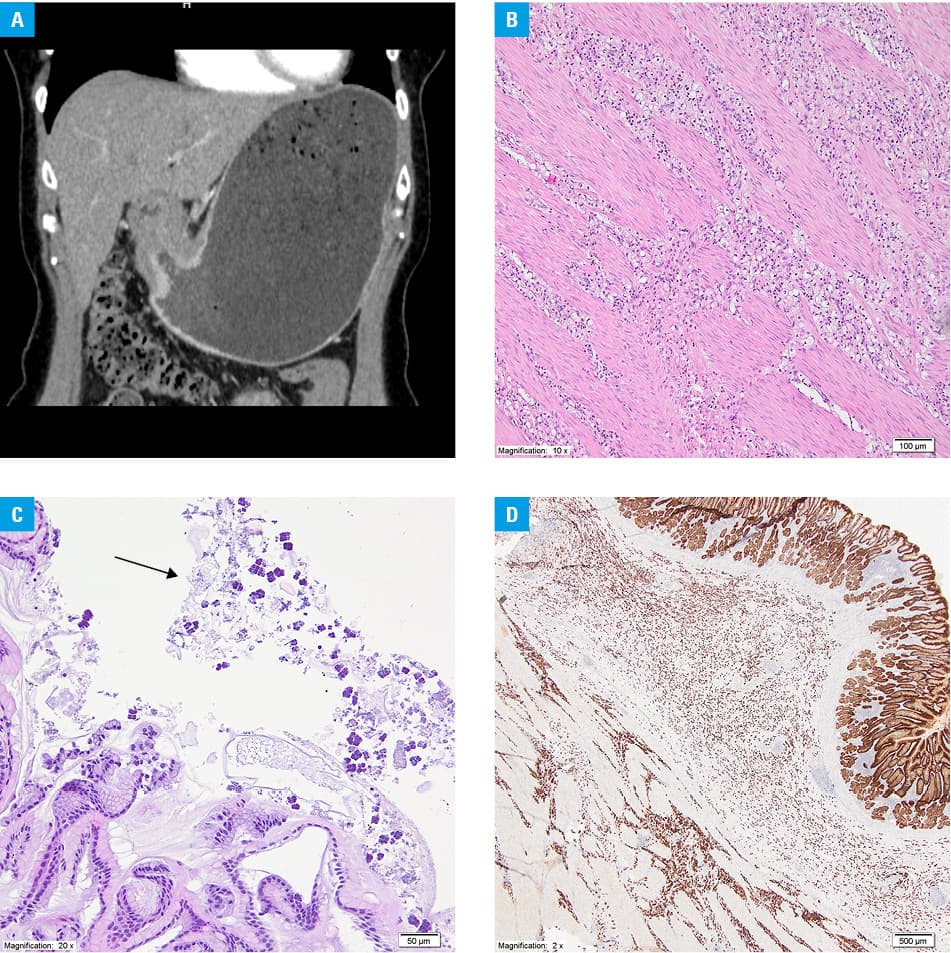
Based on the worrisome clinical presentation and the patient’s symptoms, a decision was made to perform gastrectomy with an intraoperative frozen section, which showed poorly cohesive carcinoma (PCC) with a signet‑ring component (Figure 1B). Routine histopathologic examination showed the mucosa was generally devoid of cancer, whereas the submucosa, muscularis propria, adipose tissue, and serosa were widely infiltrated by the PCC cells (Figure 1C and 1D). Isolated tumor cells were found in 1 lymph node. All margins were negative.
This case accentuates the relationship between S. ventriculi infection and severe gastric pathologies associated with delayed gastric emptying, including malignancies. Due to the predominantly deep location of the PCC and minimal mucosal changes, conventional upper endoscopy and superficial biopsies might overlook the disease.2 This case emphasizes the need for more extensive diagnostic evaluations in patients with S. ventriculi infection, as in an appropriate clinical context its presence might indicate an increased likelihood of an underlying malignancy. Literature has reported over 80 cases of S. ventriculi in humans.1,3,4 Some cases documented concomitant presence of gastric, esophageal, and rectal cancer.4 A hypothesis can be put forward that the presence of S. ventriculi in gastric biopsy, even in the absence of visible cancer, is highly suspicious for underlying malignancy. This highlights a critical need for a vigilant investigative approach once the bacterium has been identified. In addition, some studies have shown that S. ventriculi may increase the risk of gastric emphysema and perforation.3 The most frequently reported empirical treatment for S. ventriculi infection includes metronidazole, sometimes with ciprofloxacin and / or a proton pump inhibitor. There is no agreement on the standard of care for this infection, and the efficacy of various treatment regimens remains unclear.3,5
- Al Rasheed MRH, Senseng CG. Sarcina ventriculi: review of the literature. Arch Pathol Lab Med. 2016; 140: 1441‑1445. | Crossref
- Drubay V, Nuytens F, Renaud F, et al. Poorly cohesive cells gastric carcinoma including signet‑ring cell cancer: updated review of definition, classification and therapeutic management. World J Gastrointest Oncol. 2022; 14: 1406‑1428. | Crossref
- Tartaglia D, Coccolini F, Mazzoni A, et al. Sarcina ventriculi infection: a rare but fearsome event. A systematic review of the literature. Int J Infect Dis. 2022; 115: 48‑61. | Crossref
- Ugarte Bilbao A, de la Fuente Molinero I, Bravo Rodríguez MT, et al. Sarcina ventriculi in gastric biopsies of two patients with an underlying neoplasia. Rev Esp Enferm Dig. 2022; 114: 557. | Crossref
- Mishra S, Singh A, Kumar A, Phulware RH. A rare bacterial infection of the gastrointestinal tract: Clostridium ventriculi. Autops Case Reports. 2024; 14: e2024469. | Crossref
ARTICLE INFORMATION