


 CC BY-NC-SA 4.0
We present a case of a 48‑year‑old man with a 13‑year history of idiopathic diffuse pulmonary ossification (DPO). Initially, nonspecific lesions on chest radiograph were observed in 2003; however, they were not verified until December 2010, when high‑resolution computed tomography of the chest was performed. At that time, multiple, micronodular, calcified opacities in the middle and lower parts of both lungs were described (Figure 1A and 1B). Then, in February 2011, a lung biopsy during video‑assisted thoracoscopy was performed. Histopathologic examination showed presence of mature bone tissue in the lung parenchyma (Figure 1C).
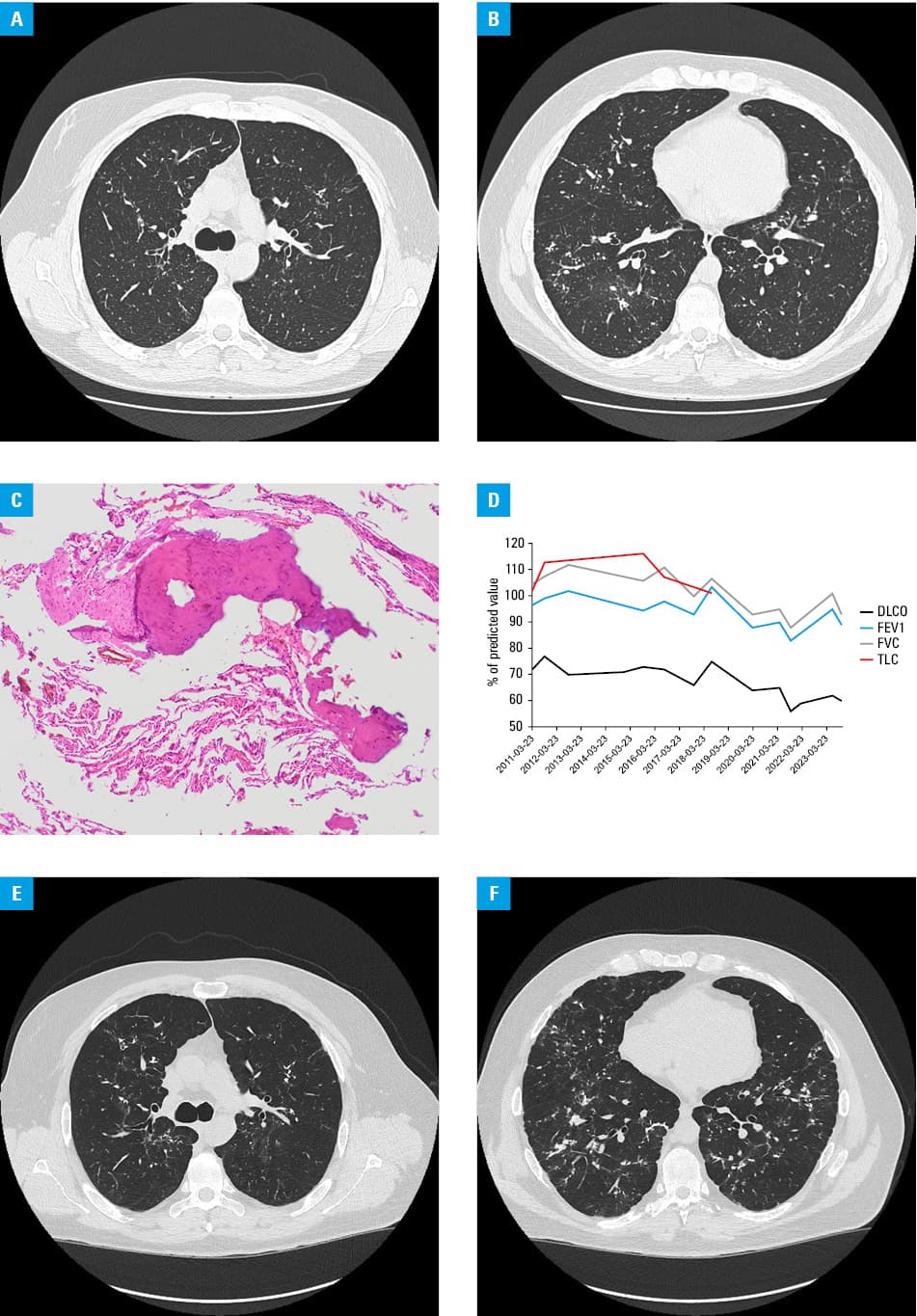
Abbreviations: DLCO, diffusing capacity for carbon monoxide; FEV1, forced expiratory volume in 1 second; FVC, forced vital capacity; TLC, total lung capacity
On first admission to our department in March 2011, the patient did not report any symptoms, had no history of chronic diseases, and denied any medication or tobacco use. His occupational history was unremarkable. Physical examination did not indicate any abnormalities. Blood tests showed a slightly elevated calcium level (2.65 mmol/l; reference range, 2.1–2.55 mmol/l) with normal levels of parathormone; other results were normal. Arterial blood gas analysis showed no signs of respiratory failure. Spirometry and plethysmography parameters were within the normal range, while diffusing capacity for carbon monoxide was moderately reduced (Figure 1D). Bronchofiberoscopy with bronchoalveolar lavage was performed, and the obtained material was evaluated for tuberculosis as well as fungal and bacterial infection, with all tests yielding negative results. Cytologic evaluation of bronchoalveolar lavage fluid showed presence of hemosiderin‑laden macrophages; other results were unremarkable. Echocardiography showed no signs of atrial or ventricular hypertrophy, valvular disorders, or pulmonary hypertension.
Due to asymptomatic presentation, good general condition, and a lack of underlying diseases, the patient was discharged without any intervention, and a follow‑up visit was scheduled. In the following years, signs of progression were observed, both in pulmonary function test results and on radiographic imaging (Figure 1D–1F). The patient demonstrated moderate exertional dyspnea (modified Medical Research Council score 1), which persists with the same intensity to the present day.
DPO is a rare disease characterized by the formation of mature bone tissue, with or without marrow elements, in the lung parenchyma. The pathogenesis of DPO has still not been fully elucidated, but it is thought to be an unusual response of the lung parenchyma to chronic injury in predisposed individuals. DPO can occur in association with several respiratory, systemic, and cardiac disorders or develop independently, without any specific underlying condition,1 but the latter variant is considered extremely rare.2 Due to its asymptomatic presentation, DPO is most commonly diagnosed accidentally, during autopsy or on pathologic evaluation of surgical specimens—its incidence was estimated at 1.63 per 1000 cases at autopsy.3
An accurate prognosis of DPO is difficult to determine due to a very limited number of cases with long‑term follow‑up data; however, in most of the previously published reports, the patients were asymptomatic and remained stable for many years.4 In 2022, Nishioka et al5 published the results of a nationwide survey of patients with idiopathic DPO conducted in Japan between 2017 and 2019. The authors identified 22 cases of idiopathic DPO and estimated its prevalence at 0.16 case per 1 million. While most of the described patients were asymptomatic, most of them showed signs of slow progression over the disease course.5
Based on the results of pulmonary function tests and radiographic imaging data from 13 years of follow‑up, our report provides valuable insight into the natural course of idiopathic DPO and confirms its tendency to slow deterioration over the years. However, information on the prognosis is still limited due to the very low number of well‑documented, long‑term observations of DPO.
- Chan ED, Morales DV, Welsh CH, et al. calcium deposition with or without bone formation in the lung. Am J Respir Crit Care Med. 2002; 165: 1654‑1669. | Crossref
- Reddy TL, von der Thüsen J, Walsh SLF. Idiopathic dendriform pulmonary ossification. J Thorac Imaging. 2012; 27: W108‑W110. | Crossref
- Tseung J, Duflou J. Diffuse pulmonary ossification: an uncommon incidental autopsy finding. Pathology. 2006; 38: 45‑48. | Crossref
- Tsuchiya T, Tanaka M. Dendriform pulmonary ossification: findings from eight years of observation. Intern Med. 2022; 61: 7785‑7721. | Crossref
- Nishioka Y, Toyoda Y, Egashira R, et al. Nationwide retrospective observational study of idiopathic dendriform pulmonary ossification: clinical features with a progressive phenotype. BMJ Open Respir Res. 2022; 9: e001337. | Crossref
ARTICLE INFORMATION