
Increase in the incidence of invasive bacterial infections following the COVID-19 pandemic: potential links with decreased herd trained immunity – a novel concept in medicine
Key words: COVID-19 lockdown, herd trained immunity, innate memory, streptococcal infections, trained macrophages

 CC BY 4.0
Increase in the incidence of invasive bacterial infections following the COVID-19 pandemic: potential links with decreased herd trained immunity – a novel concept in medicine
CC BY 4.0
A global increase in the incidence of various infectious diseases has been observed since the end of the COVID‑19 pandemic. This may be due to 2 independent phenomena. One of them is impaired immunity of long‑COVID patients. The second (major) one is associated with long‑term isolation of many people during the global pandemic‑related lockdown, resulting in an extreme reduction of exposure to natural environmental human microbiota. This, in turn, led to a silencing state of the body’s defense systems, including a decline of the prepandemic trained immunity (innate memory), which only persists for weeks to months after exposure to a pathogen. This decrease in the performance of trained immunity may be especially important for morbidity of infectious diseases without currently available vaccines, such as invasive group A Streptococcus pyogenes (GAS) infections, primarily streptococcal toxic shock syndrome. This review discusses data that support an important role of trained macrophages in host defense, and demonstrates the potential clinical implications of β-glucan, the major inducer of trained macrophages, for prophylactic and therapeutic use in individuals with impaired personal innate immunity. Altogether, it might be speculated that trained innate immunity within an entire population can lead to the development of herd trained immunity (HTI), a newly‑coined medical term. HTI can supplement classic, antigen‑specific herd immunity (memory B and T cells), and it plays a key role in preventing the spread of various infectious diseases, including invasive GAS infections. Unfortunately, the global HTI has been overthrown during the COVID‑19 pandemic; however, it should be restored shortly.
Introduction
Incidence of infectious diseases depends on the balance between pathogen virulence, its transmission, and host defense (innate and adaptive immunity). A post–COVID‑19 pandemic surge in the incidence of various infectious diseases has been observed in 2023, as reported by the Centers for Disease Control and Prevention (CDC). Is there a possibility that the global decline of herd immunity to different pathogens is the major factor responsible for this phenomenon?
The primary function of the immune system is protection against pathogens. Recognition of invaders stimulates defense mechanisms of the host’s innate and adaptive immune systems. An extreme interindividual diversity of human innate immunity ensures effective defense against an immense number of pathogens, including opportunistic ones.1 The state of individual innate immunity depends on many endogenous and environmental factors (eg, genetic variation, age, sex, diet, accompanying diseases, current therapy). However, constant exposure to diverse microbiota plays a critical role in training and development of major components of the innate immune system.2,3 For decades, we have thought that innate immunity, the first line of defense, was devoid of memory and ability to respond better during the second contact with the same pathogen—in contrast to adaptive immunity, whereby effective antigen‑specific defense mechanisms are acquired due to generation of specific memory B and T cells following infection or vaccination.4 Moreover, immunologic memory was considered a specific hallmark of the adaptive immune system of vertebrates and the basis for modern vaccines.5 Our understanding of innate immunity has changed radically since basic concepts of trained immunity (TI; also referred to as innate memory) were described by Netea et al6 in 2011. By definition, TI is a long‑term functional modification of cells in the innate immune system that alters the response to a second unrelated challenge.7-9 TI involves metabolic and epigenetic adaptations of innate immune cells (monocytes / macrophages, natural killer cells) upon exposure to microbial (eg, bacillus Calmette–Guérin [BCG]) and / or inflammatory stimuli (eg, β-glucan), so that the “trained” cells are able to respond much faster and more strongly to a subsequent challenge.10-14 This finding raised a great new hope for improving immunity to infectious diseases without current vaccines and became the priority problem of global medicine during the COVID‑19 pandemic.15-19 Consequently, vaccines such as BCG have been investigated for their capacity for protection against SARS‑CoV‑2 infection.20 Concurrently, new problems associated with the pandemic’s effect on the immune system have appeared. Firstly, the lockdown and long‑term isolation affected our immune system, especially trained immunity.21-23 Secondly, a postpandemic increase in the incidence of some infectious diseases, especially those without available vaccines, has been observed.23-26 Importantly, invasive group A Streptococcus pyogenes (GAS) infections have been on the rise in highly developed countries, including the United States (US), Canada, United Kingdom (UK), Belgium, France, the Netherlands, Sweden, and Denmark (according to recent data from the CDC).27-31
In the US, the incidence of GAS infections fell by 25% during the COVID‑19 pandemic, and then rose to levels higher than before the pandemic. A similar postpandemic resurgence in invasive S. pyogenes infections has been reported in Poland (streptococcal toxic shock syndrome [STSS]; 19 cases in 2022 vs >100 cases in 2023; data from the National Institute of Public Health – National Institute of Hygiene).32
Furthermore, retrospective studies from Denmark and France have shown that the incidence of pediatric and adult GAS infections increased markedly (up to 4‑fold) in the winter season of 2022–2023, as compared with pre–COVID‑19 seasons.28,29 The highest increase in the incidence of GAS infections (scarlet fever) was observed in children up to 5 years old. Importantly, the course and outcomes of postpandemic GAS infections were not more severe than in the previous seasons, with no significant increase in the mortality rate.29 These observations do not confirm a possible role of more virulent S. pyogenes strain(s) in the pathogenesis of the post–COVID‑19 pandemic severe GAS infections.
On the other hand, in Belgium, a remarkable increase in the incidence of invasive GAS infections was explained by the emergence of toxigenic emm1 S. pyogenes strains (M1UK).30 In contrast to these findings, retrospective studies performed in 2 hospitals in Milan have shown that the postpandemic surge in infections was caused by GAS of multiple emm types, and in general was not dominated by the emergence and expansion of a single clone.31 In summary, we have no clear‑cut evidence that new virulent S. pyogenes strain(s) contributed to the global increase in the incidence of GAS infections, whereas there is a common agreement that it was caused by weakened immunity following 2 years of strict social distancing and reduced possibility of disease transmission.28-32 Further retrospective clinical / epidemiological studies are necessary to explain these discrepancies.
The major aim of this review was to summarize the current data supporting the hypothesis concerning the association between the increased incidence of GAS infections and the decline of herd trained immunity (HTI).
Role of innate immunity in defense against invasive group A streptococcal infections
S. pyogenes, a species of gram‑positive β-hemolytic bacteria, is an exclusively human opportunistic pathogen that causes a great number of diseases, mostly self‑limiting ones. Noninvasive GAS infections typically result in common diseases, such as pharyngitis and skin lesions.33-36 On the other hand, severe invasive GAS infections can lead to rapid progressive and life‑threatening conditions, such as STSS and necrotizing fasciitis (NF), with high mortality even in hospitalized patients (up to 80%).26,27,32-34 The enlarged postpandemic human reservoir of S. pyogenes contributes to a surge in the indicence of severe invasive GAS infections.32 These infections are marked by a secretion of various bacterial virulence factors, including superantigenic exotoxins (streptococcal superantigens) and M proteins—surface proteins encoded by emm genes.39 Superantigens play a key role in the pathogenesis of STSS due to their ability to induce massive polyclonal T‑cell proliferation (5%–30% of the entire T‑cell population), which leads to subsequent release of high amounts of cytokines (interleukin [IL]-1, IL‑6, and tumor necrosis factor α [TNF-α]).40,41 This, in turn, induces a cytokine storm and may lead to sepsis (Figure 1). Fatal outcome of the disease is commonly associated with defects in host innate immunity.24,38,42,43 Importantly, while typical adaptive immune responses are activated, the generated GAS‑specific antibodies are insufficient for protection. Moreover, patients do not acquire effective antigen‑specific immunity after consecutive S. pyogenes infections.25 However, it has been demonstrated that GAS immunizations trigger TI, whereby innate immune cells become imprinted to respond with increased efficiency in the case of subsequent infection.37 All these data indicate that innate immunity, rather than adaptive immunity, is important in the defense against GAS infections. Especially, if the host defense response (innate immunity) is defective in the early stages of infection (when the patient is still asymptomatic), GAS bacteria multiply and release a massive amount of various toxins (superantigens) resulting in sepsis (STSS) or fatal soft tissue infections (NF).26,44 Moreover, simultaneous overproduction of proinflammatory cytokines, especially TNF-α, leads to infection exacerbation. Such an outcome might also be a side effect of nonsteroidal anti‑inflammatory drug (NSAID) therapy, especially with ibuprofen.44-46 This NSAID and nonselective cyclooxygenase inhibitor, commonly used to treat mild‑to‑moderate pain, fever, and inflammation, can increase the risk of secondary infections of the skin and soft tissues caused by invasive GAS infections. Importantly, ibuprofen has been associated with severe necrotizing soft tissue infections in the course of chickenpox.39,45,46 Therefore, this drug should not be recommended for the management of chickenpox and other inflammatory diseases associated with GAS infections.
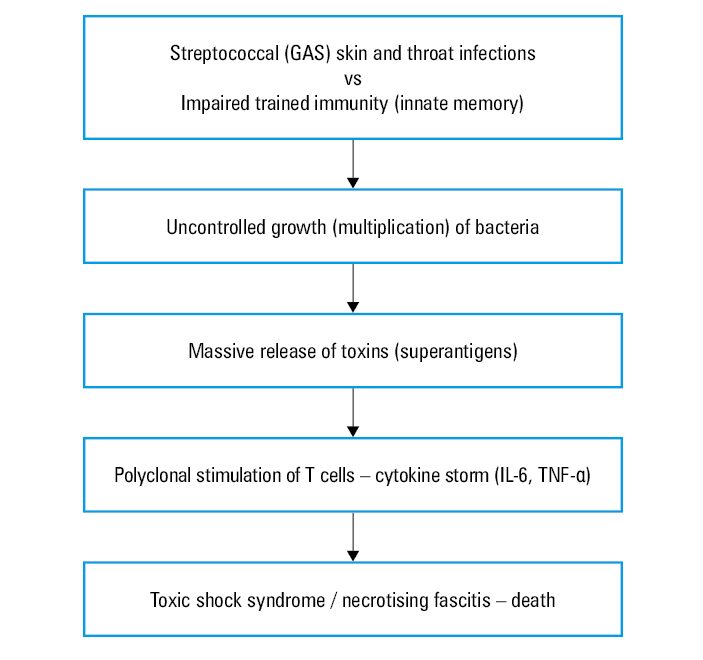
Finally, to reduce the risk of fatal S. pyogenes infection, specific therapies or prophylactic treatments that improve effectiveness of innate immunity are highly recommended. Positively, stimulation of TI (innate memory) is fully justified as a new strategy to restrict the worldwide spreading of life‑threatening GAS infections.24,25
Trained immunity (innate memory): bacillus Calmette–Guérin and yeast‑derived β-glucans as the major stimuli of trained innate cells
TI is triggered by a crosstalk between microbiota and the host innate immune system.6 Training of innate immunity cells might be induced by infections or vaccinations, as an effect of stimulation of various pathogen recognition receptors.7-9,47 In addition to pathogenic stimuli, self‑derived molecules (eg, damage‑associated molecular patterns) can also induce TI. This mode of innate memory generation is characterized by long‑term epigenetic and metabolic reprogramming of innate cells associated with potent immune responses.8 The epigenetic reprograming results in the opening of chromatin at promoters of genes encoding proinflammatory cytokines (IL‑6, IL‑1β, and TNF-α), and is associated with protection against secondary infection.9 Training of innate cells was initially reported in circulating monocytes and tissue macrophages (so‑called peripheral trained immunity).6 Subsequent findings indicate that immune progenitor cells in the bone marrow can also be trained (so‑called central trained immunity), which explains the long‑term innate memory that persists for weeks to months following exposure to pathogens.9 Although TI is predominantly protective against infections, its inappropriate induction by endogenous stimuli can also promote disease progression (eg, systemic lupus erythematosus and systemic sclerosis).8,9 Nevertheless, since the discovery of innate memory, a great number of experimental and clinical studies have confirmed its protective effects in many infectious diseases and cancer.7 For example, the BCG vaccine has been commonly used to stimulate TI, and some previously unclear beneficial effects of BCG treatment have been explained over the years. In 2003, Garley et al13 showed that BCG vaccination reduces overall mortality in children due to its nonspecific protection.13 Then, in 2012, it was documented that BCG induces TI through epigenetic reprograming of innate immune cells.12 Moreover, at the beginning of the COVID‑19 pandemic, before initiation of the global vaccination program with SARS‑CoV‑2 vaccines, adjunctive BCG treatment was proposed to induce protective TI.20 Later, this hypothesis was confirmed in a double‑blind randomized trial of BCG vaccination against COVID‑19.20 Furthermore, it has been demonstrated that BCG has an antitumor effect (eg, BCG therapy is a standard treatment for nonmuscle invasive bladder cancer).48 In addition, it has been shown that BCG has a cross‑protective effect against Candida albicans and S. aureus infections for at least 3 months after vaccination.12 All these data clearly indicate that BCG vaccination may be a promising therapeutic / prophylactic approach to infectious diseases and cancer through enhancement of trained immunity. The beneficial effect of TI was also observed in a randomized controlled trial in which older patients hospitalized for a new infection received the BCG vaccine.12,20
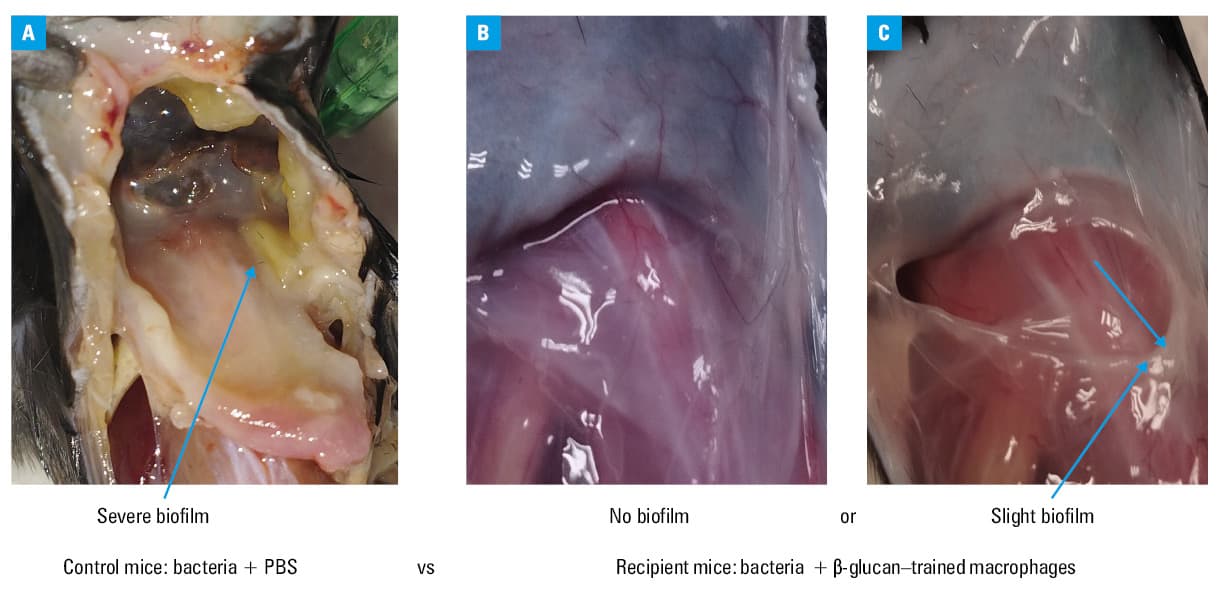
Apart from the BCG vaccine, β-glucan, a component of the cell walls of yeast (Candida and Saccharomyces species), has been extensively studied for its ability to induce TI.48,49 For instance, it has been shown that β-glucans from S. cerevisiae possess strong bioactivity, and is capable of inducing an enhanced trained innate immune response by human monocytes. This training required stimulation of receptors such as Dectin 1/ complement receptor 3, toll‑like receptor 4, and macrophage mannose receptor.49 On the other hand, it has been shown that training of murine macrophages with S. cerevisiae β-glucan markedly improves macrophage defense properties (manuscript in preparation). Namely, transferring trained murine macrophages into recipient mice infected with a highly virulent Pseudomonas aeruginosa strain profoundly suppressed multiplication of pathogens, fully inhibited biofilm formation, and ameliorated the effects of inflammation (Figure 2).50 Therefore, β-glucan training of monocytes / macrophages seems to be a promising new therapy in many chronic infections. Specifically, S. cerevisiae–derived β-glucans should be used in adjunctive treatment of P. aeruginosa biofilm infections accompanied by a detrimental inflammatory response, including therapy of advanced cystic fibrosis.51-54 However, further studies are necessary to determine the best administration route and dosage of β-glucans in humans to avoid possible adverse effects of TI (eg, induction of autoimmunity).8
Impact of the COVID‑19 pandemic lockdown on the immune system: evidence for the herd trained immunity hypothesis
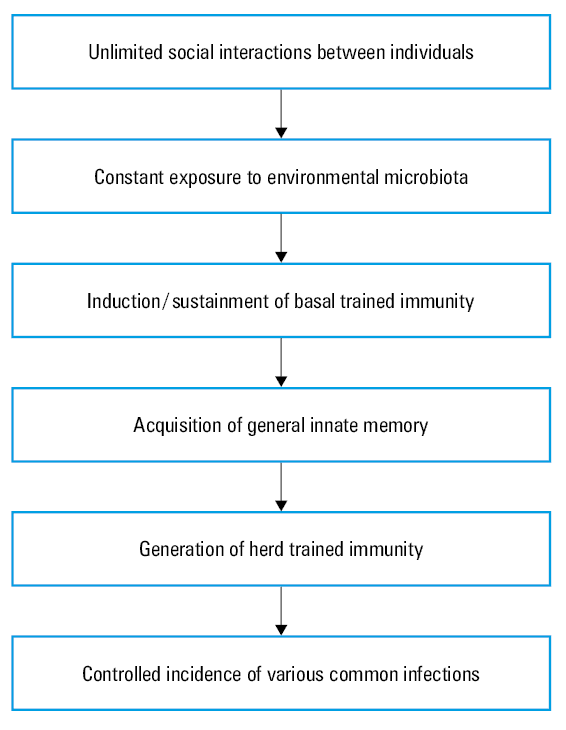
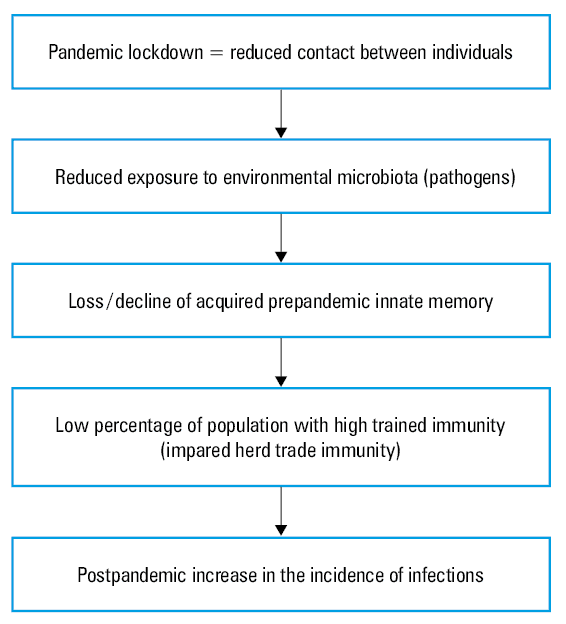
The concept of TI (innate memory) is commonly accepted and has radically changed our understanding of the innate immunity’s role and its contribution to protection against a wide range of infectious diseases. Furthermore, a number of studies in mice and humans have demonstrated that training of immune cells with different microbial ligands could provide protection against subsequent infection in a nonspecific manner.6-9,47 Enhanced defense properties of trained innate cells are pivotal at the early stages of infection in order to block pathogen multiplication, biofilm formation, and secretion of toxins (eg, fulminant invasive GAS infections).27,38 This indicates that prophylactic stimulation of innate memory of the entire population (eg, BCG revaccination) is more effective than attempts to enhance TI in already infected patients because of the extremely rapid course of some infections that may lead to sepsis. The concept of general induction of TI is based on the data of a nonspecific beneficial effect of BCG vaccination associated with reduced child mortality from viral infections in West Africa.55 At the same time, the COVID‑19 pandemic lockdown showed that acquired innate memory might have disappeared in whole populations due to long‑term isolation and reduced exposure to microbiota.
The presented data and line of argument support the hypothesis that, apart from classic herd immunity (antigen‑specific immunity), a thus far not described HTI (innate immunity) might exist (Figure 3).
This hypothesis also explains the postpandemic increase in the incidence and severity of various infectious diseases, especially these without currently available vaccines (eg, invasive GAS infections), which results from the decline of HTI (Figure 4).
Conclusions
Vaccination is the best way of protection against infectious diseases. It is related to stimulation of antigen‑specific B and T cells that results in faster and more effective immune response to invaders (ie, acquired personal / individual immune memory). On the other hand, herd immunity is responsible for blocking transmission of a particular pathogen (eg, SARS‑CoV‑2) between people and prevents the disease outbreak. The concept of classic herd immunity is related to a high percentage of individuals with natural (postinfection) or vaccine‑induced immunity. Herd immunity occurs when a large portion of a community becomes immune to a disease.4,5 Until the discovery of TI, or de facto innate memory, innate immunity was mostly perceived as the first‑line defense against pathogens, and it was considered much less important than adaptive immunity.56,57 However, in some infectious diseases, such as invasive GAS infections, neither humoral nor T‑cell–dependent immune response is effective. Therefore, the final outcome of the interaction between a pathogen and host defense system depends on the level of innate immunity (trained immunity). There is evidence to support this hypothesis. First of all, since the end of the COVID‑19 pandemic, a significant global increase in the incidence of GAS infections has been observed.26,32-34 This situation is strongly association with the decline of short‑term innate memory acquired in the prepandemic period. The hypothesis of HTI impairment explains this phenomenon independently of a possible contribution of new, highly‑virulent GAS strains. Nonaltered HTI is necessary to control the magnitude of human reservoir of S. pyogenes, an exclusively human opportunistic pathogen, and is responsible for maintaining the low incidence of this and other infectious diseases. A similar explanation of the increased incidence of GAS infections was proposed in other studies.34,35 Researchers have claimed that weakened herd immunity to S. pyogenes is responsible for the upsurge of invasive GAS infections reported in many European countries in the 2022/23 winter season. However, these studies did not link this phenomenon with TI (innate memory). Moreover, the HTI hypothesis substantiates the expected beneficial effects of prophylactic and therapeutic stimulation of impaired TI. BCG vaccine and β-glucans seem to be the best candidates for improving innate immunity. For this purpose, administration of β-glucan supplements or probiotics containing β-glucans (eg, S. cerevisiae) should be recommended. However, the impact of probiotics on building innate memory has not been well documented yet.47 In contrast, BCG seems to be a major inducer of TI already used in human medicine.12,20,48 For example, BCG vaccination in adults, especially in elderly people, might establish effective protection against common viral infections due to the improvement of innate immunity, usually defective in the senescent immune system.
Importantly, we can expect an improvement of the impaired postpandemic HTI in the near future. A recent epidemiologic report from the UK has shown a decrease in the incidence of scarlet fever (15 933 cases registered in the first quarter of 2023 vs 12 176 cases registered during the same period in 2024; data from the UK Health Security Agency; April 4, 2024). Furthermore, the incidence of invasive GAS infections in Northern Ireland has steadilly fallen since January 2023 (according to data from the Public Health Agency; September 18, 2024).
Overall, all the presented data and conclusions indicate that the increased post–COVID‑19 pandemic incidence of invasive bacterial infections is associated with impaired HTI. Consequently, training of innate cells should become a procedure recommended in human medicine, especially in patients with impaired innate immunity.
- Liston A, Humblet‑Baron S, Duffy D, Goris A. Human immune diversity: from evolution to modernity. Nature Immunol. 2021; 22: 1479‑1489. | Crossref
- Graham DB, Ramnik JX. Conditioning of the immune system by the microbiome. Trends Immunol. 2023; 44: 499‑511. | Crossref
- Wills‑Karp M, Santeliz J, Karp CL. The germless theory of allergic disease: revisiting the hygiene hypothesis. Nat Rev Immunol. 2001; 1: 69‑75. | Crossref
- Inoue T, Kurosaki T. Memory B cells. Nat Rev Immunol. 2024; 24: 5‑17. | Crossref
- Sallusto F, Lanzavecchia A, Koichi A, Rafi A. From vaccines to memory and back. Immunity. 2010; 33: 451‑463. | Crossref
ARTICLE INFORMATION