
Cardiovascular risk and preclinical atherosclerosis are associated with white matter hyperintensities in apparently healthy adults: the population-based cross-sectional BIALYSTOK PLUS study
Key words: brain magnetic resonance imaging, cardiovascular risk categories, cardiovascular risk factors, population study, white matter hyperintensities


 CC BY-NC-SA 4.0
Cardiovascular risk and preclinical atherosclerosis are associated with white matter hyperintensities in apparently healthy adults: the population-based cross-sectional BIALYSTOK PLUS study
CC BY-NC-SA 4.0
Introduction: White matter hyperintensities, present in patients and asymptomatic individuals, have been previously shown to be associated with atherosclerosis risk factors, such as high blood pressure, hypercholesterolemia, smoking, and diabetes.
Objectives: Our aim was to examine the associations between the volume of white matter hyperintensities and cardiovascular risk factors in the general, apparently healthy population.
Patients and methods: The analysis includes 735 participants (aged 20 to 79 years) without neurological or severe cardiac diseases. The participants underwent detailed clinical examination, including medical history, biochemical analyses, carotid arteries ultrasound, and brain magnetic resonance imaging, followed by white matter hyperintensities segmentation using the FreeSurfer tool. The participants were divided into 3 cardiovascular risk (CVR) categories based on the 2021 European Society of Cardiology guidelines.
Results: The median volume of white matter hyperintensities was 95.2 mm3 (interquartile range, 2.1–482 mm3). Multivariable analysis revealed positive independent association between the volume of white matter hyperintensities and CVR categories, glycated hemoglobin concentration, presence of carotid plaques, and central systolic blood pressure. An analysis including individuals without hypertension or diabetes revealed mean intima‑media thickness and high or very high cardiovascular risk class as independent predictors of white matter hyperintensities percentile.
Conclusions: The cardiovascular risk class, presence of carotid plaques, increased intima‑media complex thickness, and diabetes are the main risk factors for white matter hyperintensities in apparently healthy adults. People without hypertension or diabetes but with higher CVR are also at a risk for developing white matter hyperintensities, which emphasizes the importance of CVR assessment for prediction of neurodegenerative changes.
What's new?
Our population‑based study demonstrates that white matter hyperintensities occur even in apparently healthy people. Cardiovascular risk (CVR) and asymptomatic carotid atherosclerosis are significantly associated with the volume of hyperintensities. Even individuals without diabetes or hypertension, who consider themselves healthy, are at a risk for developing white matter hyperintensities, especially when they present higher CVR or intima‑media thickness. Our results emphasize the need to evaluate CVR in apparently healthy people not only to predict cardiovascular events, but also to envisage possible neurodegenerative changes, and help clinicians to prevent them.
Introduction
Cardiovascular diseases (CVDs) represent one of the most common causes of death or disability, especially among older adults in developed countries.1 The main risk factors of CVDs are high blood pressure (BP), increased serum cholesterol concentration, diabetes mellitus (DM), obesity, smoking, and insufficient physical activity. Most risk factors could be limited by lifestyle alterations. Cardiovascular risk (CVR) factor management according to the CVD prevention guidelines2 helps to slow down the disease progression.
The heart and the brain have similar vascular anatomy.3 Both organs require optimal functioning of microcirculation. Microvascular dysfunction is also called small‑vessel disease (SVD). Cerebral SVD (CSVD) is associated with various pathological processes: microbleeds, brain atrophy, myelin disruption, lacunae presence, and reduction of neuronal density.3,4 It may be visible on brain imaging as white matter hyperintensities (WMHs). One of the causes is cerebral amyloid angiopathy, which is due to deposition of amyloid-ß in the cerebral vascular bed, and is responsible for age–associated cognitive impairment.5 A previous prospective observation showed that the volume of WMHs is related to the progression of amyloid-β burden.6
Pathological findings typical of specific diseases, such as Alzheimer disease or Parkinson disease, are not directly associated with typical vascular pathology. Originally, they were perceived as completely unrelated to vascular pathology. However, current data indicate that lesions in the small vessels enhance severity of the disease progression possibly by impairing vascular permeability that plays a role in amyloid clearance. Small vessels are crucial for brain clearance and migrating byproducts of cerebral metabolism through membranes and barriers. The role of small vessels might be indirectly related to molecular trafficking through the barriers to feed and clear the debris. Neurodegenerative changes mean a progressive loss of neuron structure or function leading to their death. Those changes underlie neurodegenerative diseases, such as Alzheimer disease or Parkinson disease co‑occurring with CSVD in older people.7,8
WMHs are nonspecific white matter lesions seen on T2‑weighted or fluid‑attenuated inversion recovery (FLAIR) magnetic resonance imaging (MRI) scans as hyperintense signals. They are often found in older adults.9 The pathology of WMHs has not been fully understood.7 Prevalence of WMHs is associated with a higher risk of stroke, cognitive decline, dementia, and death.3,10 The results of previous studies indicate that the incidence of WMHs is associated with aging, cardiovascular factors (hypertension, smoking, dyslipidemia, DM, atrial fibrillations, glucose level), and kidney failure.3,9,11 WMH presence in neurogenerative diseases might indicate pathological mechanisms distinct from those associated with SVD.12 Further research focused on specific high‑risk populations comprising patients with severe chronic valvular heart disease,13 heart failure,14 acute ischemic stroke,15 atrial fibrillation,16 carotid atherosclerotic plaques,17 or DM.18 The selection of a symptomatic population is a limitation of those studies, because they assessed the occurrence of WMHs in patients with already diagnosed diseases. Therefore, their results are not fully transferable to the general and apparently healthy population, and cannot support early preventive interventions. Another study focused on middle‑aged individuals from the United Kingdom (UK) Biobank cohort with emphasis on hypertension and its long‑time consequences.19 The UK and Poland differ in their populational cardiovascular disease risk, as Poland is classified into the high‑risk group and UK into the low‑risk group according to the European Society of Cardiology (ESC) guidelines.2
As MRI examination is expensive, it is not used for regular screening tests. As a consequence, damage to the white matter is usually undetected until the clinical status of an individual is alarming. Additionally, the incidence and intensity of CVR and WMHs in the general population are insufficiently examined. Systematic, well‑designed population studies combining advanced imaging techniques with low‑cost, available clinical methods that reveal the association between risk factors and development of hyperintensities could be used to formulate new preventive guidelines for the general population that may reduce the frequency of neurodegenerative complications.
This study aimed to identify the most important factors associated with WMHs in a group of potentially healthy people from the Bialystok PLUS (Polish Longitudinal University Study) adult population, and to assess if their CVR was associated with the volume of WMHs. Modification of the risk factors and hence lowering the CVR might slow down not only CVD but also development of WMHs and probably also dementia in the future. This cross‑sectional study is based on the data collected between 2018 and 2022 in the Population Research Centre and Molecular Imaging Laboratory at the Medical University of Bialystok by qualified medical staff.
Patients and methods
Population
This study was a part of the Bialystok PLUS cohort study.20 We invited the residents of Bialystok aged 20–79 years who were randomly selected based on age and sex to reflect the demographic structure of the general population.
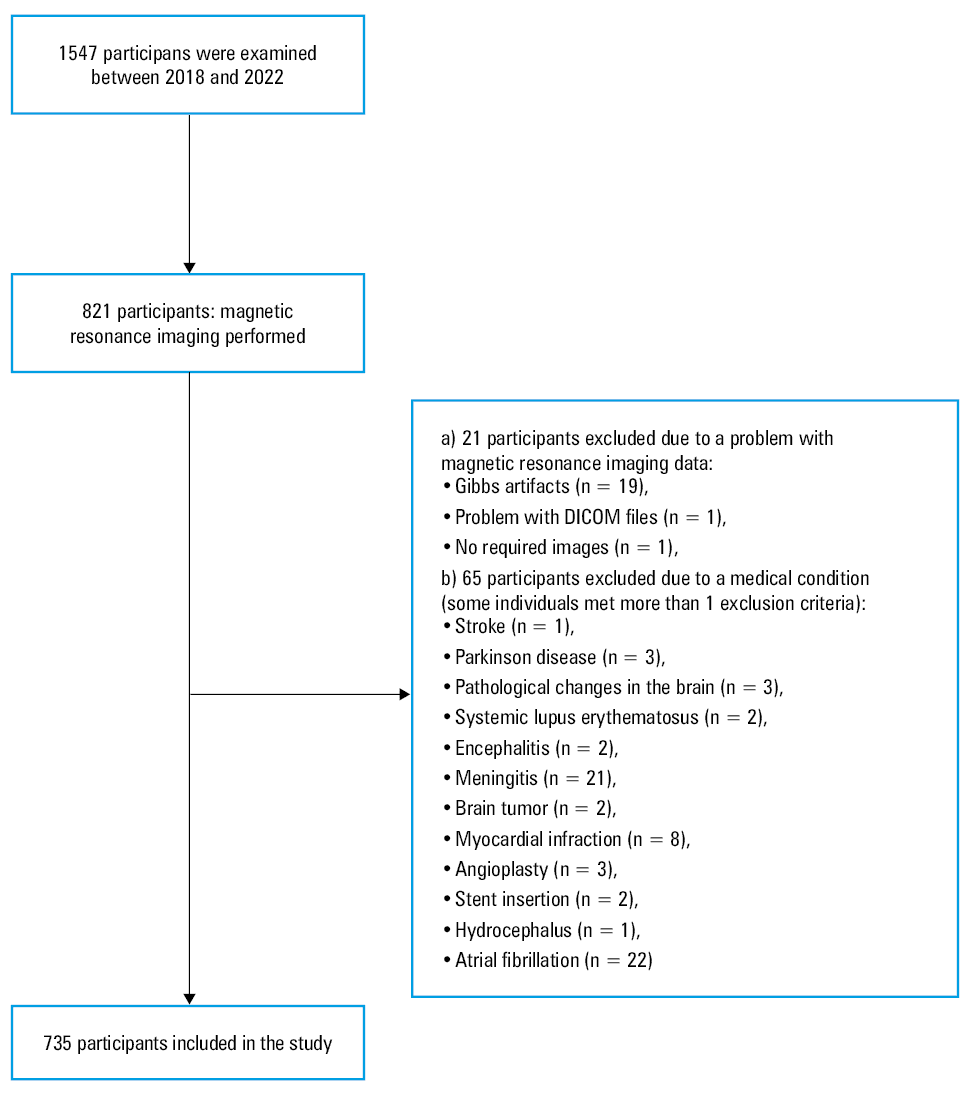
Between 2018 and 2022, 1547 participants were examined. Of those, 821 (53%) had no contraindications (such as medical implants unsuitable for MRI, pacemakers, large tattoos, pregnancy, or claustrophobia) and volunteered to undergo MRI examination. Supplementary material, Table S1 and Figures S1 and S2 present differences between the groups with and without MRI examination. Data of 86 participants were excluded for the following reasons (in some cases more than 1 exclusion criteria were met): no 2‑dimensional (2D) FLAIR image, problem with DICOM files, Gibbs artifacts, pathological changes in the brain, hydrocephalus, history of stroke, Alzheimer disease, Parkinson disease, systemic lupus erythematosus, encephalitis, meningitis, brain tumor, myocarditis, angioplasty, stent implantation, myocardial infarction, and atrial fibrillation. Figure 1 presents the study group selection process.
Data collection
Information about participant health status and demographic data were collected using standardized questionnaires.21 Anthropometric measurements were performed by qualified medical personnel. The waist‑to‑hip ratio (WHR) was obtained by dividing the waist circumference by the hip circumference.
Blood samples were collected in the morning after at least 8 hours of fasting. The participants who declared to be diabetes‑free had the oral glucose tolerance test (OGTT) performed. The collected samples were analyzed with the Cobas device (Roche Diagnostics, Meylan, France).
Whole body MRI was performed at the Independent Laboratory of Molecular Imaging at the Medical University of Bialystok within a month from initial clinical examination. Imaging acquisition was performed using 3 Tesla Siemens Biograph mMRI system (Siemens, Erlangen, Germany). T1 MRAGE images provided information about the anatomical structures of the nervous system. The voxel size was 1 mm × 0.977 mm × 0.977 mm, and the matrix size was 176 × 256 × 256. The sequence was 3D MPRAGE, axial with inversion time of 900 ms, repetition time of 2300 ms, and thickness of 1 mm. T2 FLAIR sequence was used to detect pathological processes, especially the assessment of WM diseases and segment WMHs. The imaging parameters were as follows: voxel size 0.469 mm × 0.469 mm × 5.2 mm, 2D TIRM TRA DARK FLUID axial sequence, matrix size 515 × 416 × 27, inversion time 2500 ms, repetition time 900 ms, thickness 4 mm.
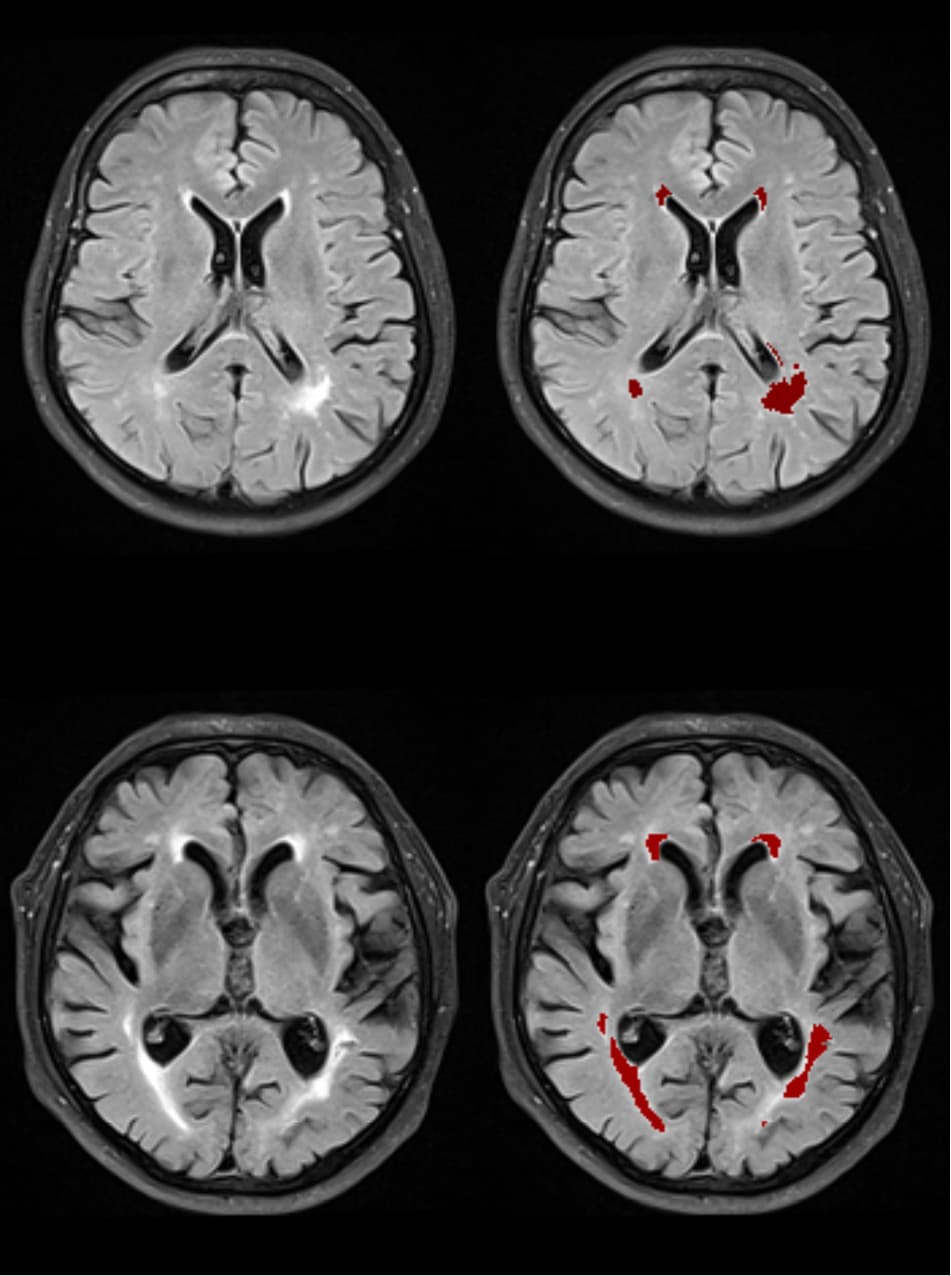
The first step of image processing included a visual quality check. Low image quality could cause interpretation problems and the automated pipeline might fail to extract brain parameters or segmentations of sufficient quality. MRI scans with artifacts in the form of Gibbs ringing or high noise were excluded from the analysis. The signal‑to‑noise ratio was calculated for the potentially aberrant images using AssemblyNet tool.22 Subsequently, morphometric brain structure analysis was conducted with FreeSurfer version 7.2.0 (available at https://surfer.nmr.mgh.harvard.edu/) using a recon‑all stream on T1‑weighted brain images.23 Head motion, Gibbs ringing, or the presence of noise are examples of sources of variance that may produce unreliable results after processing, as they may cause blurring of the structure boundaries. The FreeSurfer package registers each brain to MNI305 template brain atlas space. Significant changes in the brain (such as tumor or hydrocephalus), signaling a brain clearly different from the template atlas, lead to registration failure. WM and estimated intracranial volume were obtained with the FreeSurfer tool. The SAMSEG protocol24 implemented in the FreeSurfer tool and T1‑weighted and T2‑weighted FLAIR images were used to calculate the volume of WMHs. Both FreeSurfer and SAMSEG provide structure masks (hard segmentation) and a number denoting a total volume of each structure (soft segmentation). After processing, the results were visually checked (by viewing the mask overlay to brain) by a neurologist experienced in neuroimaging (MAP). Exemplary results are presented in Figure 2. Then, WMH load was defined as the proportion of WMHs to total WM volume, and this ratio was transformed using logit transformation (to normalize and stabilize the variance), as presented in a study by Wartolowska et al.19
Echocardiography was performed using ultrasound Vivid 9 device (GE Healthcare, Chicago, Illinois, United States). Heart size measurements were conducted according to the joint American and European guidelines.25 The left atrial volume index was calculated by dividing the left atrial volume to the body surface area (BSA). Left ventricular mass index (LVMIBSA) was calculated by dividing the LVM to BSA in g/m2 and LVMIHEIGHT was calculated by using the formula LVM/height in g/m.26 The left ventricular hypertrophy was defined as LVMIBSA equal to or above 115 g/m2 for men and LVMIBSA equal to or above 95 g/m2 for women.
The carotid ultrasound was performed using the 2D ultrasound Vivid 9 device (GE Healthcare). Medical staff assessed the presence of any atherosclerotic plaques in the right and left common carotid arteries, right and left external carotid arteries, right and left internal carotid arteries, and right and left bifurcations. The ultrasound technician obtained an automatic measurement of the intima‑media thickness (IMT) for the left and the right side. The mean IMT was computed from the left and right measurements. Atherosclerotic plaques were assessed as binomial quality variables and marked as present when 1 of the following criteria was fulfilled: 1) local thickening of IM toward the vessel lumen, exceeding the surrounding IMT by more than 0.5 mm, 2) local thickening of IM toward the vessel lumen, surpassing the surrounding IMT by 50% or 3) IM thickening above 1.5 mm.27 IMT measurements were performed using EchoPack software (GE Healthcare).
Peripheral BP measurements were performed with the Omron M6 AC Comfort device (Omron Healthcare CO., Ltd., Kyoto, Japan). BP in the ascending aorta (central BP) and pulse wave velocity were examined using Vascular Explorer system (Enverdis GmbH, Jena, Germany).
We assessed the prevalence of hypertension, hypercholesterolemia, hypertriglyceridemia, DM, and prediabetes status based on data reported by the participants and measured parameters. Hypertension was defined as a history of hypertension or systolic BP (SBP) equal to or above 140 mm Hg or diastolic BP (DBP) equal to or above 90 mm Hg. Hypercholesterolemia was defined as a history of hypercholesterolemia or a total cholesterol concentration equal to or above 200 mg/dl. Hypertriglyceridemia was defined as a history of hypertriglyceridemia or a triglyceride level equal to or above 150 mg/dl. DM and prediabetes status were defined according to the World Health Organization criteria.28 DM was defined as a history of DM or glucose level 120 minutes after glucose load equal to or exceeding 200 mg/dl or glycated hemoglobin (HbA1c) concentration equal to or exceeding 6.5%. Prediabetes was defined as impaired fasting glycemia (IFG) or impaired glucose tolerance (IGT). IFG was diagnosed as no previous diabetes diagnosis, fasting glucose equal to or above 100 mg/dl and glucose level 120 minutes after glucose load below 140 mg/dl, and IGT as no previous diabetes diagnosis and glucose level 120 minutes after glucose load between 140 and 199 mg/dl. In our study, DM was not diagnosed based on fasting glucose alone, as we only had a single glucose measurement available. If fasting glucose level was above 125 mg/dl, glucose level 120 minutes after glucose load was below 200 mg/dl, and HbA1c level was below 6.5%, we diagnosed prediabetes.
The study population was divided into 3 CVR categories (low to moderate, high, and very high risk) based on the latest recommendations, that is, 2021 ESC guidelines on CVD prevention in clinical practice, with utilization of Systemic Coronary Risk Estimation 2 (SCORE2) and SCORE2‑Older Persons.2 The CVR categories integrated information on CVR factors for individual participants considering the impact of age, sex, smoking, non–high‑density lipoprotein cholesterol (HDLC) concentration, and BP.
Statistical analysis
Statistical analysis was performed using STATA 16 (StataCorp LP, College Station, Texas, United States), R code version 4.2.2 (RStudio: Integrated Development for R. RStudio, Boston, Massachusetts, United States), and Python version 3.9.13. The level of significance was set at a P value below 0.05.
Descriptive statistics were presented as median and interquartile range (IQR) for continuous data and as number and percentage for discrete data. The population was divided into 3 groups based on the quartiles of the WMH volume (the first group below median value of WMH volume, the second group between median and the third quartile value of WMH volume, and the third group above the third quartile value of WMH volume). Comparisons between the groups were made using the Kruskal–Wallis test for continuous data and the χ2 independent test for discrete data. The post hoc Dunn test correction for multiple testing was performed to evaluate which groups were different.
We conducted a multivariable linear regression. First, a new variable (percentile of WMHs) was created. This mathematical operation split the study population into 100 groups according to the WMH load. Simple linear regression models were used to check the relationship between CVR factors and WMHs. For significant factors, we prepared models using CVR categories as covariates. Next, multivariable linear models were defined to evaluate the relationships between the percentiles of WMH volume and all CVR factors, which were significant in simple models. We employed a stepwise algorithm using both directions to create a model with the best parameters. Then, the assumptions placed on the general linear model were checked. The reason for using percentiles of WMHs was the right‑skewed distribution of the WMH load (WMH distribution is presented in Supplementary material, Figures S3–S6), and failure to meet the assumptions of the linear regression models when the WMH volume was used. To avoid collinearity, highly correlated factors that were used to describe categories, and independent factors were not considered (eg, when assessing the impact of CVR, age was not assessed as an independent factor, as it closely correlated with CVR).
Ethics
Ethical approval for this study was provided by the Ethics Committee of the Medical University of Bialystok on March 31, 2016 (R‑I‑002/108/2016). All participants provided their written informed consent. The study protocol conforms to the ethical guidelines of the 1975 Declaration of Helsinki.
Results
Baseline characteristics of the study population and comparisons between the groups as per the WMH volume quartile values are shown in Table 1. Median (IQR) age in the study group was 45 (36–58) years, and 46.39% of the participants were men. Overall, 34.92% of the investigated individuals suffered from hypertension, 7.89% from DM, and 52.18% and 25.75% had hypercholesterolemia or hypertriglyceridemia, respectively.
Variable | Analyzed population (n = 735) | Groups based on WMH volume to WM volume logit‑transformed quartiles | P value | |||
Q1+Q2 (n = 367) | Q3 (n = 184) | Q4 (n = 184) | ||||
Data are presented as median and interquartile range for continuous variables, and number and percentage for categorical variables.
SI conversion factors: to convert cholesterol to mmol/l, multiply by 0.0259; glucose to mmol/l, by 0.0555; insulin to pm/l, by 6.945; N‑terminal pro–B‑type natriuretic peptide to ng/l, by 1; triglycerides to mmol/l, by 0.0113; troponin to µg/l, by 1.
Comparison of variables between the subgroups was performed using the Dunn test, the same letters in each row represent significant differences at P <0.05 after the Bonferroni correction:
a between Q1+Q2 and Q3;
b between Q1+Q2 and Q4;
c between Q3 and Q4.
Abbreviations: Q, quartile, WMH, white matter hyperintensity | ||||||
Demographic and anthropometric data | ||||||
Age, y | 45 (36–58) | 38 (32–46) | 48 (39–59) | 61 (51–66) | <0.001a,b,c | |
Men | 341 (46.39) | 172 (46.87) | 82 (44.57) | 87 (47.28) | 0.84 | |
Body mass index, kg/m2 | 25.8 (22.9–29.3) | 25.4 (22.6–28.2) | 25.8 (22.8–29.4) | 27.7 (24.1–30.9) | <0.001b,c | |
Waist‑to‑hip ratio | 0.86 (0.79–0.94) | 0.85 (0.77–0.92) | 0.86 (0.81–0.94) | 0.9 (0.83–0.97) | <0.001a,b,c | |
Blood testing | ||||||
Fasting glucose, mg/dl | 99 (93–105) | 96 (91–103) | 99 (93–105) | 104 (98–113) | <0.001a,b,c | |
Glucose 120 min after oral glucose tolerance test, mg/dl (n = 684) | 119 (101–138) | 113 (98–131) | 120 (101–142) | 127 (111–155) | <0.001a,b,c | |
Creatinine, µmol/l | 70 (61–79) | 70 (61–81) | 69 (61–77) | 69 (62–78) | 0.83 | |
Total cholesterol, mg/dl | 189 (116–218) | 186 (164–211) | 190 (170–218) | 199 (174–228) | 0.002b | |
Triglycerides, mg/dl | 93 (68–132) | 88 (65–126) | 94 (68–136) | 98 (75–135) | 0.1 | |
High‑density lipoprotein cholesterol, mg/dl | 61 (51–72) | 60 (50–72) | 62 (52–71) | 60 (52–73) | 0.48 | |
Low‑density lipoprotein cholesterol, mg/dl | 122 (99–146) | 119 (96–143) | 124 (102–146) | 130 (102–155) | 0.03 b | |
Non–high‑density lipoprotein cholesterol, mg/dl | 126 (104–155) | 121 (99–153) | 128 (105–153) | 137 (111–164) | 0.005b | |
High‑sensitivity C‑reactive protein, mg/l | 0.76 (0.36–1.62) | 0.73 (0.36–1.52) | 0.7 (0.32–1.75) | 1 (0.5–2) | 0.08 | |
Glycated hemoglobin, % | 5.4 (5.1–5.6) | 5.2 (5.0–5.5) | 5.4 (5.2–5.7) | 5.6 (5.3–5.8) | <0.001a,b,c | |
N‑terminal pro–B‑type natriuretic peptide, pg/ml | 43.7 (20.8–80.3) | 32.8 (15.4–60.7) | 45.1 (23.6–80.4) | 58.2 (36.9–103.5) | <0.001a,b,c | |
High‑sensitivity cardiac troponin T, pg/ml | 4.3 (1.5–6.3) | 3.8 (1.5–5.6) | 4.6 (1.5–6.3) | 5.3 (1.5–7.7) | <0.001a,b,c | |
Fasting insulin, µU/ml (n = 665) | 10.3 (7.6–15.3) | 10.2 (7.3–14.5) | 10.3 (8.1–14.7) | 11.1 (7.9–16) | 0.25 | |
Insulin 120 min after oral glucose tolerance test, µU/ml (n = 618) | 48.5 (30.3–72.4) | 44.4 (29.5–67.8) | 52.5 (30.5–72.4) | 51.1 (33.1–95.5) | 0.047b | |
Interleukin 6, pg/ml (n = 665) | 0.75 (0.75–2.39) | 0.75 (0.75–2.17) | 0.75 (0.75–2.27) | 0.75 (0.75–2.87) | 0.36 | |
Health status | ||||||
Hypertension (history of or newly diagnosed) | 256 (34.92) | 93 (25.48) | 68 (36.96) | 95 (51.63) | <0.001a,b,c | |
Diabetes mellitus (history of or newly diagnosed) | 58 (7.89) | 11 (3) | 9 (4.89) | 38 (20.65) | <0.001b,c | |
Prediabetes | 181 (24.63) | 72 (19.62) | 52 (28.26) | 57 (30.98) | 0.006a,b | |
Hypercholesterolemia (history of or newly diagnosed) | 383 (52.18) | 159 (43.44) | 101 (54.89) | 123 (66.85) | <0.001a,b | |
Hypertriglyceridemia (history of or newly diagnosed) | 189 (25.75) | 81 (22.13) | 55 (29.89) | 53 (28.8) | 0.08 | |
Blood pressure–related parameters | ||||||
Systolic blood pressure, mm Hg | 122 (110–134) | 119 (107–130) | 123 (111–135) | 128 (116–138) | <0.001a,b,c | |
Diastolic blood pressure, mm Hg | 81 (74–88) | 80 (73–87) | 51 (76–89) | 82 (75–90) | 0.01a,b | |
Pulse pressure, mm Hg | 41 (33–49) | 39 (32–47) | 40 (33–50) | 46 (37–54) | <0.001b,c | |
Heart rate, bpm | 72 (65–78) | 72 (66–79) | 72 (63–78) | 69 (63–77) | 0.008b | |
Central systolic blood pressure, mm Hg | 108 (100–119) | 105 (97–113) | 108 (100–119) | 117 (108–128) | <0.001a,b,c | |
Central diastolic blood pressure, mm Hg | 71 (65–79) | 68 (63–76) | 71 (64–78) | 74 (67–81) | <0.001b,c | |
Central pulse pressure, mm Hg | 37 (32–43) | 36 (31–40) | 37 (31–43) | 42 (34–51) | <0.001b,c | |
Central pulse wave velocity, m/s | 7.8 (7–8.7) | 7.8 (7–8.6) | 7.7 (6.8–8.6) | 8.2 (7.3–9) | <0.001b,c | |
Carotid‑femoral pulse wave velocity, m/s | 8.5 (7.2–9.7) | 8.4 (7.2–9.6) | 8.3 (7–9.6) | 9 (7.7–10.3) | <0.001b,c | |
Echocardiography | ||||||
Left ventricular mass index (body surface area), g/m2 | 71.5 (61.9–83.4) | 68.5 (59.0–79.2) | 74.8 (61.8–85.5) | 76.2 (67.1–89.3) | <0.001a,b,c | |
Left ventricular mass index (height), g/m | 31.5 (26.4–38.4) | 29.8 (25.2–34) | 32.6 (26.8–39.8) | 35.6 (30.3–42) | <0.001a,b,c | |
Left ventricular hypertrophy | 37 (5.06) | 9 (2.47) | 11 (5.98) | 17 (9.34) | 0.002b | |
Left atrial volume index, ml/m2 | 21 (17.4–25.5) | 19.7 (17–23.9) | 21.5 (18.1–26.2) | 22.3 (18.3–27.2) | <0.001a,b | |
Carotid ultrasound | ||||||
Carotid plaques | 292 (39.73) | 91 (24.8) | 69 (37.5) | 132 (71.74) | <0.001a,b,c | |
Number of plaques | 0 (0–1) | 0 (0–0) | 0 (0–2) | 2 (0–2) | <0.001a,b,c | |
Intima‑media thickness in the right artery, mm | 0.59 (0.53–0.68) | 0.55 (0.51–0.6) | 0.6 (0.54–0.69) | 0.68 (0.6–0.77) | <0.001a,b,c | |
Mean intima‑media thickness, mm | 0.6 (0.53–0.69) | 0.56 (0.52–0.62) | 0.62 (0.55–0.7) | 0.68 (0.61–0.8) | <0.001a,b,c | |
Smoking status | ||||||
Ever smoking | 390 (53.72) | 190 (52.20) | 96 (53.63) | 104 (56.83) | 0.59 | |
Current smoking | 133 (18.4) | 65 (17.86) | 36 (20.45) | 32 (17.49) | 0.72 | |
Smoking‑years (n = 686) | 1 (0–13) | 0 (0–10) | 1 (0–12) | 4 (0–20) | 0.02b | |
Cardiovascular disease risk assessment | ||||||
Cardiovascular risk class | Low to moderate | 516 (71.87) | 318 (88.33) | 119 (67.23) | 79 (43.65) | <0.001a,b,c |
High | 149 (20.75) | 32 (8.89) | 47 (26.55) | 70 (38.67) | ||
Very high | 53 (7.38) | 10 (2.78) | 11 (6.21) | 32 (17.68) | ||
WMH data | ||||||
WMH volume, mm3 | 95.2 (2.1–482) | 2.1 (0.2–29.2) | 221.3 (148.5–325.6) | 1231.1 (701.3–2393.9) | – | |
WMH load, % | 0.02 (0–0.1) | 0 (0–0.01) | 0.05 (0.03–0.07) | 0.27 (0.15–0.54) | ||
Logit‑transformed WMH volume to WM volume (WMH load) | –8.5 (–12.3 to –6.9) | –12.3 (–14.7 to –9.7) | –7.7 (–8.1; to –7.3) | –5.9 (–6.5 to –5.2) | ||
The 3 groups did not differ in sex, the level of creatinine, triglycerides, HDLC, high‑sensitivity C‑reactive protein (hs‑CRP), fasting insulin, interleukin 6, the prevalence of kidney failure, hypertriglyceridemia, history of smoking, and current smoking status. There was a positive relationship between WMH quartiles and age, WHR, fasting glucose, glucose level 120 minutes after the OGGT, the level of HbA1c, N‑terminal pro–B‑type natriuretic peptide, and high‑sensitivity troponin T (hsTnT), SBP, central SBP, diagnosis of hypertension, LVMI, presence of carotid plaques, mean IMT, number of plaques, and CVD categories (all P <0.001). In comparison with the highest quartile, the participants in the lower quartiles were thinner, with a lower percentage suffering from DM and lower pulse pressure, central DBP, central pulse pressure, and pulse wave velocity (all P <0.001). The group with WMH volume below the median had a lower level of total cholesterol (P = 0.002), low‑density lipoprotein cholesterol (P = 0.03), and non–HDLC (P = 0.005), insulin 120 minutes after glucose load (P = 0.047), pulse pressure (P = 0.008), lower incidence of left ventricular hypertrophy (P = 0.002), lower incidence of prediabetes (P = 0.006), and fewer years of smoking (P = 0.02) in comparison with the group in the highest quartile.
The liner models unadjusted and adjusted for CVR categories were built to check the associations between CVR factors and WMH volume. The unadjusted models are presented in Supplementary material, Table S2, and the adjusted models are described in Table 2. The simple linear model showed that age, body mass index (BMI), fasting glucose, glucose level 120 minutes after the OGGT (all P <0.001), hs‑CRP (P = 0.002), HbA1c, hsTnT, hypertension, diabetes mellitus, hypercholesterolemia, central BP, presence of carotid plaques, number of plaques, mean IMT, and belonging to higher CVR categories (all P <0.001) are associated with WMH volume. However, after considering the impact of CVR categories, only fasting glucose (P <0.001), glucose level 120 minutes after the OGGT (P <0.001), HbA1c level (P <0.001), hs‑TnT level (P = 0.02), hypertension (P <0.001), DM (P <0.001), central SBP, central pulse pressure (P <0.001), central DBP (P = 0.01), presence of carotid plaques (P <0.001), number of plaques (P <0.001), and mean IMT (P <0.001) were positively associated with the volume of WMH.
Variable | Multivariable linear model adjusted by CVR categories; Dependent variable: WMH percentile (n = 718) | |||||
b | SE | β | t | P value | R2adj | |
Abbreviations: CVR, cardiovascular risk; others, see Table 1 | ||||||
Body mass index, kg/m2 | 0.35 | 0.226 | 0.054 | 1.55 | 0.12 | 0.1788 |
Fasting glucose, mg/dl | 0.332 | 0.073 | 0.161 | 4.57 | <0.001 | 0.1995 |
Glucose 120 min after glucose load, mg/dl (n = 669) | 0.162 | 0.031 | 0.184 | 5.26 | <0.001 | 0.2088 |
High‑sensitivity C‑reactive protein, mg/dl | 0.554 | 0.282 | 0.067 | 1.97 | 0.05 | 0.1805 |
Glycated hemoglobin, % (n = 716) | 10.026 | 2.043 | 0.173 | 4.91 | <0.001 | 0.2011 |
High‑sensitivity troponin T, pg/ml (n = 652) | 0.635 | 0.265 | 0.09 | 2.39 | 0.02 | 0.1933 |
Hypertension (history of or newly diagnosed) | 6.42 | 2.152 | 0.106 | 2.98 | 0.003 | 0.1862 |
History of hypertension | 10.524 | 2.457 | 0.149 | 4.28 | <0.001 | 0.1967 |
Diabetes mellitus (history of or newly diagnosed) | 20.761 | 3.57 | 0.061 | 5.82 | <0.001 | 0.2133 |
Prediabetes | 1.783 | 2.328 | 0.027 | 0.77 | 0.44 | 0.1768 |
Diabetes mellitus or prediabetes | 8.833 | 2.14 | 0.143 | 4.13 | <0.001 | 0.1953 |
Hypercholesterolemia (history of or newly diagnosed) | 4.02 | 2.058 | 0.069 | 1.95 | 0.05 | 0.1805 |
Peripheral systolic blood pressure, mm Hg | 0.099 | 0.061 | 0.058 | 1.61 | 0.11 | 0.1791 |
Peripheral pulse pressure, mm Hg | 0.136 | 0.091 | 0.053 | 1.49 | 0.14 | 0.1786 |
Central systolic blood pressure, mm Hg (n = 674) | 0.332 | 0.07 | 0.175 | 4.74 | <0.001 | 0.2135 |
Central diastolic blood pressure, mm Hg (n = 674) | 0.261 | 0.104 | 0.09 | 2.5 | 0.01 | 0.1947 |
Central pulse pressure, mm Hg (n = 674) | 0.442 | 0.102 | 0.156 | 4.35 | <0.001 | 0.2095 |
Systolic blood pressure >140 mm Hg or diastolic blood pressure >90 mm Hg | 3.421 | 2.339 | 0.051 | 1.46 | 0.14 | 0.1785 |
Left ventricular mass index (body surface area), g/m2 | 0.147 | 0.059 | 0.091 | 2.49 | 0.01 | 0.1815 |
Presence of carotid plaques | 14.653 | 2.222 | 0.248 | 6.6 | <0.001 | 0.2234 |
Number of plaques (n = 715) | 6.588 | 0.999 | 0.257 | 6.6 | <0.001 | 0.2233 |
Mean intima‑media thickness, per 0.1 mm | 8.131 | 0.955 | 0.332 | 8.52 | <0.001 | 0.2521 |
We built 2 multivariable linear models and present them in Tables 3 and 4. These models analyzed the relationships between the CVR factors, particular CVR class, and the WMH changes. The Tables show the coefficient for each model predictor. The first multivariable model (F5, 666 = 46.41; P <0.001; R2adj = 0.2528) presented a positive relationship between the CVR categories (coefficient for high‑risk participants β = 0.22; P <0.001, and for very high‑risk participants β = 0.18; P <0.001 in comparison with individuals in low- to moderate‑risk class), HbA1c per 0.1 unit (β = 0.65; P = 0.002), presence of carotid plaques (β = 0.19; P <0.001), and central SBP (β = 0.23; P = 0.002) in the analyzed population belonging to the class with more WMHs.
Variable | b | SE | β | t | P value |
F (5, 666) = 51.14; P <0.001; R2adj = 0.272 | |||||
Glycated hemoglobin per 0.1 unit | 0.651 | 0.205 | 0.113 | 3.17 | 0.002 |
Central systolic blood pressure | 0.226 | 0.071 | 0.119 | 3.16 | 0.002 |
Presence of carotid plaques | 11.327 | 2.355 | 0.191 | 4.81 | <0.001 |
High cardiovascular risk category | 15.443 | 2.731 | 0.218 | 5.365 | <0.001 |
Very high cardiovascular risk category | 19.824 | 4.098 | 0.178 | 4.84 | <0.001 |
Variable | b | SE | β | t | P value |
F (2, 445) = 56.51; P <0.0001; R2adj = 0.199 | |||||
Mean intima‑media thickness per 0.1 mm | 7.501 | 1.389 | 0.296 | 5.40 | <0.001 |
High or very high cardiovascular risk class | 14.606 | 4.006 | 0.2 | 3.65 | <0.001 |
The second model (F2, 445 = 56.51; P <0.001; R2adj = 0.199) was designed for a subsample of 448 persons without hypertension or DM. Our aim was to check which modifiable CVR factors are associated with increased WMH volume in the healthy participants. The final model showed that mean IMT (per 0.1 unit; β = 0.3; P <0.001), and belonging to high or very high CVR class (β = 0.2; P <0.001) in comparison with low‑to‑moderate CVR class were associated with the burden of WMHs.
Discussion
Multivariable analysis showed a strong association between CVR categories and WMH volume. It is essential to note that CVR categories strongly correlated with age, and therefore we did not analyze age as the additional independent variable. The influence of aging on the development of WMH was reported in other studies.9,11,19 We observed that such CVR factors as obesity, fasting glucose, HbA1c level, DM, hs‑CRP and hsTnT level, hypertension, BP, heart rate variability, hypercholesterolemia, total cholesterol concentration, central pulse wave velocity, carotid‑femoral pulse wave velocity, LVMI, presence of carotid plaques, IMT, hypertension, and smoking‑years were associated with the burden of WMHs, but multivariable analysis showed that essential independent factors included only DM, fasting glucose, central SBP, IMT, and higher CVR categories.
Prevalence of DM and prediabetes status in Bialystok PLUS population was estimated previously.29 In short, 13.9% of the investigated individuals were found to suffer from DM, and 39% had prediabetes. In the current study population, 7.89% of the participants had DM and 24.63% were prediabetic. Differences were probably due to the exclusion criteria in our study, as many elderly patients with DM had no brain MRI performed due to contraindications including pacemaker or prostheses. Moreover, DM is a strong risk factor for severe cardiac disease, which was another contraindication for the study, as presented in Supplementary material, Table S1 (prevalence of DM in the group with brain MRI was 8.89%, and in the group without brain MRI it was 16.53%; P <0.001). However, our study demonstrated that DM, higher level of glucose and HbA1c are significant risk factors associated with the burden of WMHs.
BP is strongly associated with CVR. In addition, our results indicate that central SBP is an additional independent risk factor. The reason why increased central SBP is detrimental could be that the reflected pressure wave, increasing central BP, particularly affects the brain vasculature.30 The association between BP and WMH volume has been proven in previous studies,3,9,19,31,32 as well as in our research. Moreover, hypertension accompanied by DM increase the risk of vascular diseases.33 Hypertension and DM contribute to decreasing compliance of large arteries, what may be observed as increased central pressure. When large arteries stiffen, the small brain vessels may become more fragile and prone to injury.34 Highly pulsatile flow exposes smaller brain arteries to high pulsatile pressure, and hence promotes microvascular damage in the brain.35 We observed a positive association between the burden of WMH and central BP.
A meta‑analysis of cross‑sectional studies performed by Moroni et al31 showed an association between carotid atherosclerosis and the presence of WMHs. In our population, early asymptomatic pre‑atherosclerotic lesions (increased IMT or the presence of early atherosclerotic plaques), were significantly associated with WMHs. Our findings emphasize that the presence of carotid plaques is a major risk factor for WMHs in apparently healthy people. In a very low‑risk population (without hypertension or DM) even increased IMT marked increased likelihood of higher WMH burden, independently from the CVR category.
Hypercholesterolemia, hypertriglyceridemia, and smoking are reported in the literature as significant factors of WMH development.3 Our results demonstrated a positive relationship between cholesterol level, history of hypercholesterolemia, and smoking years in the univariable models, but those relationships were not significant in the multivariable analysis. This might be because our study included not only these risk factors, but also the variable integrating them, that is, CVR class, as well as their vascular complications, such as carotid atherosclerosis. Therefore, it is the actual vascular outcome and not just the presence of a risk factor that is more closely associated with WMHs. Nevertheless, both hypercholesterolemia and smoking should be considered risk factors of WMHs, especially in individuals whose carotid arteries have not been assessed. The association between hyperlipidemia and WMHs was proved by Jimmes‑Conde et al36 in patients after acute ischemic stroke and by Lin et al32 in patients with neurological problems. Debette et al37 and Power et al38 showed an association between smoking and WMH progression. They reported that smoking contributes to altered coronary microvascular function.38 However, our study population did not include patients with coronary arteries disease and myocardial infarction, so our results extend these observations to apparently healthy individuals.
Obesity, which is defined as elevated BMI or WHR, is strongly associated with higher BP, and lipid and glucose level.19,40 In our population, we observed a link between obesity, defined as BMI equal to or above 30 kg/m2, and WMH presence in the univariable analysis, but not in the multivariable analysis. This could be explained by the fact that its impact is indirectly included in particular CVR categories.
CVR categories, which are based on the latest ESC guidelines,2 integrate a number of risk factors, allowing for their simultaneous assessment. Our study showed a positive association between a CVR category and the burden of WMHs in all multivariable models. This finding indicates that knowledge about the CVR category not only plays an important role in CVD prevention, but may also facilitate actions to slow down WMH development in the brain.
Our study emphasizes that even in the healthy population WMHs are not rare and their presence depends on the conventional CVR factors. It is important to highlight that management of CVR factors is critical for occurrence of neurodegenerative changes in the future, even at a very early preclinical stage.
Limitations
There are some limitations to our study. WMH imaging only focused on total volume, not on their location in specific brain structures or the number of lesions. The Bialystok PLUS cohort study population was selected at random; hence, the results could reflect the general population of a middle‑size city of Bialystok. Due to contraindications, MRI examinations were performed in younger, potentially healthy people. Moreover, because of the cross‑sectional design of the study, we could not make causal inferences, hence only associations are presented. As we lacked historical data on how well the CVR factors were controlled in the past, we could not analyze the effect of their additive total burden; only their presence and measures of current control were taken into account.
Conclusions
Asymptomatic carotid plaques and pre‑atherosclerotic carotid changes are silent risk factors associated with WMHs. Healthy people may develop WMHs without any preceding symptoms. There is a positive association between CVR categories and the extent of WMHs. Glycemic disorders are linked to WMHs in the apparently healthy population.
- Townsend N, Nicols M, Scarborough P, Rayner M. Cardiovascular disease in Europe‑epidemiological update. Eur Heart J. 2015; 36: 2696‑2705. | Crossref
- Visseren FLJ, Mach F, Smulders YM et al. 2021 ESC Guidelines on cardiovascular disease prevention in clinical practice. Eur Heart J. 2021; 42: 3227‑3337.
- Moroni F, Ammirati E, Hainsworth AH, Camici PG. Association of white matter hyperintensities and cardiovascular disease: the importance of microcirculatory disease. Circ Cardiovasc Imaging. 2020; 13: e010460. | Crossref
- Wardlaw JM, Smith C, Dichgans M. Small vessel disease: mechanisms and clinical implications. Lancet Neurol. 2019; 18: 684‑696. | Crossref
- Charidimou A, Boulouis G, Frosch MP, et al. The Boston criteria version 2.0 for cerebral amyloid angiopathy: a multicentre, retrospective, MRI‑neuropathology diagnostic accuracy study. Lancet Neurol. 2022; 21: 714‑725.
SUPPLEMENTARY MATERIAL
ARTICLE INFORMATION