
Kynurenines in heart failure with preserved ejection fraction: an influence of type 2 diabetes
Key words: echocardiography, heart failure with preserved ejection fraction, kynurenine pathway, tryptophan metabolites, type 2 diabetes

 CC BY 4.0
Kynurenines in heart failure with preserved ejection fraction: an influence of type 2 diabetes
CC BY 4.0
Introduction: Given their association with inflammatory processes and oxidative stress, tryptophan metabolites involved in the kynurenine pathway (KP) play a role in the pathophysiology of heart failure with preserved ejection fraction (HFpEF) and type 2 diabetes (T2D).
Objectives: The study aimed to examine the relationship between the parameters of HFpEF, as determined by transthoracic echocardiography, and metabolites of the KP.
Patients and methods: We prospectively included 120 patients with HFpEF, 60 with and 60 without T2D, and 55 controls. High‑performance liquid chromatography was used to quantify the serum metabolites of KP. Echocardiography was used to assess left ventricular systolic and diastolic function.
Results: The patients with HFpEF and T2D showed an increase in tryptophan, kynurenine, and anthranilic acid concentrations (P = 0.001, P <0.001, and P <0.001, respectively) with a concomitant decrease in 3‑hydroxykynurenine (P <0.001) and quinolinic acid (P = 0.003), as compared with those with HFpEF without T2D. Left ventricular and left atrial remodeling was more pronounced in the group with T2D, but differences between these parameters did not reach statistical significance. Left ventricular global longitudinal strain was lower in the subgroup of patients with HFpEF and T2D than in the subgroup without T2D (P = 0.003).
Conclusions: The study showed altered tryptophan metabolism in patients with HFpEF, highlighting a possible connection. The findings suggest potential implications for targeted therapeutic strategies focusing on tryptophan metabolism and cardiac function in patients with HFpEF and T2D.
What's new?
The study showed that the levels of tryptophan and its kynurenine pathway (KP)-derived metabolites are significantly altered in patients with heart failure with preserved ejection fraction (HFpEF), particularly in those with type 2 diabetes (T2D). Kynurenines levels were more elevated in the patients with HFpEF and T2D according to the 10‑year cardiovascular risk as assessed by the Systematic Coronary Risk Evaluation 2‑Diabetes (SCORE2-Diabetes) algorithm. We also found positive correlations between levels of KP metabolites and left ventricular remodeling on transthoracic echocardiography. On the practical side, our results suggest that tryptophan metabolites via KP may be involved in pathophysiological mechanisms of HFpEF, especially in patients with T2D. This could reflect an advanced degree of myocardial remodeling and thus allow for an assessment of the risk of cardiovascular complications.
Introduction
Approximately half of all cases of heart failure (HF) are heart failure with preserved ejection fraction (HFpEF),1 a condition characterized by diastolic dysfunction, cardiac remodeling, and chronic fibrosis.2 Although inflammation is acknowledged as a pivotal factor in the development of HFpEF, the precise mechanism underlying this condition remains poorly understood.3 Similarly, even though approximately 30% to 40% of HFpEF cases are associated with type 2 diabetes (T2D), the underlying pathways are not fully understood.4,5 The relationship between HFpEF and T2D is well established; however, the pathophysiologic mechanisms of HFpEF remain to be determined.
Recently, there has been a shift in focus toward tryptophan metabolites produced via the kynurenine pathway (KP) (Figure 1), given their established link with inflammatory processes and cardiovascular disease (CVD).2,6 The available evidence indicates that kynurenines may serve as potential biomarkers in patients with HF,6-9 particularly in those with reduced skeletal muscle endurance.7 Elevated tryptophan levels have been associated with T2D.10,11
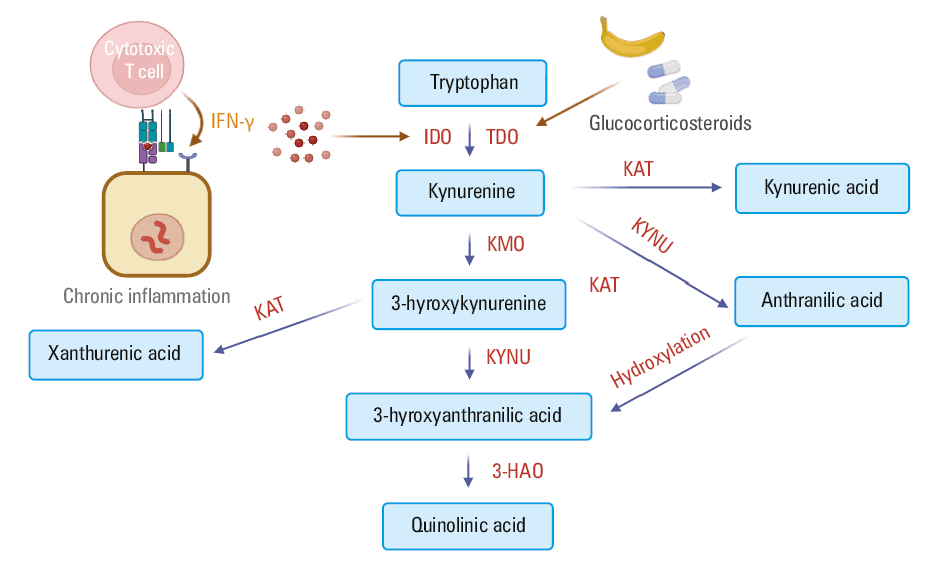
Abbreviations: 3‑HAO, 3‑hydroxyanthranilate oxidase; IDO, indoleamine 2,3- dioxygenase; IFN-γ, interferon-γ; KAT, kynurenine aminotransferase; KMO, kynurenine‐3‐monooxygenase; KYNU, kynureninase; TDO, tryptophan‑2,3‑dioxygenase
Kynurenine is the first stable metabolite of tryptophan degradation. It is formed from tryptophan in an enzymatic reaction involving tryptophan 2,3‑dioxygenase under physiological conditions, whereas indoleamine 2,3‑dioxygenase is primarily responsible for this process under pathological conditions. The activity of indoleamine 2,3‑dioxygenase is triggered by interferon-γ, a cytokine involved in chronic immune activation. This suggests that the chronic inflammation observed in HFpEF may contribute to the production of KP metabolites. Studies have shown that serum concentrations of tryptophan and its metabolites, including kynurenine, kynurenic acid (KYNA), xanthurenic acid (XA), 3‑hydroxykynurenine (3‑HKYN), quinolinic acid (QA), and KP enzymes, correlate with CVD and worse outcomes.8,9,12 Recent research findings indicate that tryptophan and its metabolites are also associated with T2D. Increased levels of kynurenine, XA, and KYNA have been observed in patients with T2D in comparison with nondiabetic individuals.10,11 These findings suggest that overproduction of KP metabolites, triggered by chronic stress or low‑grade inflammation, may contribute to T2D, particularly in middle‑aged women with obesity.13 Recent research shows an association between elevated KP metabolites and T2D, suggesting its potential role in disease pathogenesis.10,11,13 However, whether these metabolites directly cause T2D or are markers of metabolic dysregulation requires further investigation in mechanistic studies and clinical trials.
The aim of this study was to assess alterations in tryptophan metabolism via the KP in patients with HFpEF, and to investigate the correlation between serum biomarkers and laboratory parameters with left ventricle (LV) morphology as determined by transthoracic echocardiography (TTE) in HFpEF patients with and without T2D.
Patients and methods
Patients
From September 2019 to June 2022, participants were recruited from the population of patients with HF treated at the outpatient clinic of the Department of Internal Medicine and Metabolic Diseases at the Medical University of Bialystok. The control group was recruited from among the employees of Medical University of Bialystok and through media advertisements. After considering inclusion and exclusion criteria, as described below, the final study population included 120 patients with HFpEF and 55 healthy controls.
HFpEF was diagnosed according to the guidelines of the European Society of Cardiology‑HF 202114,15 and only patients with a Heart Failure Association (HFA)-PEFF score greater than 4 were included.16 Moreover, patients had to be in the New York Heart Association (NYHA) functional class I–III.
The exclusion criteria for the HFpEF group included: a recent infection within the past month; antidepressant use; chronic kidney disease with glomerular filtration rate (GFR) below 60 ml/min/1.73 m2; active malignancy; resistant hypertension; advanced coronary artery disease (CAD); a history of myocardial infarction, cardiothoracic surgery, or stroke in the 3 months preceding enrolment; obesity with body mass index (BMI) of 40 kg/m2 or greater; and a refusal to participate in the study. The additional exclusion criteria for the T2D subgroup included glycated hemoglobin A1c (HbA1c) levels above 10%. A total of 62 of the 120 patients with HFpEF were confirmed to have CAD, but no patient had reduced systolic ejection fraction, abnormal wall movement, or significant valvular heart disease. Symptoms related to the NYHA functional class, time of T2D diagnosis, and medication regimen were assessed (Table 1). In the subgroup of HFpEF patients with T2D aged under 70 years, the 10‑year risk of CVD was estimated based on Systematic Coronary Risk Evaluation 2‑Diabetes (SCORE2‑Diabetes) involving sex, age at diabetes diagnosis, smoking status, systolic blood pressure, total and high‑density lipoprotein cholesterol (HDL‑C) levels, HbA1c, and estimated GFR values using the ESC CVD Risk Calculation App.17
Variable | Controls (n = 55) | HFpEF (with and without T2D; n = 120) | P value | HFpEF without T2D (n = 60) | HFpEF with T2D (n = 60) | P value | |
Data are presented as mean (SD) or median (interquartile range) unless indicated otherwise. P values were derived from the unpaired t test (Gaussian distribution), the Mann–Whitney test (non‑Gaussian distribution), or the χ2 test (nominal values).
SI conversion factors: to convert glucose to mmol/l, multiply by 0.0555; HDL‑C to mmol/l, by 0.0259; creatinine to µmol/l, by 88.4; GFR to ml/s, by 0.0167; CRP to nmol/l, by 9.524; NT‑proBNP to pmol/l, divide by 8.46.
Abbreviations: ACE, angiotensin‑converting enzyme; ARBs, angiotensin receptor blockers; ARNI, angiotensin receptor‑neprilysin inhibitor; BMI, body mass index; CABG, coronary artery bypass graft surgery; CRP, C‑reactive protein; DBP, diastolic blood pressure; DOAC, direct oral anticoagulant; DPP‑4, dipeptidyl peptidase 4; E/e′, peak early‑diastolic flow velocity to early‑diastolic mitral annular velocity ratio; GFR, glomerular filtration rate; GLP‑1, glucagon‑like peptide 1; HbA1c, glycated hemoglobin A1c; HFpEF, heart failure with preserved ejection fraction; HDL‑C, high‑density lipoprotein cholesterol; HR, heart rate; IVS, interventricular septum; LAVi, left atrial volume index; LVEDD, left ventricular end‑diastolic diameter; LVEDV, left ventricular end‑diastolic volume; LVEF, left ventricular ejection fraction; LVGLS, left ventricular global longitudinal strain; LVMi, left ventricular mass index; MI, myocardial infarction; MRA, mineralocorticoid receptor antagonist; NT‑proBNP, N‑terminal pro–B‑type natriuretic peptide; NYHA, New York Heart Association; PAD, peripheral arterial disease; PWT, posterior wall thickness; RR, reference range; SBP, systolic blood pressure; SCORE2‑Diabetes, Systematic Coronary Risk Evaluation 2‑Diabetes; SGLT2, sodium‑glucose cotransporter‑2; T2D, type 2 diabetes; TSH, thyroid‑stimulating hormone; WHR, waist‑hip ratio | |||||||
Age, y | 64 (58–71) | 66.5 (62–72) | 0.06 | 66.5 (62–72) | 66 (60–71) | 0.58 | |
Women, n (%) | 29 (52.7) | 74 (61.7) | 0.32 | 39 (65) | 35 (58.3) | 0.57 | |
SBP, mm Hg | 126 (114–136) | 136.5 (121–148) | 0.005 | 136 (116–151) | 139 (125–147.5) | 0.35 | |
DBP, mm Hg | 78 (72–85) | 82 (75.25–89) | 0.01 | 82 (74.25–89.75) | 83 (77–89) | 0.61 | |
HR, bpm | 66 (61–72) | 74 (63–87) | 0.004 | 74 (65.25–88) | 73.5 (62–83) | 0.37 | |
LVEF, % | 62 (58–64) | 55 (50–58) | <0.001 | 55 (51.3–58) | 54 (50–58) | 0.39 | |
LVEDD, mm | 47.8 (44.2–51) | 49.95 (46–53.73) | 0.04 | 49 (46–52.68) | 50.05 (46.28–54.2) | 0.16 | |
IVS, mm | 9.3 (8–10) | 10.45 (9.35–12) | <0.001 | 10 (9.08–11.93) | 10.7 (9.5–12.7) | 0.21 | |
PWT, mm | 9.5 (8.3–10.1) | 11 (10–12) | <0.001 | 10.65 (9.925–11.83) | 11 (10.08–12) | 0.12 | |
LVMi, g/m2 | 79.88 (71–88.4) | 107.3 (88.14–121.4) | <0.001 | 106.6 (79.65–118.5) | 108.6 (90.33–124.7) | 0.2 | |
LAVi, ml/m2 | 29.5 (20.1–38) | 38.8 (31.9–48.3) | <0.001 | 38 (31.8–44) | 40.1 (31.95–52.55) | 0.4 | |
E/e′ | 6.4 (4.87–7.86) | 11.02 (9.63–13.16) | <0.001 | 10.79 (9.59–11.59) | 11.69 (9.8–15.64) | 0.17 | |
LVEDV, ml | 103 (92–120.6) | 111 (94.5–135) | >0.99 | 114.6 (94.92–147) | 106.1 (89.75–124.5) | 0.05 | |
LVGLS, % | –20.3 (–21.4 to –19.2) | –16.2 (–17.6 to –14.6) | 0.04 | –16.8 (–17.9 to –15.4) | –15.3 (–17.1 to –13.8) | 0.003 | |
Fasting glucose, mg/dl; RR, 70–100 | 90 (83–95) | 108.5 (95–140) | <0.001 | 97 (88.25–105.8) | 139 (118–168.8) | <0.001 | |
HbA1c, %; RR, 0–6 | – | – | – | – | 7.7 (6.5–9.2) | – | |
HDL‑C, mg/dl; RR >40 | 51 (44–61) | 43.5 (370–53) | 0.001 | 45.5 (38–53.75) | 42.5 (36.25–52.75) | 0.47 | |
CRP, mg/l; RR, 0–10 | 1 (1–1.3) | 2.3 (1.1–3.5) | <0.001 | 1.55 (1–2.71) | 2.75 (1.3–3.88) | 0.02 | |
BMI, kg/m2; RR <25 | 26.18 (4.12) | 30.5 (4.8) | <0.001 | 28.81 (4.31) | 32.2 (4.71) | <0.001 | |
WHR | 0.92 (0.1) | 0.99 (0.09) | <0.001 | 0.98 (0.09) | 1 (0.09) | 0.44 | |
Body fat, % | 30.9 (24–35.8) | 38.7 (34.2–44.2) | <0.001 | 38.2 (31.5–43.3) | 39.1 (34.7–46) | 0.17 | |
Creatinine, mg/dl; RR, 0.73–1.18 | 0.8 (0.71–0.84) | 0.84 (0.71–1.03) | 0.02 | 0.85 (0.75–1.03) | 0.82 (0.7–0.98) | 0.33 | |
GFR, ml/min/1.73 m2; RR >60 | 99 (91–107) | 80.5 (69–96) | <0.001 | 76 (68.5–90.75) | 85.5 (69–106) | 0.13 | |
TSH, mIU/l; RR, 0.35–4.94 | 1.096 (0.917–1.613) | 1 (0.67–1.5) | 0.08 | 0.874 (0.635–1.365) | 1.08 (0.727–1.68) | 0.08 | |
NT‑proBNP, pg/ml; RR, 0–125 | 37.74 (23.56–68) | 470.9 (192.2–955) | <0.001 | 576.9 (195.3–1168) | 445.5 (192.2–892.3) | 0.04 | |
SCORE2‑Diabetes | – | – | – | – | 22.1 (15.45–32.83) | – | |
Comorbidities | |||||||
Atrial fibrillation, n (%) | 0 | 37 (30.8) | <0.001 | 29 (48.3) | 8 (13.3)b | <0.001 | |
Coronary artery disease, n (%) | 0 | 62 (51.7) | <0.001 | 22 (36.4) | 40 (66.7) | 0.002 | |
Hypertension, n (%) | 10 (8.2) | 112 (93.3) | <0.001 | 53 (88.3 | 59 (98.3) | 0.06 | |
PAD, n (%) | 0 | 19 (15.8) | 0.01 | 4 (6.7) | 15 (25) | 0.01 | |
Hyperlipidemia, n (%) | 14 (25.5) | 107 (89.2) | <0.001 | 52 (86.7) | 55 (91.7) | 0.36 | |
NYHA functional class, n (%) | I | 0 | 28 (23.3) | >0.99 | 15 (25) | 13 (21.7) | 0.53 |
II | 0 | 73 (60.8) | 38 (63.3) | 35 (58.3) | |||
III | 0 | 19 (15.8) | 7 (11.7) | 12 (20) | |||
Previous MI, n (%) | 0 | 18 (150) | <0.001 | 8 (13.3) | 10 (16.7) | 0.8 | |
Previous CABG, n (%) | 0 | 5 (4.2) | 0.33 | 2 (3.3) | 3 (5) | >0.99 | |
Previous stroke, n (%) | 0 | 8 (6.7) | 0.06 | 7 (11.7) | 1 (1.7) | 0.06 | |
T2D, n (%) | 0 | 60 (50) | <0.001 | 0 | 60 (100) | <0.001 | |
Diabetes duration, y | – | – | – | – | 10 (5.75–15) | – | |
Smoking status, n (%) | Never | 42 (76.4) | 63 (52.5) | 0.005 | 27 (45) | 36 (60) | 0.009 |
Current | 7 (12.7) | 20 (16.7) | 12 (20) | 8 (13.3) | |||
Former | 6 (10.9) | 37 (30.8) | 21 (35) | 16 (26.7) | |||
Concomitant medications | |||||||
Statins, n (%) | 4 (7.3) | 99 (82.5) | <0.001 | 47 (78.3) | 52 (86.7) | 0.34 | |
β-Blockers, n (%) | 3 (5.5) | 106 (88.3) | <0.001 | 54 (90) | 52 (86.7) | 0.78 | |
Diuretic agents, n (%) | 4 (7.3) | 69 (57.5) | <0.001 | 36 (60) | 33 (55) | 0.71 | |
MRA, n (%) | 0 | 30 (25) | <0.001 | 21 (35) | 9 (15) | 0.02 | |
ACE inhibitor, n (%) | 3 (5.5) | 74 (61.7) | <0.001 | 32 (53.3) | 42 (70) | 0.09 | |
ARB, n (%) | 1 (1.8) | 26 (21.7) | <0.001 | 15 (25) | 11 (18.3) | 0.5 | |
ARNI, n (%) | 0 | 1 (0.8) | >0.99 | 1 (1.7) | 0 | >0.99 | |
Calcium channel inhibitors, n (%) | 2 (3.6) | 48 (40) | <0.001 | 21 (35) | 27 (45) | 0.32 | |
DOAC, n (%) | 0 | 33 (27.5) | <0.001 | 24 (40) | 9 (15) | 0.004 | |
Acetylsalicylic acid, n (%) | 2 (3.6) | 40 (33.3) | <0.001 | 15 (25) | 25 (41.7) | 0.08 | |
Metformin, n (%) | 1 (1.8) | 48 (4) | <0.001 | 7 (11.7) | 41 (68.3) | <0.001 | |
Sulfonylureas, n (%) | 0 | 5 (4.2) | 0.33 | 1 (1.7) | 4 (6.7) | 0.36 | |
Insulin, n (%) | – | 20 (16.7) | <0.001 | – | 20 (33.3) | <0.001 | |
Daily long‑acting insulin dose (units / 24 h) | – | – | – | – | 27 (24–43.5) | – | |
Daily short‑acting insulin dose (units / 24 h) | – | – | – | – | 37 (24–53.5) | – | |
DPP‑4 inhibitors, n (%) | 1 (1.8) | 3 (2.5) | >0.99 | 0 | 3 (5) | 0.24 | |
GLP‑1, n (%) | 0 | 14 (11.7) | 0.006 | 3 (5) | 11 (18.3) | 0.04 | |
SGLT2 inhibitors, n (%) | 0 | 34 (28.3) | <0.001 | 12 (20) | 22 (36.7) | 0.07 | |
The controls did not have HF nor T2D. However, they exhibited certain risk factors, such as well‑controlled arterial hypertension or hypercholesterolemia. All controls had a normal echocardiogram. Written informed consent was obtained from all participants upon recruitment. The Ethics Committee of the Medical University of Bialystok (R‑I‑002/138/2019) approved the study protocol, which fulfilled the principles of the Declaration of Helsinki.
Echocardiography
Each participant underwent transthoracic echocardiography (TTE). The imaging was performed by a single experienced echocardiographer (JL) in accordance with the guidelines of the American Society of Echocardiography and European Association of Cardiovascular Imaging18 using a system with a duplex, 2.5–4 MHz transducer (Aplio 300, Canon Medical Systems, Otawara, Japan). The following were measured in the parasternal long‑axis view: LV end‑diastolic diameter (LVEDD), LV end‑systolic diameter, interventricular septal (IVS) and LV posterior wall thicknesses (PWT), and left atrium (LA) dimension. LV ejection fraction (LVEF) was derived using the biplane Simpson method. LV mass (LVM) was calculated using the Devereux formula and LA volume, by the area–length method, and indexed for body surface area, as LVM index (LVMi) and LA volume index (LAVi). The diastolic function of LV was assessed using early (E) and late (A) diastolic transmitral valve velocity, deceleration time (DT), mean value of early diastolic mitral annular lateral and septal velocity (E′), as well as the ratio of E to mean early‑diastolic mitral annular velocity (E/e′). Two‑dimensional speckle tracking echocardiography was performed to obtain averaged LV global longitudinal strain (LVGLS) from apical 4-, 2-, and 3‑chamber views, respectively. Participants with poor image quality were excluded from the study.
Anthropometric measurements
All assessments were conducted following an overnight fast. BMI was calculated as body weight divided by height squared (kg/m2). Waist circumference was measured at the narrowest point between the chest and the iliac crest while standing. Hip circumference was measured at the widest point around the hips. Waist‑to‑hip ratio was calculated accordingly. Body fat percentage was determined using bioelectrical impedance analysis with the InBody 570 device (InBody Co., Ltd., Cerritos, California, United States).
Blood sampling and assays
After an overnight fast, venous blood samples were drawn into syringes containing a clotting activator (serum). The concentrations of glucose, HbA1c, HDL‑C, creatinine, C‑peptide, and thyroid stimulating hormone were assessed as described previously.19 To assess the concentration of N‑terminal pro–B‑type natriuretic peptide (NT‑proBNP), the Roche Cobas test (Roche NT‑proBNP, Roche 0482464190) was used on the Cobas e411 (Roche, Basel, Switzerland) analyzer according to the manufacturer’s instructions.
Tryptophan, kynurenine, KYNA, 3‑HAA, and AA concentrations were determined using high‑performance liquid chromatography as described previously.20 The QA concentration (orb781977, Biorbyt, Cambridge, United Kingdom) was measured by enzyme‑linked immunosorbent assay following the kit manufacturer’s instructions, using a microplate reader (Synergy HTX, BioTek, Winooski, Vermont, United States). The minimum detectable concentration for QA was 1.57 ng/ml.
Statistical analysis
The normality of variable distribution was tested with the Shapiro‑Wilk test. Non‑Gaussian data were presented as median (interquartile range [IQR]). For group comparisons, the 2‑tailed Mann–Whitney test was used for comparing 2 groups, and the 2‑tailed Kruskal–Wallis test was used for comparing more than 2 groups. Post hoc comparisons following the Kruskal–Wallis test were performed using the Dunn–Bonferroni test to adjust for multiple comparisons. The 2‑sided χ2 test was employed for the comparison of nominal variables. Correlations between variables were assessed using the Spearman test. A P value below 0.05 was considered significant. A multivariable linear regression model was used to analyze the relationships between the dependent variable and multiple independent variables. The data analyses were performed using Statistica (Statistica 13.3, TIBCO Software, Inc., Palo Alto, California, United States) and GraphPad Prism 10 software (GraphPad, Inc., La Jolla, California, United States).
Data and resource availability
The data sets generated and / or analyzed in the present study are accessible from the corresponding author upon request.
Results
Clinical characteristics of the study population are summarized in Table 1. A total of 60 patients with HFpEF had T2D and 60 were deemed diabetes‑free. The HFpEF and control groups as well as HFpEF subgroups were homogenous with respect to age. There were more women in the HFpEF group (62%), as compared with the control group (52.7%). The patients with HFpEF showed higher systolic blood pressure, diastolic blood pressure, and heart rate. Additionally, they had elevated serum levels of fasting glucose, HDL‑C, creatinine, and NT‑proBNP, along with higher BMI, waist‑to‑hip ratio, and body fat percentage, as compared with the controls. Hypertension (93.3% vs 8.2%; P <0.001) and hyperlipidemia (89.2% vs 25.5%; P <0.001) were more prevalent among the patients with HFpEF. Controls were more likely to be nonsmokers (76.4% vs 52.5%; P = 0.005). In the HFpEF group, the prevalence of coronary artery disease (CAD) was 51%, and the prevalence of atrial fibrillation was 30.8%. Both of these values were higher than those observed in the control group. A total of 60.8% of the patients with HFpEF were in NYHA class II, and 15.8% were in NYHA class III. The patients with HFpEF had a greater number of concomitant medications used, including angiotensin‑converting enzyme inhibitors, angiotensin receptor blockers, β-blockers, statins, and sodium‑glucose cotransporter‑2 inhibitors (all P <0.001) (Table 1).
The influence of type 2 diabetes on the clinical characteristics of patients with heart failure with preserved ejection fraction
The median (IQR) duration of T2D was 10 (6–15) years. Except for fasting glucose levels (P <0.001), no differences were noted in blood pressure, heart rate, or most laboratory findings between the HFpEF subgroups. The patients with T2D and HFpEF maintained good glycemic control with a median (IQR) HbA1c concentration of 7.7% (6.5%–9.15%). In comparison with the HFpEF patients without T2D, those with T2D had a higher BMI (28.81 vs 32.2 kg/m2; P <0.001) and greater prevalence of CAD (36.4% vs 66.7%; P = 0.002) and peripheral arterial disease (6.7% vs 25%; P = 0.01), but lower prevalence of atrial fibrillation (48.3% vs 13.3%; P <0.001). The prevalence of NYHA functional classes I–III was similar between the HFpEF patients without T2D and with T2D. Medication usage did not differ except for usage of sodium‑glucose cotransporter‑2 inhibitors or glucagon‑like peptide 1 analogs in the patients with T2D. Additionally, 20 patients with HFpEF and T2D were taking insulin (Table 1).
Echocardiographic characteristics
Echocardiographic characteristics of the study population are presented in Table 1. The participants with HFpEF presented a lower ejection fraction (LVEF) than the control group (P <0.001). LVEDD (P = 0.04), LVGLS (P = 0.04), IVS, PWT, LVMi, and LAVi (all P <0.001) were greater in the HFpEF group than in the controls. Moreover, these patients had significantly worse LV diastolic function (lower E/e′) and lower absolute values of LVGLS than the controls.
Within the group of patients with HFpEF, the cohort with T2D did not show any significant differences in the morphology of the LV or LA; also, the parameters of LV diastolic function were comparable in both subgroups (HFpEF with and without T2D). LVGLS was significantly lower in the HFpEF with T2D subgroup than in the HFpEF without T2D subgroup.
Serum tryptophan metabolism in patients with heart failure with preserved ejection fraction and concomitant type 2 diabetes
The concentrations of serum 3‑HKYN, tryptophan, kynurenine, KYNA, AA, and 3‑HAA were significantly greater in the HFpEF group than in the control group, while the QA concentration was significantly lower. In HF and T2D, these ratios reflect critical metabolic and biochemical pathways influencing immune modulation, oxidative stress, and neuroinflammation. An elevated 3‑HKYN to kynurenine ratio indicates increased activity within the kynurenine pathway, potentially exacerbating inflammatory responses. The AA to kynurenine and QA to 3‑HAA ratios play known roles in neuroprotective mechanisms and neurotoxicity, respectively, which are crucial for understanding the neurological complications associated with these chronic conditions. The 3‑HKYN to kynurenine, AA to kynurenine, and QA to 3‑HAA ratios in the HFpEF group were significantly lower than those in the control group. However, the kynurenine to tryptophan, 3‑HAA to 3‑HKYN, and 3‑HAA to AA ratios were significantly greater than those in the control group. Similar trends were seen in the patients with HFpEF and concomitant T2D, with increased tryptophan (P = 0.001), kynurenine, 3‑HKYN, and AA levels (all P <0.001) and decreased QA levels (P = 0.003), as compared with the controls. In comparison with those with HFpEF without T2D, the patients with HFpEF and T2D showed significantly increased concentrations of tryptophan, kynurenine, and AA, and significantly decreased concentrations of 3‑HKYN and QA.
The ratios of kynurenine to tryptophan, 3‑HAA to 3‑HKYN, and 3‑HAA to AA were higher in those with HFpEF and T2D than in the controls (P = 0.005; P <0.001; P <0.001 respectively). The 3‑HKYN to kynurenine and QA to 3‑HAA ratios were significantly lower in the whole study group than in the controls. In the group of patients with HFpEF and T2D, the AA to kynurenine and 3‑HAA to 3‑HKYN ratios were significantly increased, and the KYNA to kynurenine, 3‑HKYN to kynurenine, 3‑HAA to AA, and QA to 3‑HAA ratios were significantly decreased, as compared with patients with HFpEF but without T2D (Table 2).
Variable | Controls (n = 55) | HFpEF (with and without T2D; n = 120) | P value | HFpEF without T2D (n = 60) | HFpEF with T2D (n = 60) | P value |
Data are presented as median (interquartile range). P values were derived from the Mann–Whitney test.
Abbreviations: AA, anthranilic acid; 3‑HAA, 3‑hydroxyanthranilic acid; 3‑HKYN, 3‑hydroxykynurenine; KYN, kynurenine; KYNA, kynurenic acid; QA, quinolinic acid; TRP, tryptophan; others, see Table 1 | ||||||
TRP, µmol/l | 35.43 (31.52–42.63) | 50.42 (43.8–57.56) | <0.001 | 46.1 (40.48–51.83) | 54.32 (46.08–64.94) | 0.001 |
KYN, µmol/l | 1.97 (1.69–2.32) | 3.08 (2.59–3.43) | <0.001 | 2.78 (2.32–3.12) | 3.43 (3.08–4.19) | <0.001 |
KYNA, nmol/l | 24.7 (18.77–31.62) | 33.6 (26.68–42.49) | <0.001 | 33.6 (26.93–1.25) | 34.58 (25.94–43.48) | 0.63 |
3‑HKYN, nmol/l | 26.79 (19.64–32.14) | 30.83 (23.87–41.96) | 0.003 | 36.35 (28.37–48.32) | 27.8 (20.62–37.21) | <0.001 |
AA, nmol/l | 41.35 (29.14–64.85) | 47.93 (35.95–71.19) | <0.001 | 36.65 (28.43–46.05) | 64.85 (49.34–93.75) | <0.001 |
3‑HAA, nmol/l | 56.6 (47.17–73.11) | 99.06 (82.55–123.4) | <0.001 | 99.06 (84.91–120.3) | 100.2 (80.19–127.4) | 0.71 |
QA, nmol/l | 121.9 (79.97–172.2) | 75.13 (54.83–115.2) | <0.001 | 91.4 (61.68–131) | 63.27 (45.01–93.76) | 0.003 |
KYN/TRP ratio | 0.057 (0.048–0.066) | 0.061 (0.053–0.073) | 0.02 | 0.059 (0.052–0.067) | 0.064 (0.056–0.08) | 0.005 |
KYNA/KYN ratio | 11.5 (8.45–16.17) | 11.14 (8.42–15.15) | 0.36 | 11.92 (9.94–16) | 9.87 (6.61–13.46) | 0.02 |
3‑HKYN/KYN ratio | 13.5 (9.5–17.8) | 10.2 (7.12–14.32) | 0.008 | 13.72 (9.54–17.29) | 7.397 (5.9–10.21) | <0.001 |
AA/KYN ratio | 20.44 (15.08–31.79) | 16.24 (11.76–21.09) | <0.001 | 12.95 (10.44–18.22) | 18.14 (13.88–26.26) | <0.001 |
3‑HAA/3‑HKYN ratio | 2.32 (1.78–3.12) | 3.164 (2.51–4.55) | <0.001 | 2.83 (2.22–3.56) | 3.741 (2.98–5.14) | 0.02 |
3‑HAA/AA ratio | 1.52 (0.87–2.24) | 2.04 (1.38–2.91) | <0.001 | 2.7 (2.04–3.36) | 1.53 (1.1–2.05) | <0.001 |
QA/3‑HAA ratio | 1.92 (0.99–3.54) | 0.7 (0.51–1.13) | <0.001 | 0.85 (0.67–1.3) | 0.6 (0.35–0.91) | 0.002 |
In the patients with HFpEF and T2D whose 10‑year risk of CVD was greater than 20% as calculated by SCORE2‑Diabetes, the 3‑HKYN level was significantly higher than in the 10% to 20% risk group, and the 3‑HAA level was significantly higher than in the 5% to 10% risk group. The QA level was significantly higher in the 10% to 20% group than in the lowest‑risk group (Table 3, Figure 2).
Variable | SCORE2‑Diabetes | ||
5% to <10% (n = 7) | 10% to <20% (n = 18) | ≥20% (n = 35) | |
Data are presented as median (interquartile range). P values were derived from the Kruskal–Wallis test.
a P = 0.02 (≥20% vs 10%–20%)
b P = 0.01 (≥20% vs 5%–10%)
c P = 0.02 (10–20% vs 5%–10%)
d P = 0.04 (≥20% vs 5%–10%)
| |||
TRP, µmol/l | 66.62 (48.65–69.93) | 56.11 (47.96–64.26) | 50.78 (44.39–60.78) |
KYN, µmol/l | 3.26 (2.39–3.88) | 3.39 (2.95–3.94) | 3.86 (3.26–4.3) |
3‑HKYN, nmol/l | 25.11 (23.76–40.8) | 23.99 (18.72–27.69) | 29.59 (23.31–41.25)a |
KYNA, nmol/l | 31.62 (17.79–37.55) | 32.11 (26.19–42.74) | 36.56 (25.69–63.24) |
AA, nmol/l | 55.45 (46.05–78.95) | 66.26 (46.99–85.29) | 68.61 (53.57–111.8) |
3‑HAA, nmol/l | 73.11 (61.32–89.62) | 97.88 (76.65–111.4) | 113.2 (87.26–160.4)b |
QA, nmol/l | 42.48 (30.70–53.85) | 74.89 (49.64–118.3)c | 64.61 (48.99–88.48) |
SBP, mm Hg | 131 (118–163) | 137.0 (124.8–141.3) | 141 (125–150) |
DBP, mm Hg | 86 (80–88) | 87 (76.5–90) | 81 (75–87) |
HR, bpm | 73 (65.5–80.5) | 67.0 (63.5–78.25) | 63.5 (59–71.5) |
LVEF, % | 55.5 (53.23–60.25) | 53.5 (50–58) | 53.8 (50–56) |
LVEDD, mm | 46.8 (46–53.5) | 50.05 (46.83–56.1) | 50.4 (46.5–54.4) |
IVS, mm | 9.5 (8.7–11) | 10.75 (8.95–13) | 10.9 (10–12.78) |
PWT, mm | 10.8 (10.5–12) | 11.15 (9.8–13) | 11 (10–12) |
LVMi, g/m2 | 90.34 (80.63–113) | 116 (95.7–129.7) | 107.7 (90.73–126.4) |
LAVi, ml/m2 | 33 (18.6–38.3) | 39.5 (32.58–48.45) | 41.1 (33.45–61)d |
E/e′ | 9.82 (7.9–12.18) | 11.71 (9.43–13.6) | 12.26 (10.47–16.75) |
NT‑proBNP, pg/ml | 189.6 (151.7–356.6) | 210.2 (159–356.1) | 198 (154.6–494.6) |
LVGLS, % | –17.5 (–18.4 to –16) | –14.8 (–16.7 to –12.85) | –14.9 (–16.25 to –13.8) |
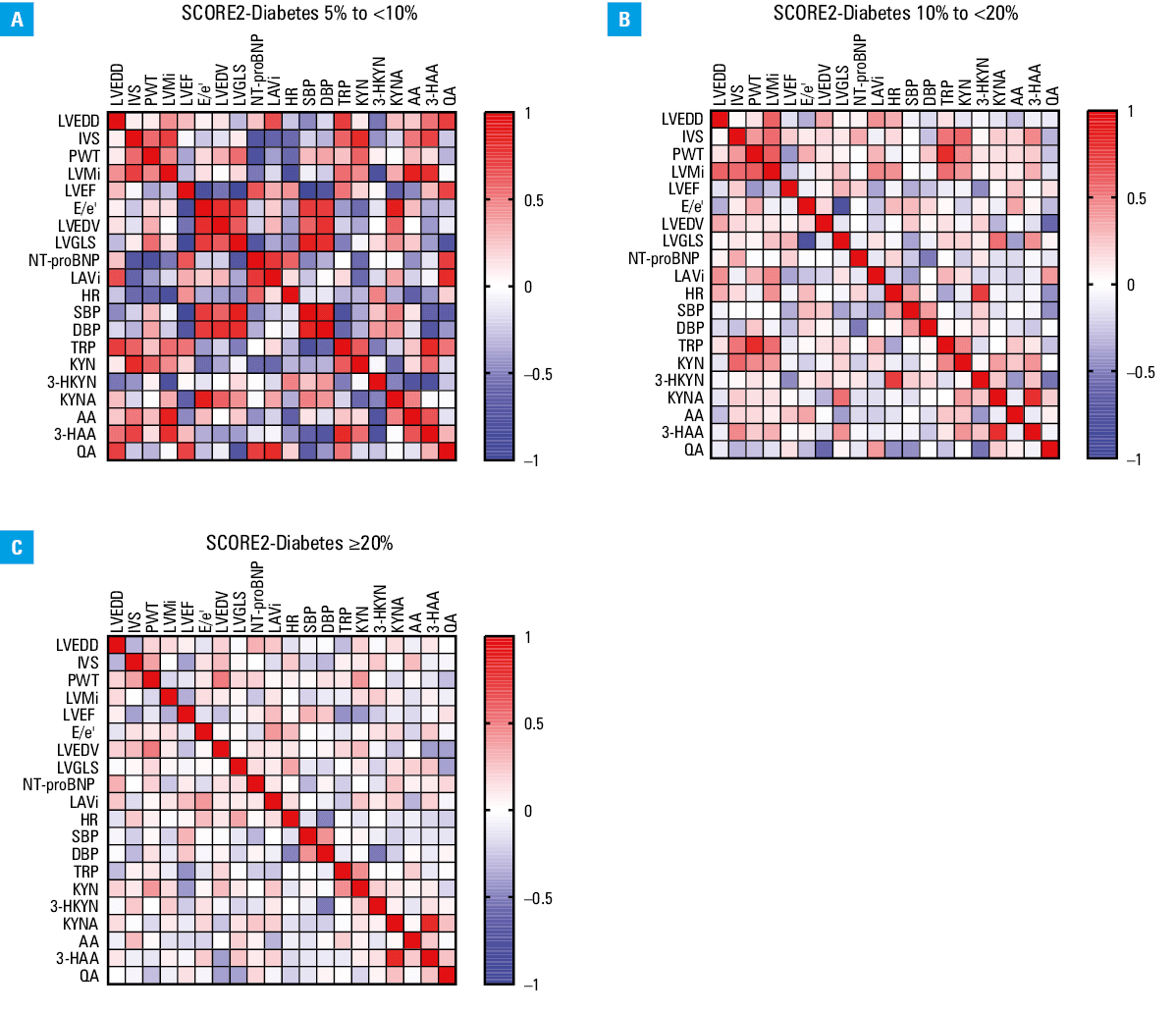
Abbreviations: KYN, kynurenine; KYNA, kynurenic acid; QA, quinolinic acid; TRP, tryptophan; others, see Tables 1 and 2
A multivariable linear regression analysis was conducted to examine the impact of kynurenines levels on echocardiographic parameters in the patients with HFpEF and T2D. Following the analysis of all echocardiographic parameters, LAVi (a robust predictor of adverse cardiovascular events) was selected as the dependent variable, as indicated by the highest R2 value. The linear regression demonstrated a moderate effect of the independent variables on LAVi (R2 = 0.2399) (Table 4).
Independent variables | Dependent variable (LAVi) | ||||
Estimate | Standard error | 95% CI (asymptotic) | P value | Variance inflation factor (VIF) | |
Intercept | 33.26 | 14.09 | 4.905–61.62 | 0.02 | 1.825 |
TRP | 0.0 002 816 | 0.174 | –0.3499 to 0.3504 | 0.99 | 2.788 |
KYN | –2.963 | 2.491 | –7.977 to 2.05 | 0.24 | 2.645 |
KYN/TRP | 330.9 | 145.3 | 38.37–623.5 | 0.03 | 1.142 |
3‑HKYN | –0.01 501 | 0.0872 | –0.1905 to 0.1605 | 0.86 | 3.187 |
KYNA | –0.04 095 | 0.124 | –0.2906 to 0.2087 | 0.74 | 1.398 |
AA | –0.03 583 | 0.04 026 | –0.1169 to 0.04 522 | 0.38 | 1.666 |
AA/KYN | –0.05 716 | 0.1495 | –0.3581 to 0.2437 | 0.7 | 3.243 |
3‑HAA | –0.01 711 | 0.02 788 | –0.07 323 to 0.03 902 | 0.54 | 1.252 |
3‑HAA/AA | –0.9224 | 0.7702 | –2.473 to 0.628 | 0.24 | 1.441 |
3‑HAA/3‑HKYN | 0.09 349 | 0.1191 | –0.1462 to 0.3332 | 0.44 | 4.151 |
QA | 0.1091 | 0.08 219 | –0.0564 to 0.2745 | 0.19 | 3.911 |
QA/3‑HAA | –2.793 | 6.245 | –15.36 to 9.778 | 0.66 | 1.825 |
R2 | 0.2399 | ||||
Correlations between tryptophan metabolites and metabolic and echocardiographic parameters in patients with heart failure with preserved ejection fraction and concomitant type 2 diabetes
In the group with HFpEF only, a positive correlation was observed between the KYNA level and PWT (R = 0.353; P = 0.006) and between AA and E/e′ (R = 0.334; P = 0.02) (Figure 3, Supplementary material, Table S1).
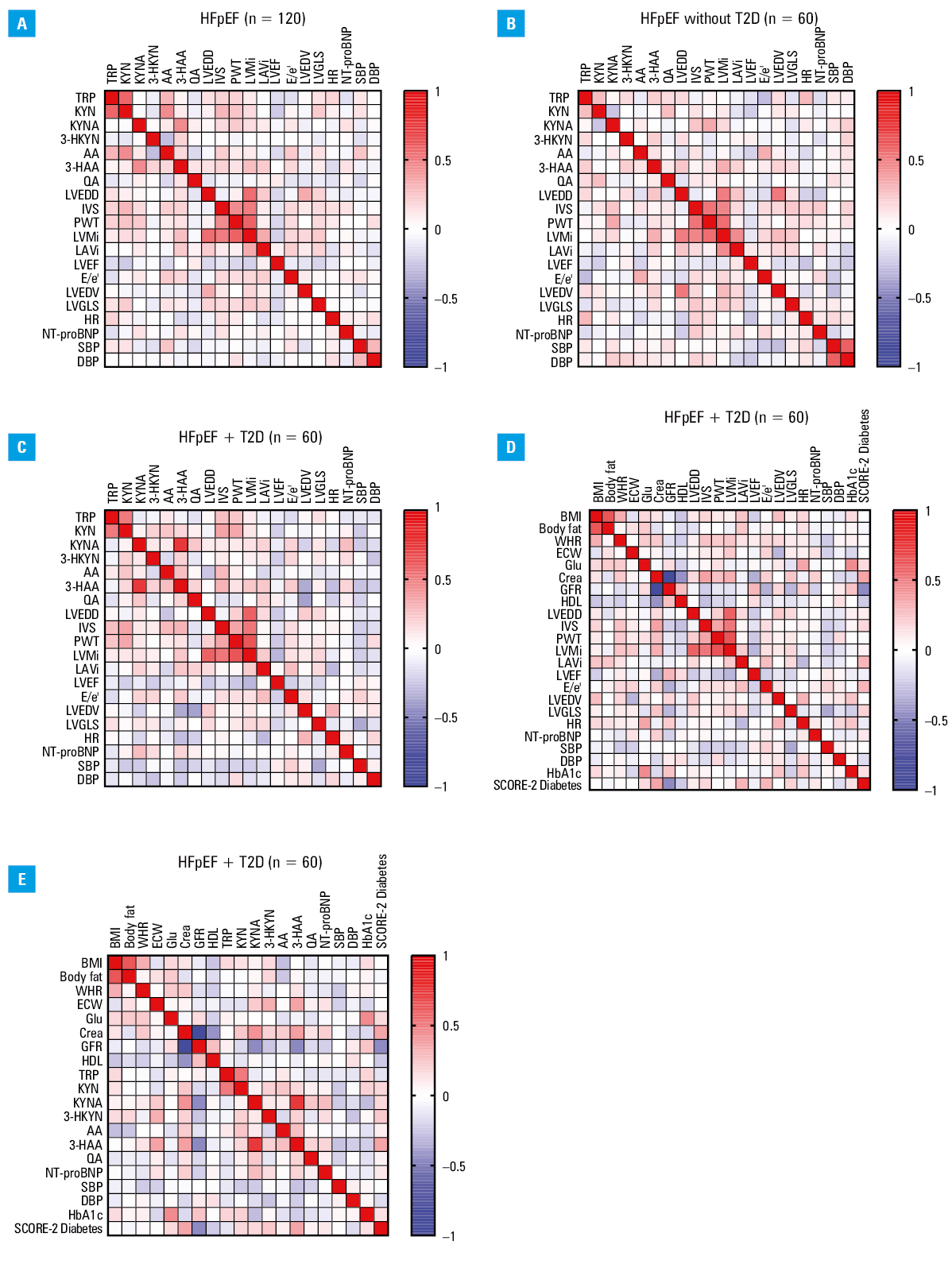
Abbreviations: Crea, creatine; ECW, extracellular water; Glu, glucose; others, see Tables 1, 2 and Figure 2
In the patients with HFpEF and T2D, a positive correlation was noted between the concentration of 3‑HAA and IVS (R = 0.317; P = 0.01) and a negative correlation between 3‑HAA and LVEDV (R = –0.361; P = 0.005). A negative correlation was also observed between QA and LVEDV (R = –0.385; P = 0.002) (Figure 3; Supplementary material, Table S1).
Discussion
Our results demonstrate that: 1) the concentrations of serum tryptophan, kynurenine, KYNA, 3‑HKYN, AA, and 3‑HAA were higher in the patients with HFpEF than in the control group; 2) serum KP metabolite concentrations were higher in the patients with HFpEF and T2D than in those without T2D; 3) in T2D, the levels of kynurenines (except for QA) increased with greater CVD risk as calculated by SCORE2‑Diabetes; levels of QA were lower in the patients with HFpEF and T2D than in those without T2D; the control group had the highest QA levels; and 4) serum kynurenine concentrations were correlated with changes in LV and LA volumes.
In HUSK (the Hordaland Health Study21), kynurenines were identified as a risk factor for all‑cause mortality, with a particularly strong association observed with CVD mortality. In another study, the levels of KP metabolites were found to be significantly and strongly correlated with coronary events, as well as all‑cause and cardiovascular mortality in patients with suspected stable angina pectoris on elective coronary angiography.9 Konishi et al22 reported elevated kynurenine levels in patients with HF with reduced ejection fraction (HFrEF) and HFpEF. Additionally, kynurenine was proposed as a novel and valuable biomarker of chronic HFrEF, particularly in predicting 6‑month follow‑up mortality and reflecting exercise capacity.23 Hage et al24 found increased kynurenine levels in patients with new‑onset HFpEF, suggesting that it may serve as a regulator of the immune response, particularly in patients with diabetes and kidney dysfunction. Additionally, it may serve as a trigger of HFpEF as a consequence of systemic inflammation.24 Our findings confirm higher kynurenine levels in patients with HFpEF. Furthermore, these levels were higher in the patients with HFpEF and T2D than in those without T2D. Similarly, Bekfani et al7 showed higher kynurenine concentrations in patients with HF, especially HFpEF and impaired muscle endurance. Additionally, they found a strong correlation between inflammatory factors, such as growth differentiation factor 15, and kynurenine in patients with HF and reduced muscle endurance. The authors proposed that under conditions of inflammatory or oxidative stress, tryptophan metabolism occurs in many cells.
We showed that kynurenine was not the only marker that was elevated—tryptophan and other KP metabolites (except for QA) were higher in the patients with HFpEF than in the control group. Moreover, in the HFpEF with T2D cohort, these markers (except for QA and 3‑HKYN) were higher than in the cohort without T2D. Observed changes in tryptophan metabolites may contribute to a shift in KP metabolism toward the intensification of AA synthesis.25
Lund et al6 found that symptomatic patients with HF with LVEF of 50% or less determined on ventriculography had higher levels of kynurenine, 3‑HKYN, QA, and KTR as well as a higher 3‑HKYN to XA ratio, as compared with patients with normal LVEF with CAD, as well as with patients without coronary heart disease with normal systolic function. Moreover, they found that increases in QA, 3‑HKYN, 3‑HKYN to XA ratio, and KTR were associated with higher mortality in patients with HF. Another study on chronic HF mentioned above23 showed that in a cohort of patients with chronic HF with reduced LVEF with an implantable cardioverter–defibrillator, the levels of kynurenine and NT‑proBNP increased with the NYHA class, but only kynurenine was a mortality predictor within a 6‑month follow‑up.
We found that the cohort with HFpEF and T2D had higher concentrations of kynurenine in comparison with the healthy controls; furthermore, these levels were also higher in comparison with the patients with HFpEF but without T2D. Also in the cohort of HFpEF with T2D, kynurenine levels rose along with the CVD risk as assessed by the SCORE2‑Diabetes.
The observed increase in tryptophan levels in the patients with HFpEF, particularly those with T2D, may be attributed to distinctive alterations in the gut microbiome of patients with HF and diabetes. These changes have the potential to disrupt immune homeostasis and metabolism, ultimately leading to HF. It has been shown that dysbiosis, which is characterized by a shift in bacterial catabolism toward proteolytic fermentation, results in the production of indole‑derived metabolites and tryptophan. Previous research has indicated that these metabolites are associated with cardiotoxicity and vascular inflammation.26
Pioppi et al27 assessed tryptophan content in the cardiac tissue in an experimental model of HFpEF and hypothesized that tryptophan, an essential amino acid, may play a key role in myocardial contraction and stiffness. Although our analysis was not performed directly on the cardiac tissue, we described for the first time the profile of serum levels of KP metabolites in patients with HFpEF with regard to the presence or absence of concomitant T2D.
The important and novel finding of the present study was a lower QA concentration in the HFpEF group, as compared with the control group. This tendency was even more pronounced in the patients with T2D and HFpEF than in those without T2D. It has been shown that QA is converted to nicotinic acid mononucleotide by quinoline phosphoribosyl‑transferase, which commits the pathway to the biosynthesis of the oxidized nicotinamide adenine dinucleotide (NAD+).28 Our finding might be explained by an imbalance in redox homeostasis in HFpEF, which was even greater in T2D in response to high levels of glucose and overnutrition. However, myocardial NAD+ levels were found to be decreased in experimental models of HF because of mitochondrial dysfunction, metabolic remodeling, and inflammation.29 It has even been suggested that regulating NAD homeostasis by NAD precursor supplementation could have therapeutic efficacy in improving myocardial bioenergetics and function.29 However, in contrast to our findings, Dschietzig et al23 showed that patients with HFrEF had increased QA levels.
The most important and novel finding of the present study is the association between serum KP metabolite levels and LV remodeling and diastolic dysfunction of LV. We found a positive correlation between tryptophan concentrations and IVS thickness in the patients with HFpEF and T2D. Furthermore, kynurenine levels positively correlated with the LV wall diameters (IVS and PTW) in the patients with HFpEF. This is in line with a study by Shi et al,30 in which the plasma kynurenine concentration was elevated in children with LV pressure overload. The same was observed in a mouse model. They found that plasma kynurenine concentrations correlated with cardiac remodeling as assessed by posterior wall thickness, LVMi, relative wall thickness, and LVEF. The authors explained that kynurenine was responsible for the upregulation of genes responsible for hypertrophy and fibrosis in the myocardium through the activation of aryl hydrocarbon receptors (AHRs). In addition, fecal microbiota transplantation demonstrated a relationship between the altered gut microbiota and kynurenine levels. The authors further observed that reconstruction of the gut microbiota reduced kynurenine levels and alleviated ventricular remodeling.30 In our studies, apart from the increase in the kynurenine concentration, we also demonstrated a surge in another AHR agonist, KYNA. Literature search revealed that AHR ligands improve adverse cardiac remodeling in the early phase of pressure overload in the murine heart.31 Conversely, AHR activation may also favor activation of the transcription factor nuclear factor erythroid 2–related factor 2, which may diminish cardiac adaptation and lead to cardiac dysfunction.32
We also observed that AA and 3‑HAA positively correlated with the IVS wall thickness. AA negatively correlated with LVEDD and 3‑HAA negatively correlated with LVEDV. All those echocardiographic parameters are connected with the LV concentric remodeling in HFpEF. Our findings are consistent with those of an experimental study that demonstrated a correlation between elevated plasma levels of KYNA and 3‑HAA and reduced ejection fraction and stroke volume after cardiopulmonary resuscitation.33 This all supports a theory of mitochondrial dysfunction in HFpEF, especially with concomitant T2D. The known increase in blood kynurenine concentration in patients with ischemic heart disease or essential hypertension may suggest involvement of tryptophan metabolites in impaired cardiac mitochondrial function, for example, in cardiomyopathy.34 On the other hand, we showed an increase in kynurenine levels and, at the same time, a decrease in QA levels. Further analysis showed a negative association of QA with PWT and LVEDV in HFpEF and T2D. We can hypothesize that the disturbance of mitochondrial function observed in diabetes may result from a decrease in the concentration of the NAD+ precursor, that is, QA. The PWT value was higher in the patients with HFpEF than in the controls, but there were no differences between the cohort of HFpEF with and without diabetes. It has been proven that 70% of the heart’s NAD+ pool is located in the mitochondria.35 The changes observed in our studies may suggest activation of a compensatory mechanism aimed at increasing the production of NAD+ when its precursor concentrations are decreased. This might reveal that mechanisms engaged in the production of cardiac energy and reactive oxygen species are insufficient, which leads to HF. However, these findings need to be confirmed in future prospective studies in a larger population of patients with HFpEF.
Limitations
The major limitation of our study was a relatively small number of participants. Consequently, we could not evaluate the impact of pharmacotherapy on the assessed parameters and the relationship with, for example, BMI or HbA1c. Moreover, the assessment of immune system stimulation was limited to the analysis of C‑reactive protein concentrations. Finally, the exact influence of KP metabolites should be investigated simultaneously in the myocardial tissue and peripheral blood samples.
Conclusions
Our findings demonstrate a possible relationship between HFpEF and alterations in tryptophan metabolism via the KP in patients with and without T2D. This study warrants further assessment of the impact of kynurenines on HFpEF, especially in patients with diabetes.
- Dunlay SM, Roger VL, Redfield MM. Epidemiology of heart failure with preserved ejection fraction. Nat Rev Cardiol. 2017; 14: 591‑602. | Crossref
- Cuijpers I, Simmonds SJ, van Bilsen M, et al. Microvascular and lymphatic dysfunction in HFpEF and its associated comorbidities. Basic Res Cardiol. 2020; 115: 39. | Crossref
- Adamo L, Rocha‑Resende C, Prabhu SD, Mann DL. Reappraising the role of inflammation in heart failure. Nat Rev Cardiol. 2020; 17: 269‑285. | Crossref
- Yap J, Tay WT, Teng T‑HK, et al. Association of diabetes mellitus on cardiac remodeling, quality of life, and clinical outcomes in heart failure with reduced and preserved ejection fraction. J Am Heart Assoc. 2019; 8: e013114. | Crossref
- Kristensen SL, Jhund PS, Lee MMY, et al. Prevalence of prediabetes and undiagnosed diabetes in patients with HFpEF and HFrEF and associated clinical outcomes. Cardiovasc Drugs Ther. 2017; 31: 545‑549. | Crossref
SUPPLEMENTARY MATERIAL
ARTICLE INFORMATION