
 CC BY 4.0
To the editor
Conferences marking the celebration of the World Thrombosis Day (WTD) have been organized annually since 2014, when this initiative was established by the International Society on Thrombosis and Hemostasis.1 Since then, it has been celebrated all over the world on October 13, the birthday anniversary of an eminent German physician, Rudolf Virchow (Oct 13, 1821–Sep 5, 1902), who, in 1856, introduced his triad of factors leading to thrombosis and increased awareness of this dangerous condition.
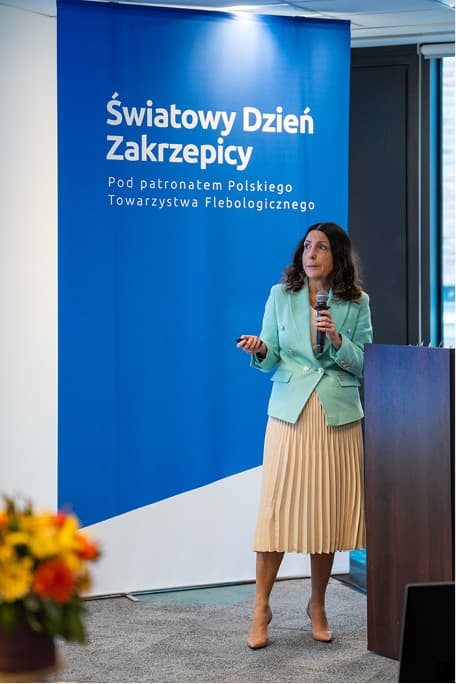
On October 12, 2024, the Scientific WTD Conference was held in Warsaw, Poland in a hybrid form. The Polish Society of Phlebology took patronage over the Conference. The Group for Hemostasis of the Polish Society of Hematology and Transfusion Medicine actively participated in this event (in 2014–2022 the Group organized their own WTD meetings entitled: “Venous thromboembolism: an underestimated problem”). Professor Krystyna Zawilska (1937–2019) was the initiator of this event in Poland, and this initiative was successfully continued also after her death.2,3
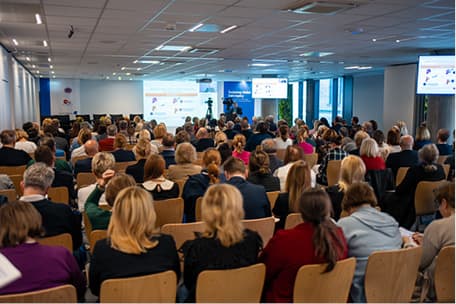
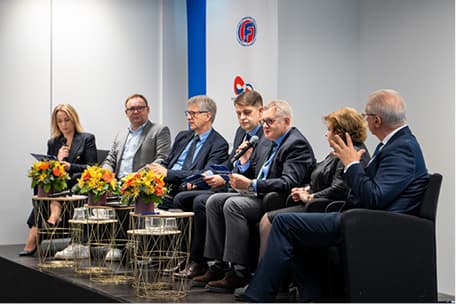
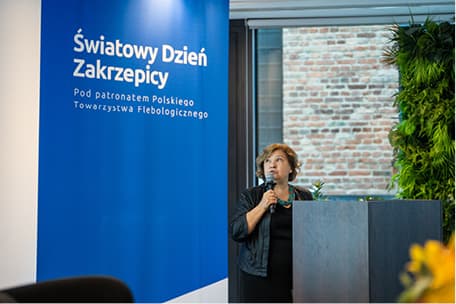
The Conference attracted a total of 487 participants—280 online and 207 on‑site (Figures 1, 2, 3, 4).
Thrombosis, as a truly multidisciplinary issue, is still underestimated and mistreated by physicians of various specialties. Arterial and venous thromboembolic events account for the 3 most common causes of cardiovascular death, that is, heart attack, stroke, and venous thromboembolism (VTE).
During the Conference, a multidisciplinary approach to a wide spectrum of issues related to risk factors, prevention, and therapy of VTE was presented and discussed by eminent Polish specialists in angiology, vascular surgery, hematology, cardiology, pulmonology, gynecology, and others. All lectures are available on the educational platform run by Medycyna Praktyczna.4
In particular, the lectures were focused on recent data on epidemiology and risk factors for VTE, anticoagulation strategies, the role of interventional treatment and vascular surgery in VTE (especially high‑risk pulmonary embolism), prophylaxis of post‑thrombotic syndrome as well as thrombosis in children and in the elderly with multiple comorbidities. The difficult decisions regarding parenteral and oral anticoagulation in patients with bleeding and malignancy as well as in pregnant women have been discussed based on recent guidelines and expert opinions. The newest Polish recommendations for the management of VTE in medical and surgical patients, the much needed update of the 2012 guidelines,5 have been announced. Given the recent advances in the field, including widespread use of direct oral anticoagulants and new technologies to treat high‑risk thrombosis, new practical recommendations have a huge potential for improving the care of patients suspected of and diagnosed with VTE at the level of general practitioners and hospital specialists. How to effectively prevent thrombosis remains a challenge that needs newer approaches and active patient involvement. The WTD is a great opportunity also in Poland to remind all of us that thrombosis is preventable but could be lethal if not properly diagnosed and treated. Increased awareness of VTE supported by knowledge on therapeutic advances among health care providers saves lives, and further efforts are needed in this regard all over the world.
- ISTH Steering Committee for World Thrombosis Day. Thrombosis: a major contributor to the global disease burden. J Thromb Haemost. 2014; 12: 1580‑1590. | Crossref
- Podolak‑Dawidziak M, Łętowska M, Windyga J. World Thrombosis Day in Poland, October 15, 2022. Pol Arch Intern Med. 2022; 132: 16361. | Crossref
- Podolak‑Dawidziak M, Łętowska M, Windyga J. World Thrombosis Day in Poland, October 13, 2023. Pol Arch Intern Med. 2023; 133: 16598. | Crossref
- Medycyna Praktyczna website. World Thrombosis Day 2024 [in Polish]. https://www.mp.pl/konferencje/zakrzepica/2024/. Accessed October 21, 2024.
- Zawilska K, Bała MM, Błędowski P, et al. Polish guidelines for the prevention and treatment of venous thromboembolism. 2012 update. Pol Arch Med Wewn. 2012; 122 Suppl 2: 1‑76.
ARTICLE INFORMATION