
Novel factors affecting fibrin clot formation and their clinical implications
Key words: antithrombin, factor XI, fibrin, lipopolysaccharide, neutrophil extracellular traps

 CC BY 4.0
Novel factors affecting fibrin clot formation and their clinical implications
CC BY 4.0
Fibrin formation is pivotal in hemostasis, serving as a temporary barrier to blood loss following vascular injury, while in thrombosis this process is involved in thrombus progression, stability, and recurrence. Growing evidence shows exceptional complexity of processes that determine fibrin clot structure and function, especially lysability, both in health and disease, which might be relevant in the pathogenesis of arterial and venous thromboembolic diseases. In this review, we summarized available data on novel factors that in recent years have been suggested to contribute to prothrombotic fibrin clot properties, involving formation of compact fibrin networks (reduced clot permeability) displaying impaired susceptibility to lysis (prolonged clot lysis time). The factors discussed in this review encompass elevated levels of factor (F)XI, and its activated form (FXIa), protein carbonylation as the most common type of post‑translational modification, neutrophil extracellular traps formation, increased levels of circulating lipopolysaccharide and zonulin, a marker of gut permeability, along with antithrombin deficiency. These factors have been shown to be not only associated with ischemic stroke, myocardial infarction, pulmonary embolism, and cardiovascular death, but also with unfavorably altered fibrin clot characteristics, which underscores clinical relevance of fibrin clot properties. Given preclinical or ongoing studies aimed at modifying some of these factors, in particular FXI/FXIa inhibitors, recent findings might expand our knowledge on fibrin‑related mechanisms of emerging therapeutic agents tested and stimulate further research into new targets for future therapeutic interventions to prevent thromboembolic events.
Introduction
A conversion of circulating fibrinogen into insoluble fibrin and subsequent formation of a stable clot represent the final steps of blood coagulation, embodying the intrinsic capacity to arrest postinjury bleeding. Human fibrinogen, circulating at concentrations of 2 to 4 g/l, is a 340 kDa glycoprotein composed of 3 pairs of polypeptide chains: Aα, Bβ, and γ.1 The 6 subunits are connected by 29 disulfide bonds within the central nodule of the fibrinogen molecule.1 Fibrinogen molecules are stabilized by disulfide bonds, which, however, are particularly prone to oxidation.2 Oxidative modifications can lead to cleavage of disulfide bridges, inducing structural alterations that may impair fibrinogen function.2
Structurally, fibrinogen comprises of 3 principal regions linked by α-helical coils: a central E region containing the N‑termini of all polypeptide chains and 2 outer D regions encompassing the C‑termini of the Bβ and γ chains (D‑E‑D configuration).1 The C‑terminal region of the Aα chain forms a globular structure adjacent to the central E region.1
Thrombin cleaves 2 fibrinopeptides A from the N‑termini of the fibrinogen Aα chains, producing desA‑fibrin monomers with exposed binding sites.1 The release of fibrinopeptides B (FpB) from the N‑termini of the Bβ chains, which is not essential for fibrin polymerization, occurs at a slower rate.1 Fibrin monomers polymerize through noncovalent interactions between the D and E regions, with subsequent lateral aggregation primarily driven by interactions between α-α and α-γ chains, forming a twisted protofibril.1 Lateral aggregation of double‑stranded fibrin oligomers and the formation of thicker fibrin fibers is likely associated with FpB release, a mechanism that remains incompletely understood and warrants further investigation.1 Branching is crucial for development of the 3‑dimensional (3D) fibrin network, with a higher number of branch points typically associated with shorter fiber segments.1
Impaired fibrinolysis (hypofibrinolysis) is related to abnormal fibrin structure, namely to the formation of denser clots with thinner and more branched fibrin fibers and smaller pores between them.3 Fibrin resistance to plasmin‑mediated degradation is predominantly determined by covalent cross‑linking, mediated by activated factor XIII (FXIII), which catalyzes the formation of covalent bonds between γ-γ, γ-α, and α-α chains.3 Tissue- and urokinase‑type plasminogen activators (tPA and uPA) convert plasminogen to plasmin, a process regulated by plasminogen activator inhibitor type 1 (PAI‑1).3 The catalytic efficiency of plasminogen activation by tPA, but not uPA, is enhanced in the presence of fibrin, forming a ternary complex, rather than in the presence of fibrinogen.4 tPA binds to fibrin via a finger domain, followed by a conformational change that facilitates plasminogen binding. Increased incorporation of antifibrinolytic proteins, such as α2‑antiplasmin, thrombin‑activatable fibrinolysis inhibitor (TAFI) or complement component C3 into the fibrin mesh leads to hypofibrinolysis through various mechanisms.3-5 α2‑Antiplasmin is cross‑linked to fibrin and directly inhibits plasmin or tPA.5 TAFI, activated by thrombin while bound to thrombomodulin, cleaves C‑terminal lysine fibrin residues, which are essential for tPA and plasminogen binding.5
Cross‑linked fibrin clot formation is a strictly regulated mechanism, which is crucial for the thrombus stability and its resistance to fibrinolysis. Properties of 3D fibrin network, including its porosity and susceptibility to lysis, can identify patients at a risk for several clinical conditions associated with thromboembolism.6 Altered fibrin clot characteristics, including reduced fibrin clot porosity and susceptibility to fibrinolysis have been linked to a history of thromboembolism or recurrent events in case‑control studies, and have been associated with adverse outcomes in prospective trials.6
A traditional concept of determinants of fibrin clot properties encompasses genetic and environmental factors affecting predominantly fibrinogen concentration or function and its genetic variants and posttranslational modifications, followed by thrombin generation and FXIII activity that stabilizes fibrin and ensures its stability for proteolytic degradation.1,7
The key fibrin clot characteristics describe fibrin structure, including density or porosity, both related to fibrin fiber diameter and architecture as well as fibrin mechanical stability and resistance to fibrinolysis.6,7 Fibrin porosity is usually assessed using a clot permeability assay, based on the volume of a buffer flowing through a fibrin gel at a given hydrostatic pressure in a given time period using the Darcy constant: Ks ( × 10-9 cm2) = Q × L × η/t × A × Δp, where Q is the volume (in ml) of the liquid passed through in time t, η is viscosity of the fluid (in poise), L is the length of the gel (in cm), A is a cross‑sectional area of the clot (in cm2), and p is the applied pressure (in dyne/cm2). This approach, with the use of thrombin or tissue factor (TF) to generate clots is, however, time‑consuming and requires considerable hands‑on experience.8,9 Faster fibrinogen polymerization, which is measured using turbidimetric assays, results in formation of denser fibrin network (higher clot turbidity), which is relatively resistant to fibrinolysis, as reflected by prolonged clot lysis time (CLT).8,9 The CLT assay introduced by Ton Lisman in 2001 is, with some modifications, widely used and can efficiently generate data on fibrinolytic capacity in plasma samples with relatively good reproducibility.10-12 However, none of these assays or their numerous modifications leading to substantial variability in their results among laboratories, have been standardized to be used in practice despite much efforts also supported by international societies.13,14 Recently, an upgraded, portable, and cost‑effective system for measuring clot permeability has been proposed.15 Despite methodological shortcomings of the available assays, several novel factors associated with unfavorably altered plasma fibrin clot characteristics have been identified and reported in clinical conditions with thromboembolic risk. This review summarizes recent advances in fibrin clot research with focus on their potential clinical relevance and implications.
Coagulation factor XI
FXI is a plasma glycoprotein with a molecular weight of approximately 160 kDa. It is a homodimer, composed of 2 identical polypeptide chains connected by disulfide bonds. FXI is converted to its active form, FXIa, by activated FXII (FXIIa) or thrombin in the presence of negatively‑charged surfaces, such as activated platelets.6 FXIa activates FIX by cleavage, and FIXa subsequently activates FX in the presence of FVIIIa, calcium ions, and phospholipids, leading to thrombin generation and then fibrinogen polymerization (Figure 1). FXI activity is regulated by several inhibitors, and the complexes (FXIa:α1‑antitrypsin, FXIa:antithrombin, and FXIa:C1‑inhibitor) can be determined in human plasma.16 Thrombin not only activates FXI but also provides a feedback loop to enhance its own generation, amplifying coagulation.6 Moreover, FXIIa plays a central role in inflammatory response, amplifying the signal by the kallikrein‑kinin system. A key downstream effect of FXII activation is the upregulation of TF expression in endothelial or immune cells (Figure 1). Factor XI deficiency (hemophilia C) is rare, and the prevalence of severe deficiency (levels <15 IU/dl) is approximately 1 case per 1 000 000 in the general population, and low FXI activity does not always correlate with severity of spontaneous bleeding. It has been shown that FXI‑deficient patients experience less severe bleeding than those on warfarin or direct oral anticoagulants (DOACs).17 On the other hand, laboratory and epidemiologic studies support the view that elevated FXI levels are associated with an increased risk of both venous and arterial thrombosis, in particular venous thromboembolism (VTE) and ischemic stroke.17-19
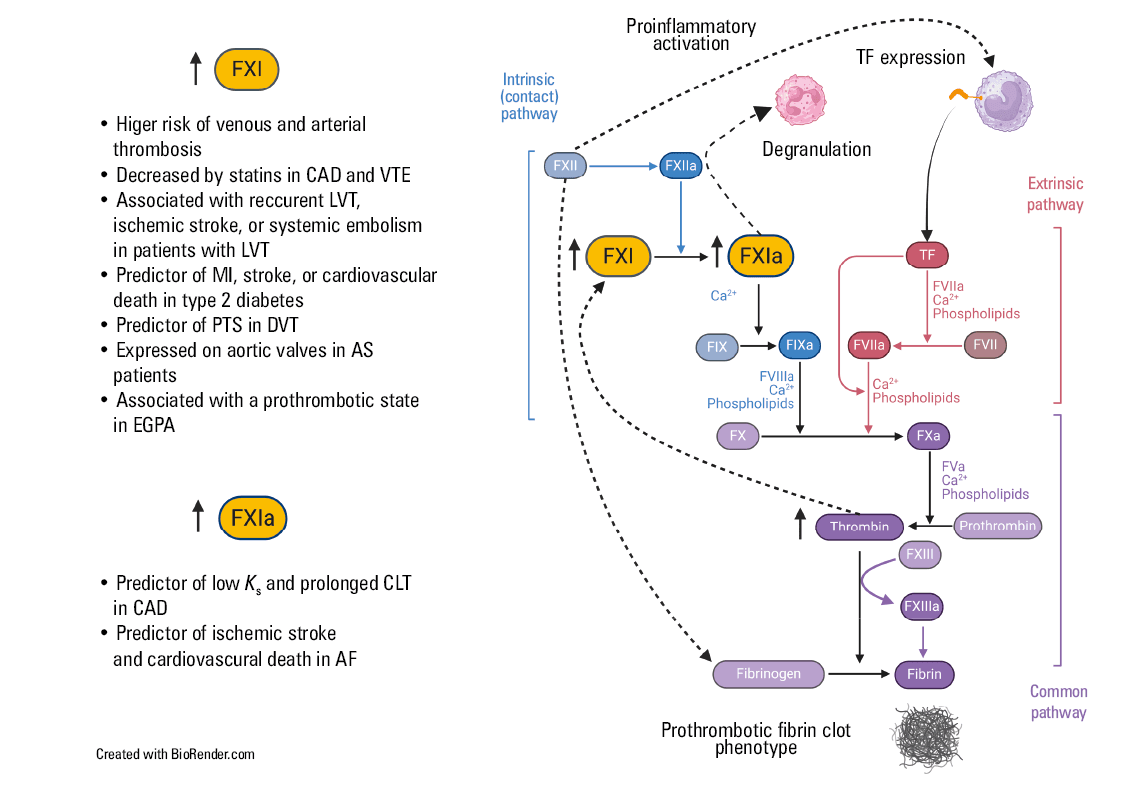
Abbreviations: AF, atrial fibrillation; AS, aortic stenosis; CAD, coronary artery disease; CLT, clot lysis time; DVT, deep vein thrombosis; EGPA, eosinophilic granulomatosis with polyangiitis; F, clotting factor; Ks, fibrin clot permeability coefficient; LVT, left ventricular thrombus; MI, myocardial infarction; PTS, post‑thrombotic syndrome; TF, tissue factor; VTE, venous thromboembolism
In line with the concept of FXI/FXIa inhibition tested in phase 2 and 3 trials,20 it has been demonstrated that altered fibrin clot properties could be associated with increased FXI levels or the extent of its activation (Figure 1), despite the fact that the amount of this protein is relatively low in plasma, especially when compared with fibrinogen concentrations. In patients with advanced coronary artery disease (CAD), circulating FXIa measured using inhibitory monoclonal antibody anti‑FXI that binds to FXI/FXIa, preventing FIX activation by FXIa (active despite the presence of inhibitors), was an independent predictor of lower Ks and prolonged CLT on multivariable analysis.21 Moreover, FXI level above 120%, measured using a routine coagulation test, was an independent predictor of myocardial infarction (MI), stroke, or cardiovascular death (hazard ratio, 12.35; 95% CI, 4.73–32.23) in patients with type 2 diabetes during long‑term follow‑up.22 This observation might suggest additional mechanisms through which FXIa inhibitors could act as safer antithrombotic agents in CAD.
The predictive role of FXIa reaches beyond CAD, and has been reported also in patients with atrial fibrillation (AF), a well‑known and increasingly common cause of severe ischemic stroke with a relatively poor prognosis. We have observed that FXIa detected in circulating blood was associated with the composite end point of ischemic stroke and cardiovascular death in anticoagulated AF patients during a mean follow‑up of 47 months.23 It is unknown whether in AF elevated FXI might be associated with prothrombotic fibrin clot properties.
Interestingly, in patients with severe aortic stenosis (AS), there is a valvular expression of FXI and FIXa associated with the disease severity and valvular leaflet calcification.24 Since in 2013 AS severity was reported to be linked with impaired PAI‑1–mediated fibrinolysis in a plasma‑based assay as evidenced by longer CLT, which positively correlated with the valve leaflet thickness, the degree of valve calcification, and valvular fibrin,25 it might be hypothesized that FXI is also involved in inflammation in stenotic valves.
Regarding drug‑induced changes in FXI, rosuvastatin‑related decrease in several apolipoproteins was associated with reduced FXI level after 28 days of statin treatment (20 mg/d).26 We expanded these findings by showing that a 6‑month high‑dose statin therapy administered in patients with advanced CAD not only decreased FXI by 8.5%, but also this change was associated with 12.9% higher Ks and 11.1% shortened CLT independently of cholesterol‑lowering actions.27 Given compelling evidence for additional antithrombotic and anti‑inflammatory effects of statins,28 these observations indicate that favorable modifications of fibrin clot phenotype induced by statins are multifactorial with some contribution of lower FXI levels, most likely via direct and indirect mechanisms. This finding was supported by a preliminary study, in which in 28 prior VTE patients and 25 healthy controls reduced FXI activity, observed as soon as after 3 days of atorvastatin treatment, was independently associated with higher Ks, but not clot lysability.29
Elevated FXI levels could also contribute to thrombosis at atypical locations. It has been reported recently that patients with prior left ventricular thrombus of unknown origin were characterized by increased FXI levels associated with lower Ks and longer CLT, and these features were also independently associated with a combined end point, encompassing recurrent left ventricular thrombus, symptomatic ischemic stroke, or systemic embolism (odds ratio [OR], 1.18; 95% CI, 1.09–1.28).30 Regarding long‑term complications of VTE, elevated FXI level that was linked to lower Ks and longer CLT, has been documented to characterize patients who developed post‑thrombotic syndrome at 1 year (OR per 1% increase, 1.06; 95% CI, 1.02–1.09) and recurrent VTE (OR, 1.03; 95% CI, 1.01–1.06) following the first‑ever deep vein thrombosis.31 FXI appears to be involved in autoimmune disorders associated with thrombosis. We have demonstrated such an association in eosinophilic granulomatosis with polyangiitis, and after adjustment for multiple comparisons, FXI levels above 130% were associated with not only with higher eosinophil count, but also formation of denser fibrin networks, reflected by 20.5% lower clot permeability and 17.5% thinner fibrin fibers, as compared with patients with FXI up to 130%.32
It is unclear whether the benefits from FXI inhibition reported in patients at a risk for thrombosis could be partly related to favorable changes in fibrin clot characteristics observed at decreased levels of this factor. Several studies are ongoing to prove benefits from such a therapy besides those during thromboprophylaxis, with low bleeding risk suggested in small phase 2 clinical trials with, for example, asundexian (PACIFIC‑AF).20 However, very recently, a daily dose of 50 mg asundexian was found to be less effective than apixaban in preventing stroke and systemic embolism in high‑risk AF patients, which indicates that FXI inhibition is inferior to DOACs at elevated thromboembolic risk.33
Mechanisms linking FXI with fibrin properties are elusive and require further studies. Reduction of FXIa and FXIIa can improve fibrin clot formation and function by a direct modulation of thrombin generation and / or as a result of multiple effects affecting fibrin formation, such as adsorption and activation of FXII to fibrinogen / fibrin and conformational changes in the fibrinogen molecule allowing for FXII activation with subsequent FXIa formation as well as neutrophil aggregation and degranulation (Figure 1).34 These combined effects can reduce the risk of thrombotic events and enhance fibrinolysis potential, offering a balanced approach to anticoagulation with potentially fewer side effects.
Protein carbonylation
In humans, in vitro oxidation of plasma primarily results in carbonylation of fibrinogen, with a lower degree of modification observed in transferrin, immunoglobulins, or albumin,35 and such nonenzymatic reaction represents a common oxidative post‑translational protein modification. Additionally, the presence of sulfur‑containing amino acids, such as cysteine, in fibrinogen, makes it especially vulnerable to oxidative modifications, which can result in the formation of disulfide bonds, sulfenic acids, and sulfinic acids, further altering its structure and functional properties.2 Protein oxidation results in the formation of carbonyl groups and modification of amino acids, including a conversion of methionine to methionine sulfoxide and tyrosine to dityrosine. Carbonylation of fibrinogen is linked to altered fibrin clot architecture, characterized by increased fragility and reduced strength of the clot.2 In the plasma of post‑MI patients, carbonylated fibrinogen increased by approximately 3.5‑fold, as compared with controls, which was associated with the prothrombotic fibrin clot phenotype.36 Elevated total protein carbonyl (PC) levels measured on admission in patients with acute ischemic stroke have also been linked with impaired fibrin clot structure and function.37 Moreover, PC levels assessed up to 24 hours after the stroke onset predicted the stroke outcome at 3 months.37 Associations of elevated PC levels with major cardiovascular events during mean follow‑up of 8.3 years have been reported in patients with stable CAD.38 Ischemic cerebrovascular events observed in patients with AF despite oral anticoagulant therapy were associated with 36% higher baseline PC levels.39 The PC levels have been shown to positively correlate with CLT and negatively with Ks in AF patients.39 Interestingly, higher PC levels, moderately associated with the prothrombotic clot phenotype, were found in AF patients with spontaneous echo contrast, as compared with those without this abnormality,40 suggesting that this phenomenon might be related to enhanced oxidative stress. Of note, echocardiographic parameters, such as right ventricular diameter or left atrial size and volume have been previously shown to be associated with low Ks and prolonged CLT in patients with acute pulmonary embolism (PE) and acute MI, respectively.41,42
Hormone therapy has been reported to reduce PC levels in postmenopausal women, in whom fibrinolysis is known to be impaired.43 In postmenopausal women with increased PC level, standard and ultra‑low‑dose hormone therapy was accompanied by the PC level reduction and faster clot lysis together with decreased PAI‑1 and TAFI activity,44 suggesting potential links between enhanced protein oxidation and hypofibrinolysis.
In summary, based on the observed associations between plasma PC concentrations and impaired fibrin clot structure as well as short- and long‑term clinical outcomes, higher PC levels could reflect a residual risk factor that may require a different therapeutic approach. Further research, particularly development of simple point‑of‑care tests, would be valuable in determining the diagnostic significance of elevated levels of carbonylated proteins.
Neutrophil activation and neutrophil extracellular traps activation and release
Neutrophil extracellular traps (NETs) composed of nuclear chromatin and granular proteins form an extracellular mesh, which can serve as antimicrobial protection but also constitute a scaffold for thrombus formation (Figure 2).45,46 DNA and histones alone, besides their cytotoxic properties, are capable of inducing thrombin generation.47 It has been postulated that the selective presentation of TF on NETs is critical for initiating blood coagulation in vivo; however, the presence of TF on NETs is stimulus‑dependent; it is not present after microbial activation, while it is expressed in patients with chronic inflammation accompanied by tissue damage.45 NETs can also contribute to coagulation activation by providing a negatively charged surface, facilitating the activation of FXII, an initiator of the intrinsic coagulation pathway 48; however, the exact mechanism of coagulation activation on NETs remains unknown. Inhibition of FXII or FXI has been shown to reduce thrombin generation on NETs.49 Furthermore, NETs, rich in DNA, have been found to bind fibrinogen, suggesting that fibrin formation on NETs may occur following coagulation activation, regardless of the pathway involved.48,49 Besides a direct stimulation of the coagulation cascade, NETs seem to contribute to thrombosis in a platelet‑dependent manner by interactions of P‑selectin glycoprotein ligand‑1 binding platelet‑derived P‑selectin (Figure 2).49 Additionally, positively‑charged nucleosomes at injury sites can attract negatively‑charged TF pathway inhibitor (TFPI).45 NET‑associated proteins, such as neutrophil elastase and cathepsin G, promote fibrin formation by inhibiting TFPI, a key regulator of the extrinsic coagulation pathway.45
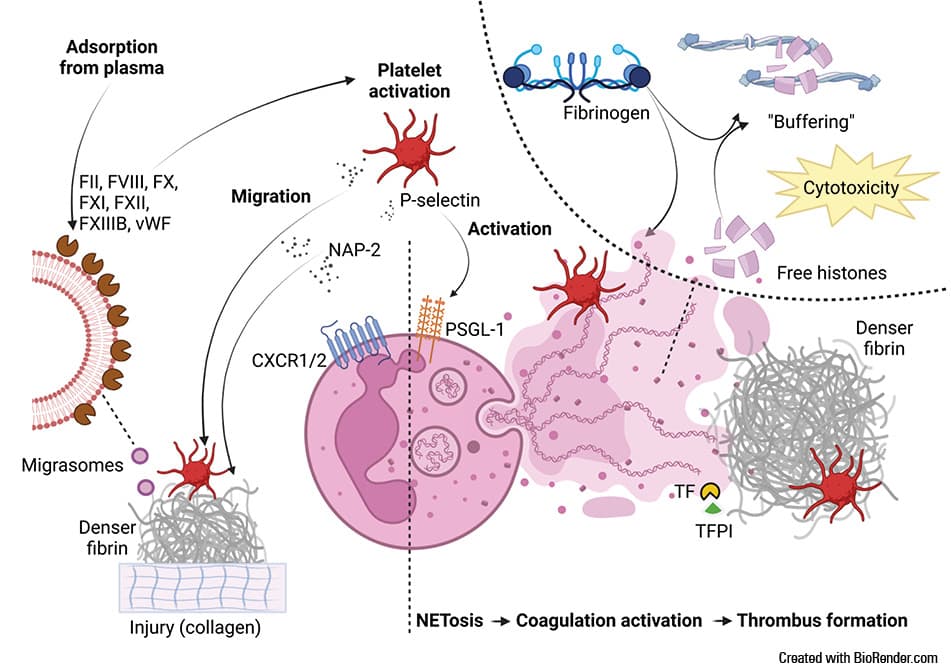
Abbreviations: CXCR1/2, CXC chemokine receptors 1 and 2; NAP‑2, neutrophil activating peptide‑2; NETosis, neutrophil activation and neutrophil extracellular traps activation and release; PSGL‑1, P‑selectin glycoprotein ligand‑1; TFPI, tissue factor pathway inhibitor; others, see Figure 1
On scanning electron microscopy, fibrin clots formed in the presence of NET components exhibit a denser structure.50 Recent studies have shed light on the intriguing relationship between NETosis markers and fibrin clot properties, particularly in the context of thrombotic disorders. NETosis, the process by which neutrophils release NETs, has been increasingly linked to changes in the structure and function of plasma fibrin clots in AF or acute pulmonary embolism.51,52 Similarly, an understanding of the role of fibrinogen as an acute‑phase protein has been recently extended by showing that fibrinogen is involved in modulating the behavior of neutrophils and can protect cells from host‑derived histones.53 Histone‑fibrin(ogen) complexes, with histones H3 and H4 having the highest affinity to the D‑domain of fibrinogen, diminished cytotoxic effect of these proteins (Figure 2).54 Elevated levels of neutrophil activating protein‑2 (NAP‑2), a primary platelet‑derived Cys‑X‑Cys motif neutrophil chemoattractant that can signal through the CXC chemokine receptors (CXCRs) 1 and 2 (Figure 2), have been shown to unfavorably alter Ks (about –20%) and prolong CLT (+8.5%) in patients with AF.55 The mechanism by which NAP‑2 makes fibrin network denser remains to be established. However, clinical observations suggest an important role of local NAP‑2–mediated platelet‑neutrophil interaction in thrombus formation during acute ischemic stroke.56 On the other hand, CXCR1/2 inhibition by reparixin reduced NETs formation together with fibrin deposition in a murine model of sepsis, which shows clinical relevance of NETosis‑associated thrombosis.57
Very recently, neutrophil‑derived migrasomes, which are organelles generated by migrating cells, have been shown to adsorb coagulation factors, such as prothrombin, FXIII‑B, FX, FVIII, FXI, FXII, and von Willebrand factor from plasma, and transport them to the site of injury, triggering in loco platelet activation and clot formation (Figure 2).58
These observations highlight the complexity of interactions between neutrophil activation and coagulation, as well as open a promising area of research with significant clinical relevance. Since associations between the markers of neutrophil activation and the phenotype of plasma fibrin clot have been observed, it can be assumed that therapeutic interventions targeting neutrophils may improve clot properties and help reduce the risk of thromboembolism in some clinical conditions. However, further research is required.
Gut barrier and lipopolysaccharide
Lipopolysaccharide (LPS) is a glycolipid component of the outer membrane of Gram‑negative bacteria that may be detected in the peripheral circulation with values usually below 20 pg/ml.59 LPS binding protein (LBP), a soluble protein that binds to LPS, and CD14, a pattern‑recognition receptor, are critical components of endotoxin signaling pathway activating CD14+ monocytes / macrophages,60 resulting in the TF expression on their surface. Therefore, LPS has procoagulant properties.
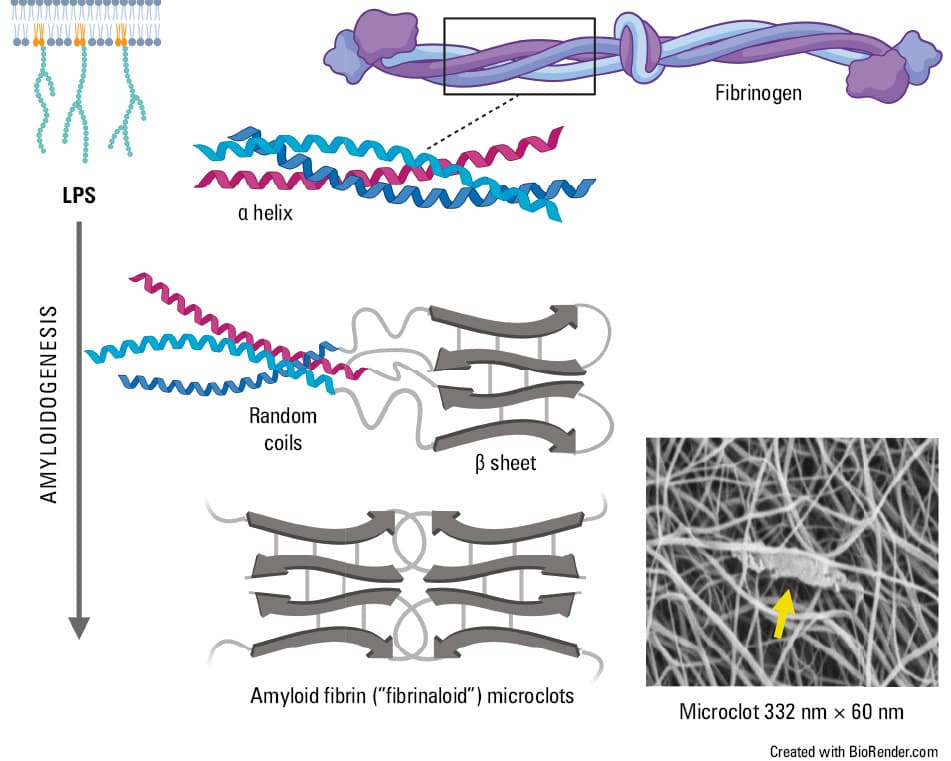
Gut dysbiosis referring to a disruption in the gut microbiome associated with decreased microbial diversity, is a major natural source that increases circulating LPS levels.61 Gut dysbiosis has been shown to be associated with diseases related to an ongoing prothrombotic state, such as MI,62 coronary microvascular angina,63 PE,64 ischemic stroke65 or COVID‑19.66 In acute PE patients, LPS concentrations were associated with an unfavorably modified fibrin clot phenotype, suggesting a novel biomarker contributing to fibrin network alterations.64 LPS concentrations exceeding 100 pg/ml predicted prolonged CLT in AF patients and correlated with PAI‑1 and growth differentiation factor 15 (GDF‑15) levels.67 Fibrinogen‑bound LPS promotes formation of fibrin amyloid, which can be deposited68 and result in formation of denser fibrin clots.69 The effects of LPS can be, however, inhibited in vitro by LBP.70 Amyloid fibrin(ogen) particles, called microclots (Figure 3), have been detected in plasma samples from patients with COVID‑19,70 postacute sequelae of COVID‑19,71 type 2 diabetes70 or acute PE.72 Interestingly, low‑molecular‑weight heparin treatment for 24 hours has been shown to markedly reduce the presence of fibrin amyloid.72 Of importance, potential resistance of the microclots to fibrinolysis might alter the typical pattern of D‑dimer increase, leading to lower‑than‑expected levels or a delayed rise in D‑dimer levels.71 However, the molecular and cellular mechanisms behind fibrin aggregate formation need to be thoroughly understood to determine whether this is merely a secondary effect or a pathophysiological process linked to thrombus formation or fibrinolysis. Current evidence suggests that patients at a risk of thromboembolism with increased levels of circulating LPS should be encouraged to follow a diet suitable for a leaky gut, such as gut and psychology syndrome diet. It is unclear whether such an intervention could be effective in real‑life patients.
Antithrombin and other natural anticoagulant deficiency
Antithrombin is the main human endogenous anticoagulant (serine‑protease inhibitor) composed of 432 amino acids that primarily inactivates thrombin, FXa, and to a lower extent FXIIa, FXIa, and FIXa. Hereditary antithrombin deficiency is significantly less common than the factor V Leiden mutation and the prothrombin G20210A mutation. The prevalence of antithrombin deficiency is 0.02%–0.2% (1/5000–1/500 individuals), and it is equally common in both sexes.73 A meta‑analysis of 35 studies showed that the OR for the first VTE among individuals with antithrombin deficiency is 14‑fold higher (95% CI, 5.5–29) with the annual risk of 1.2% (95% CI, 0.8–1.7).74 Protein C and protein S are other natural anticoagulants. Their deficiency is less common than that of antithrombin, but it can also contribute to thrombosis. Foley et al75 have shown impaired dynamics of thrombin formation by measuring thrombin‑antithrombin complex formation, despite similar levels of thrombin generated, when comparing 4 patients with the protein C deficiency and 5 healthy controls.76 Moreover, altered thrombin generation contributed to thrombosis by increasing clot density, consumption of FXIII, and fibrin resistance to fibrinolysis, likely via TAFI‑dependent and independent mechanisms.76 More recently, Brouns et al76 have shown that formation of thrombi under a shear‑stress condition is delayed in patients with protein C deficiency (n = 12), and to a lower extent in those with protein S deficiency (n = 11).
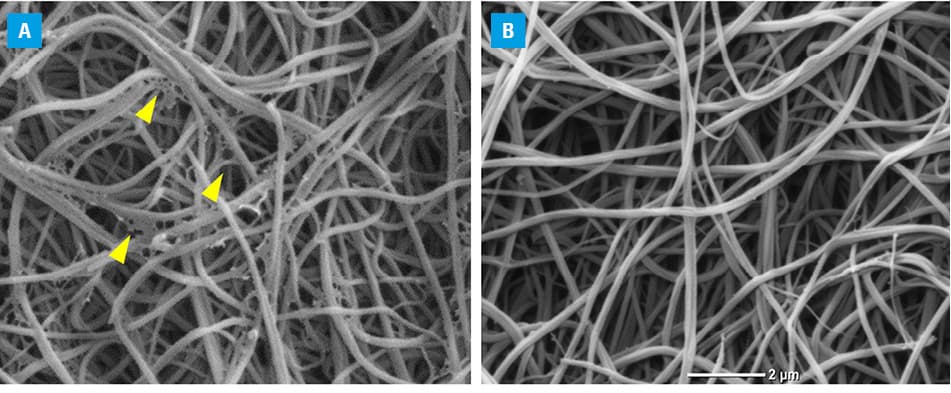
Antithrombin deficiency is associated with excessive thrombin generation and prothrombotic plasma fibrin clot phenotype that can contribute to a higher risk of thrombosis.77 Patients with type I antithrombin deficiency, characterized by reduced antithrombin antigen level and activity despite similar fibrinogen levels, displayed reduced Ks and prolonged CLT, as compared with type II antithrombin‑deficient patients (lower antithrombin activity at normal antigen levels).77 Clots formed of antithrombin‑deficient patients’ plasma were characterized by about one‑third thinner fibrin fibers than in healthy controls, with no difference in fibrin fiber diameter between individuals with type I and type II antithrombin deficiency.77 However, abnormal fibrin fibers have been detected within fibrin clots of antithrombin‑deficient patients with increased concentrations of prothrombin fragments 1+2 (Figure 4), the levels of which correlated inversely with fibrin fiber diameter.77
Reduced plasma level of selenoprotein P in patients with type I vs type II antithrombin deficiency has also been identified as a potentially modifiable factor contributing to prothrombotic state.78 Very recently, Alehagen et al79 have reported that dietary selenium supplementation induced circulating selenoprotein P levels and reduced mortality among 403 elderly individuals observed for 12 years. On the other hand, low selenoprotein P levels at inclusion were related to shorter telomere length.79 Further studies are required to establish potential associations between fibrin clot features and serum selenium levels as well as to investigate the interaction of selenoproteins with fibrinogen.
Other factors
Current data indicate also a growing role of stress response proteins, including GDF‑15, in cardiac diseases, such as AF, known to be associated with prothrombotic fibrin clot phenotype.80 Moreover, the interaction of fibrin with platelets and red blood cells (RBCs) is essential for fibrin mechanical properties.81 Platelets contribute to clot retraction and compaction, while RBCs can become entrapped within the fibrin network, influencing clot density and porosity.82
There is significant variability in clot properties among individuals with similar clinical profiles, which is especially hard to estimate due to several challenges of measurement standardization in practice.6 The sources of this heterogeneity, beyond genetic and environmental factors,83 are not entirely clear. However, considering the multitude of proteins that can bind to the fibrin clot,84 including those not directly related to the coagulation system, each of them could represent a new factor significantly modulating the clot properties.
Recent studies have shown that non‑biological particles—microplastics85 and nanoplastics86—can integrate into fibrin clots and alter their properties.87 These findings are of major importance given the increasing presence of nonbiological particles in the environment and their potential health impacts. The incorporation of micro- / nanoplastics into clots could influence their stability and the body’s ability to regulate clot formation and breakdown, which, however, requires further investigation.
COVID‑19 had potent effects on blood coagulation, including CLT.88 Increased coagulation activation along with hypofibrinolysis assessed on admission were associated with the disease severity and might affect so‑called long COVID‑19.88 Moreover, elevated fibrinogen levels, along with formation of a dense fibrin network, associated with increased FXII activation, have been shown to contribute to fibrinolysis resistance in COVID‑19.89
Future directions
Extensive research in the field of fibrin structure and function gradually presents novel factors that might influence the complex mechanisms governing fibrin resistance to shear stress, fragmentation, viscosity, susceptibility to endo- or exogenous fibrinolysis, and interaction with blood cells. Multiple proteins and complex post‑translational modifications of fibrinogen and other involved proteins are detectable in plasma fibrin clots with substantial differences related to specific diseases. It is likely that such associations may contribute to thromboembolism at various locations and explain to some extent a failure of known antithrombotic or fibrinolytic therapies. Despite potential clinical benefits from fibrin clot assessment, without major advances in the optimization of laboratory assays used to characterize the clot properties, implementation of clot permeability or lysability in practice requires a long time. Standardized methods for measuring circulating NETs and LPS levels are also necessary, since often there are marked differences in results obtained using tests from different manufacturers, which in an enzyme‑linked immunosorbent assay (ELISA) can be influenced, for example, by the type of antibodies used to detect myeloperoxidase‑DNA complexes.90 Efforts should be made to create standardized protocols for ELISA and other assays to ensure consistency across different laboratories, including the use of standardized types of antibodies, reference reagents, and standards. Moreover, collaborative studies and interlaboratory comparisons could help to identify potential sources of variability and develop best practices. Advances in technology, such as genomic and proteomic studies could also provide more accurate and reproducible methods for measuring novel biomarkers affecting fibrin clot properties. Among the parameters routinely available in most laboratories, FXI activity is exceptional in this regard, similarly to other coagulation factors. Conducting large‑scale longitudinal studies to correlate fibrin clot properties with clinical outcomes can refine risk assessment models and combine these measures with standard markers, such as D‑dimer.91 Integrating fibrin clot characteristics with other hemostatic parameters, such as platelet function or coagulation factor activity, can allow for a comprehensive evaluation of hemostasis, the regulation of which is complex by itself. Such an approach can improve diagnostic tools, targeted therapies, and personalized treatment strategies for thrombotic and bleeding disorders.
- Litvinov RI, Pieters M, Lange‑Loots Z de, Weisel JW. Fibrinogen and fibrin. Subcell Biochem. 2021; 96: 471‑501. | Crossref
- Vries JJ de, Snoek CJM, Rijken DC, Maat MPM de. Effects of post‑translational modifications of fibrinogen on clot formation, clot structure, and fibrinolysis: a systematic review. Arterioscler Thromb Vasc Biol. 2020; 40: 554‑569. | Crossref
- Collet JP, Park D, Lesty C, et al. Influence of fibrin network conformation and fibrin fiber diameter on fibrinolysis speed: dynamic and structural approaches by confocal microscopy. Arterioscler Thromb Vasc Biol. 2000; 20: 1354‑1361. | Crossref
- Kim PY, Tieu LD, Stafford AR, et al. A high affinity interaction of plasminogen with fibrin is not essential for efficient activation by tissue‑type plasminogen activator. J Biol Chem. 2012; 287: 4652‑4661. | Crossref
- Pechlivani N, Kearney KJ, Ajjan RA. Fibrinogen and antifibrinolytic proteins: interactions and future therapeutics. Int J Mol Sci. 2021; 22: 12537. | Crossref
ARTICLE INFORMATION