


 CC BY-NC-SA 4.0
A 51‑year‑old man with a history of non–ST‑segment elevation myocardial infarction, hypertension, and focal segmental glomerulosclerosis (FSGS) was admitted to a hospital due to worsening renal function with oliguria. FSGS had been diagnosed 2 months prior to this admission based on findings from a renal biopsy. Nephrotic syndrome, with 24‑hour urinary protein excretion of 4 g and reduced renal function (estimated glomerular filtration rate, 43 ml/min/1.73 m²) were indications for performing the renal biopsy. The disease was considered primary based on a careful exclusion of secondary causes and the nephropathologist’s assessment. Steroid monotherapy with methylprednisolone was started for primary FSGS (3 consecutive daily intravenous doses of 500 mg, followed by an oral dose of 40 mg per day with gradual tapering). It was administered on top of optimal supportive treatment, including an angiotensin‑converting enzyme inhibitor, a diuretic, and a statin, as recommended by the latest Kidney Disease: Improving Global Outcomes guidelines.1
Laboratory tests on admission showed hemoglobin level of 6.6 g/dl (reference range [RR], 14–18 g/dl), white blood cell count of 15 810/μl (RR, 4100–10 900/μl), platelet count of 256 000 cells/μl (RR, 150 000–400 000 cells/μl), serum creatinine at 2.8 mg/dl (RR, 0.7–1.2 mg/dl), serum urea at 180 mg/dl (RR, 16.6–48.5 mg/dl), and C‑reactive protein at 0.13 mg/dl (RR <0.5 mg/dl). Urinalysis showed proteinuria at 2.1 g/l. Since serum creatinine level measured 4 weeks earlier was 2.2 mg/dl, acute‑on‑chronic renal injury was diagnosed.
Upon admission, intravenous esomeprazole was initiated, and emergency esophago‑gastro‑duodenoscopy was performed. The entire esophagus was affected by severe inflammation with focal hemorrhages partially covered by clots, with severity of the lesions gradually decreasing toward the gastric cardia, where isolated lesions were observed (Figure 1A–1D). Endoscopic images suggested severe acute esophagitis, likely attributed to herpes simplex infection. Due to the severity of the lesions and the risk of potential esophageal wall injury, endoscopic biopsy was not performed. A computed tomography scan of the neck and chest showed no enlarged mediastinal lymph nodes or periesophageal inflammation.
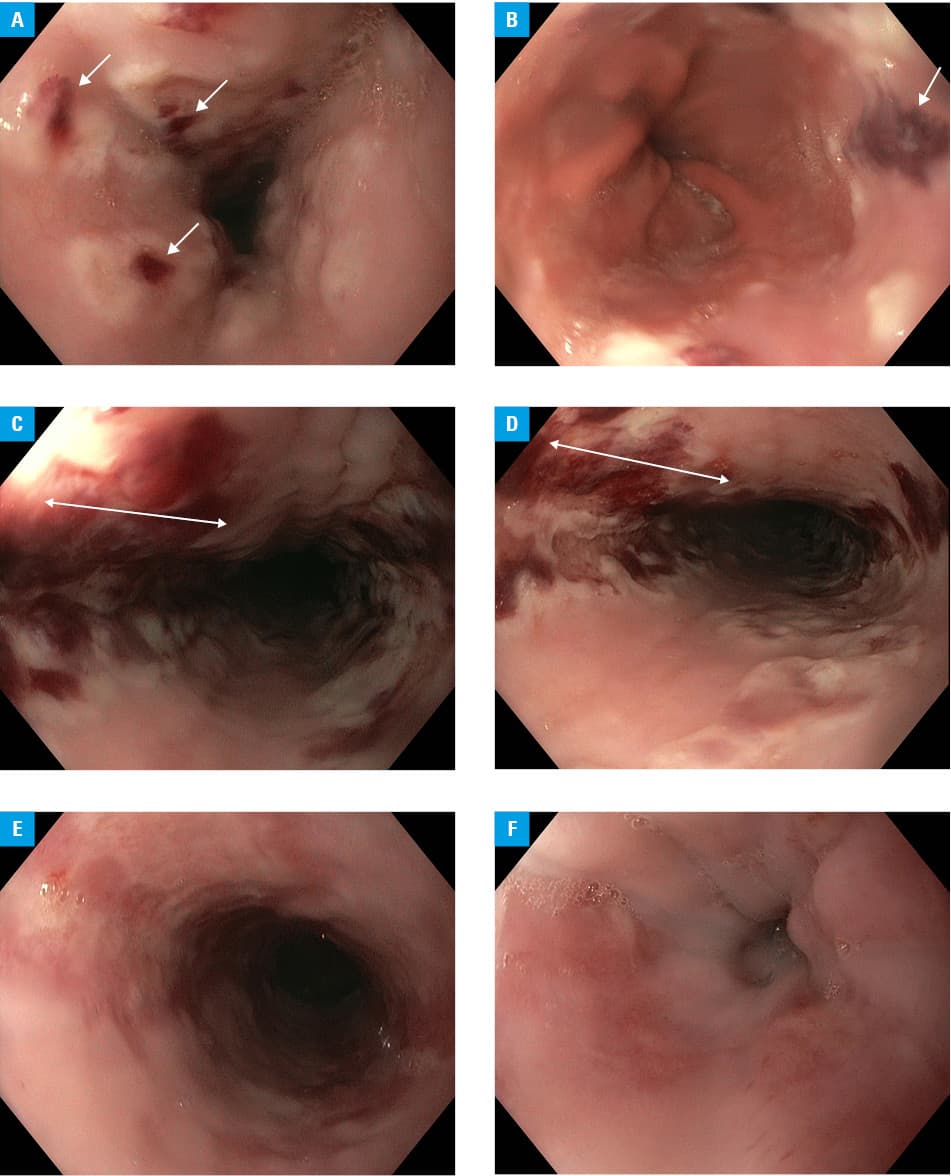
Intravenous acyclovir was administered. Due to acute pain, the patient was unable to eat and needed opioid analgesics. Total parenteral nutrition was provided for 10 days. After 3 days of antiviral therapy, the symptoms relieved significantly (Figure 1E and 1F). A liquid diet was then initiated, followed by a gradual expansion to solid food. Prophylactic oral acyclovir was continued for 3 months. Intravenous diuretics were administered, leading to a reduction in peripheral edema. Despite worsening of nephrotic syndrome, immunosuppressive treatment was postponed. One month later, at a follow‑up outpatient visit, laboratory results were as follows: hemoglobin, 11 g/dl; serum creatinine, 1.8 mg/dl; serum urea, 162 mg/dl; and proteinuria of 1.1 g/l. Oral steroids were reintroduced.
Few reports on herpes simplex esophagitis in immunocompromised patients can be found in the literature. However, these reports describe patients undergoing antineoplastic polychemotherapy, organ transplant recipients, or individuals with AIDS.2-5 We failed to identify any cases of patients with severe herpetic esophagitis treated with methylprednisolone for primary FSGS or any other form of glomerular disease.
- Kidney Disease: Improving Global Outcomes (KDIGO) Glomerular Diseases Work Group. KDIGO 2021 Clinical Practice Guideline for the management of glomerular diseases. Kidney Int. 2021; 100: S1‑S276.
- Ramanathan J, Rammouni M, Baran JJ, Khatib R. Herpes simplex virus esophagitis in the immunocompetent host: an overview. Am J Gastroenterol. 2000; 95: 2171‑2176. | Crossref
- Antaki N, Aljarad Z, Dabbas H, et al. Epigastric pain associated with herpes esophagitis: case report. BMC Infect Dis. 2020; 14: 754. | Crossref
- Gani I, Kosuru V, Saleem M, Kapoor R. Simultaneous Candida albicans and herpes simplex virus type 2 esophagitis in a renal transplant recipient. BMJ Case Rep. 2019; 12: 1‑4. | Crossref
- Moore E, Merali N, Abbassi‑Ghadi N. Herpes simplex oesophagitis leading to perforation and mediastinal collection: a case report and review of literature. Ann R Coll Surg Engl. 2023; 105: 94‑96. | Crossref
ARTICLE INFORMATION