
Efficacy of selected scales in the assessment of impaired awareness of hypoglycemia in adults with type 1 diabetes
Key words: diabetes, hypoglycemia, hypoglycemia unawareness, impaired awareness of hypoglycemia, type 1 diabetes


 CC BY-NC-SA 4.0
Efficacy of selected scales in the assessment of impaired awareness of hypoglycemia in adults with type 1 diabetes
CC BY-NC-SA 4.0
Introduction: Impaired awareness of hypoglycemia (IAH) increases the risk of severe hypoglycemia. Questionnaires may allow for easy identification of patients with IAH and facilitate appropriate interventions.
Objectives: This study aims to assess the clinical utility of the questionnaires commonly used for diagnosing IAH, providing practical insight for medical professionals. Additionally, we sought to identify clinical factors associated with IAH in adults with type 1 diabetes (T1D), enhancing the understanding of this condition in a real‑world context.
Patients and methods: The study included 252 adults with T1D (135 men), at a median (interquartile range) age of 41 (30–52) years. We evaluated their awareness of hypoglycemia using the validated questionnaires (Clarke scale, Gold scale, and Hypoglycemia Awareness Questionnaire [HypoA‑Q]), anthropometric data, and metabolic control data. To estimate the optimal cutoff point for the diagnosis of IAH using HypoA‑Q, we used the receiver operating characteristic (ROC) curve analysis. IAH was diagnosed based on at least 1 abnormal questionnaire score.
Results: We found a cutoff of 9 points for diagnosing IAH with HypoA‑Q (sensitivity, 79%; specificity, 82%; area under the ROC curve, 0.898). IAH in any test was found in 98 patients (39%). In the univariable logistic regression models, the diagnosis of IAH was associated with lifetime episodes of severe hypoglycemia, hypertension, glycated hemoglobin level, mean glycemia, standard deviation, total cholesterol, low‑density lipoprotein cholesterol, non–high‑density lipoprotein cholesterol, and daily dose of insulin.
Conclusions: HypoA‑Q, with a 9‑point cutoff, demonstrated the highest sensitivity in diagnosing IAH, and may be considered the most valuable screening tool for IAH detection.
What's new?
Our study is one of the first to compare the Clarke scale, the Gold scale, and the Hypoglycemia Awareness Questionnaire (HypoA‑Q) for assessing hypoglycemia awareness in patients with type 1 diabetes (T1D), and the first to utilize HypoA‑Q in the Polish population. We propose a 9‑point cutoff to recognize impaired awareness of hypoglycemia (IAH) with HypoA‑Q. That threshold demonstrated the highest sensitivity in diagnosing IAH, even identifying patients missed by the Clarke and Gold scales. Thus, HypoA‑Q can be considered a novel alternative screening tool for IAH in T1D patients, addressing the limitations of traditional methods.
Introduction
Nowadays, patients with type 1 diabetes (T1D) have access to structured education and diabetes technology. Nonetheless, hypoglycemia is the most common acute complication in this group of patients. There are 3 levels of hypoglycemia severity: a glucose alert value, defined by glycemia below 70 mg/dl; clinically important hypoglycemia, characterized by glycemia below 54 mg/dl; and severe hypoglycemia, which lacks a specified glucose threshold but involves cognitive impairment requiring external assistance for recovery.1 Iatrogenic hypoglycemia is a typical adverse effect of insulin therapy.2 Moreover, hypoglycemia is a significant barrier to achieving good glycemic control.3,4
Hypoglycemia is accompanied by warning symptoms (tremors, palpitations, anxiety, sweating, hunger, and paresthesias), mainly caused by stimulation of the autonomic nervous system due to the response of counterregulatory hormones and, to a lesser extent, by neuroglycopenia (cognitive impairments, behavioral changes, psychomotor abnormalities, seizure, and coma). Being aware of the symptoms of hypoglycemia helps patients recognize it and begin self‑treatment to prevent severe incidents. In people experiencing recurrent episodes of hypoglycemia, the counterregulatory hormonal response may be diminished, reducing or eliminating the ability to recognize and effectively respond to the onset of hypoglycemia.5 This condition is called impaired awareness of hypoglycemia (IAH) and affects up to 40% of T1D patients.6 IAH increases the risk of severe hypoglycemia 6‑fold. The recurrent episodes of severe hypoglycemia can result in serious complications, such as increased mortality, cognitive dysfunction, cardiovascular events, and fear of hypoglycemia.7-9 Many methods with proven efficacy can be used to reduce the number of hypoglycemic episodes, including educational interventions, insulin analogues, continuous glucose monitoring (CGM), automatic insulin delivery systems, and islet / pancreas transplant.10-16 Identifying patients with IAH could help draw attention to those at a risk of its consequences. These individuals could then undergo evidence‑based interventions to improve their safety.
The hyperinsulinemic‑hypoglycemic clamp technique is the gold standard for assessing hypoglycemia awareness.17 It is a complicated test involving intravenous insulin and glucose infusions to obtain successive stages of hypoglycemia.18 This technique provides an objective measurement; however, it is an invasive, costly, and time‑consuming procedure, making it suitable only for small patient cohorts. An alternative method of assessing hypoglycemia awareness is the use of validated questionnaires in which patients report specific situations in their lives related to hypoglycemia. Four questionnaires are known to diagnose awareness of hypoglycemia: the Gold, Clarke, and Pedersen‑Bjergaard scales and HypoA‑Q. Their use to assess hypoglycemia awareness offers several advantages, as they are noninvasive, cost‑effective, and capture patient‑reported experiences from real hypoglycemic episodes. Additionally, they are suitable for large‑scale patient populations and have practical applications in clinical settings.19 The use of the questionnaires may allow for easy identification of patients with IAH and appropriate interventions. However, there is still little information on the clinical usefulness of individual tests and differences in their sensitivity of diagnosing IAH in the population of adults with T1D.
Therefore, this study aimed to assess the clinical efficacy of the questionnaires commonly used for diagnosing IAH and to provide practical insight for medical professionals. Additionally, we sought to identify clinical factors associated with IAH in adults with T1D, enhancing the understanding of this condition in a real‑world context.
Patients and methods
The study included consecutive adults with T1D (women and men over 18 years of age) treated at the Department of Internal Medicine and Diabetology of the Poznan University of Medical Sciences, Poznań, Poland in 2022 and 2023. The inclusion criteria were diabetes duration of over 10 years and the patient’s consent. The exclusion criteria comprised pregnancy, neurodegenerative diseases (Parkinson disease, Alzheimer disease, Huntington disease), multiple sclerosis, and mental disorders. Two patients who met the inclusion criteria declined to participate in the study.
Data collection
Data were collected on the duration of diabetes, history of lifetime episodes of severe hypoglycemia and diabetic ketoacidosis, previous glycated hemoglobin (HbA1c) values, use of CGM systems, medications, comorbidities, and smoking.
All patients underwent physical examination, which included anthropometric measurement of weight, height, and body mass index (BMI). Blood pressure was measured with a sphygmomanometer. A daily insulin dose was defined as the requirement for insulin per kilogram of body weight per day.
Assessment of hypoglycemia awareness
Awareness of hypoglycemia was evaluated using validated questionnaires (the Clarke scale, the Gold scale, and the HypoA‑Q). The Clarke questionnaire consists of 8 questions assessing prior experience of hypoglycemia, such as a history of severe hypoglycemia and blood glucose levels at which patients begin to perceive the symptoms of hypoglycemia. The questionnaire generates a score (0–7) based on the patient’s responses.20 The Gold questionnaire contains 1 question asking the respondents to report their experience of perceiving hypoglycemic events with a score ranging from 1 (always aware) to 7 (never aware) on the Likert scale.21 In the Clarke and Gold questionnaires, the score of 4 or higher indicates IAH, 3 indicates indeterminant awareness, and the score of 2 or lower indicates normal awareness of hypoglycemia.20,21 HypoA‑Q is a 33‑item complex tool assessing the frequency and severity of hypoglycemic events, health care utilization, blood glucose thresholds at which the symptoms occur, awareness of symptoms, and frequency of checking blood glucose. HypoA‑Q is a profile measure, that is, it yields several item and subscale scores. The subscale of awareness of hypoglycemia of HypoA‑Q consists of 5 questions regarding the symptoms of hypoglycemia experienced in the past, with a score ranging from 0 (never) to 4 (always). The score is the sum of the points (0–20). Higher scores indicate greater impairment of hypoglycemia awareness.22 We received a written permission from the Mapi Research Trust to translate the HypoA‑Q into Polish and conduct our research. We performed the translation and linguistic validation of HypoA‑Q according to the Linguistic Validation Guidance of a Clinical Outcome Assessment. The Mapi Research Trust accepted our translation.
The end point, that is, IAH, was reached if indicated by one of the scales.
Laboratory tests
Eight milliliters of venous blood and a morning urine sample of 100–200 ml were collected from all patients after at least 8‑hour fast. Laboratory analyses were performed on the Cobas 6000 (Roche Diagnostic, Basel, Switzerald), Alinity ci‑series (Abbott Diagnostics, Lake Forest, Illinois, United States), Sysmex UC (Sysmex Corporation, Kobe, Japan), and Sysmex UF (Sysmex Corporation) devices. Whole‑blood HbA1c level was determined by turbidimetry, and the levels of the other parameters were assessed in the serum. The enzymatic‑colorimetric method was used to determine the concentration of total cholesterol (TC), low‑density lipoprotein cholesterol (LDL‑C), high‑density lipoprotein cholesterol (HDL‑C), and triglycerides. The level of creatinine was determined by the Jaffe method, and estimated glomerular filtration rate was calculated using the Chronic Kidney Disease Epidemiology Collaboration equation. The level of thyroid‑stimulating hormone was measured by electrochemiluminescence. The level of cortisol was measured using a chemiluminescence immunoassay.
Assessment of glycemic control
The glucometers (patients on self‑monitoring of blood glucose [SMBG]) and CGM data were downloaded to evaluate short‑term glycemic control. We analyzed mean glycemia, standard deviation (SD), and coefficient of variation in all patients. Additionally, in individuals utilizing CGM systems, we assessed the percentage of time in range 70–180 mg/dl, time below range (TBR), that is, below 70 mg/dl and 54 mg/dl, and time above range, that is, above 180 mg/dl.23 We analyzed data from the last 4 weeks.
The skin content of advanced glycation end products (AGEs) was evaluated to assess long‑term glycemic control. The degree of accumulation of AGEs of proteins in the skin was noninvasively assessed using the fluorescent properties of the tissue. The skin autofluorescence (SAF) ratio was measured using the AGE‑Reader (DiagnOptics, Groningen, the Netherlands). The measurement was performed at the ventral side of the forearm. SAF was measured 3 times in each patient. The result was the arithmetic mean of these 3 measurements.24
Statistical analysis
We compared the 2 groups of patients utilizing different statistical tests based on the scale of measurement for the data. For the interval or ordinal scale data, we employed the Mann–Whitney test, as the data did not follow the normal distribution according to the Shapiro–Wilk test. The results were presented as medians and interquartile range (IQR). When the data were on a nominal scale, we used either the χ2 test or the Fisher exact test, depending on the sample size and the expected frequencies. The results were presented as numbers and relative frequencies. Univariable and multivariable logistic regression models were used to assess the influence of significant variables on the occurrence of IAH. For the multivariable analysis, we utilized the least absolute shrinkage and selection operator (LASSO) logistic regression to identify the most significant variables among all those considered. The LASSO regression method was chosen for its ability to perform both variable selection and regularization. This approach prevents overfitting by shrinking the coefficients of less important variables toward 0 and retaining only those variables that contribute meaningfully to the model. Consequently, the LASSO regression is particularly advantageous when dealing with datasets with many potential predictors, as it simplifies the model while maintaining its predictive accuracy.
The Cohen κ coefficient was used to assess the agreement between the studied scales for IAH. To determine the optimal cutoff for the HypoA‑Q scale, we performed receiver operating characteristic (ROC) curve analysis, using the Clarke scale as the gold standard for determining the presence of IAH. We used a threshold of 4 points on the Clarke scale to indicate IAH. The optimal cutoff was identified using the Youden index. The potential prognostic property of the HypoA‑Q scale was assessed by the area under the curve (AUC). Sensitivity and specificity for the cutoff point were also provided.
The analysis was performed using Statistica package version 10 (StatSoft Inc., Tulsa, Oklahoma, United States) and MedCalc Statistical Software version 15.6.1 (MedCalc Software bvba, Ostend, Belgium). All tests were considered significant at a P value below 0.05.
Ethics
All patients signed their written informed consent to participate in the study. The study was approved by the local Bioethics Committee of the Poznan University of Medical Sciences (795/22). The study is registered at the ClinicalTrials (NCT05620927).
Results
We included 252 patients (135 men) at a median (IQR) age of 41 (30–52) years and median diabetes duration of 22 (16–30) years. The median (IQR) BMI was 24.9 (22.8–28.2) kg/m2. The characteristics of the study population are shown in Table 1. The median (IQR) HbA1c level was 8.1% (7.2%–9.2%), that is, 65 (55.2–76.5) mmol/mol. As many as 160 patients (63%) used SMBG and 92 (37%) were on the CGM system.
Parameter | Value | |
Data are presented as number (percentage) or median (interquartile range).
a Data obtained from patients using SMBG (n = 160); b Data obtained from patients using CGM (n = 92)
SI conversion factors: to convert TC, LDL‑C, HDL‑C, and non–HDL‑C to mmol/l, multiply by 0.0259; creatinine to μmol/l, by 88.4; glucose to mmol/l, by 0.0555; triglycerides to mmol/l, by 0.0113.
Abbreviations: BMI, body mass index; CGM, continuous glucose monitoring; CSII, continuous subcutaneous insulin infusion; CV, coefficient of variation; DKA, diabetic ketoacidosis; eGFR, estimated glomerular filtration rate; HbA1c, glycated hemoglobin; HDL‑C, high‑density lipoprotein cholesterol; HypoA‑Q, Hypoglycemia Awareness Questionnaire; IIT, intensive insulin therapy; LDL‑C, low‑density lipoprotein cholesterol; MDI, multiple daily injections; SAF, skin autofluorescence; SD, standard deviation; SMBG, self‑monitoring of blood glucose; TAR, time above range; TBR, time below range; TC, total cholesterol; TIR, time in range; TSH, thyroid‑stimulating hormone | ||
Age, y | 41 (30–52) | |
Sex | Men | 135 (54) |
Women | 117 (46) | |
Duration of diabetes, y | 22 (16–30) | |
Lifetime episodes of severe hypoglycemia, n | 1 (0–2) | |
Lifetime episodes of DKA, n | 0 (0–1) | |
Current smoker | 43 (17) | |
Hypertension | 106 (42) | |
Hypothyroidism | 68 (27) | |
Hyperthyroidism | 3 (1) | |
Model of insulin therapy | IIT | 234 (93) |
Basal‑bolus | 17 (7) | |
Premixed insulin | 1 (<1) | |
Insulin delivery | MDI | 202 (80) |
CSII | 50 (20) | |
Daily dose of insulin, U/kg body weight/day | 0.56 (0.44–0.68) | |
CGM use | 92 (37) | |
Body weight, kg | 75.1 (65.5–85) | |
BMI, kg/m2 | 24.9 (22.8–28.2) | |
Current HbA1c, %; mmol/mol | 8.1 (7.2–9.15); 65 (55.2–76.5) | |
Mean HbA1c in the last 5 years, %; mmol/mol | 8 (7.4–9); 64 (57–75) | |
Creatinine, mg/dl | 0.87 (0.76–1) | |
eGFR, ml/min/1.73 m2 | 96 (80–111.5) | |
TSH, µIU/ml | 1.8 (1.1–2.5) | |
Cortisol, µg/dl | 15.3 (13.1–17.6) | |
TC, mg/dl | 179 (155.5–206.5) | |
LDL‑C, mg/dl | 92.9 (72.6–116.3) | |
HDL‑C, mg/dl | 61.5 (51–73) | |
Non–HDL‑C, mg/dl | 114.5 (95–136) | |
Triglycerides, mg/dl | 97.3 (73.5–131.7) | |
Mean glycemia, mg/dla | 213 (170–245) | |
SD, mg/dla | 88 (73–111) | |
CV, %a | 43 (37.6–48) | |
Mean glycemia, mg/dlb | 170 (147–193) | |
SD, mg/dlb | 64 (53–76) | |
CV, %b | 37.3 (34–43.3) | |
TAR >180 mg/dl, %b | 39 (25–53) | |
TIR 70–180 mg/dl, %b | 59 (46–70) | |
TBR <70 mg/dl, %b | 3 (1–5) | |
TBR <54 mg/dl, %b | 0 (0–1) | |
SAF ratio, AU | 2.3 (2–2.8) | |
Clarke scale, points | 1 (0–3) | |
Gold scale, points | 2 (1–3) | |
HypoA‑Q, points | 6 (3–9) | |
The median (IQR) score was 1 (0–3) on the Clarke scale, and 2 (1–3) on the Gold scale. The distribution of results is shown in Figure 1A and 1B. The Cohen κ coefficient and the percentage agreement between individual scales were: Clarke vs HypoA‑Q, 0.5 and 81.35%, P <0.001; Gold vs HypoA‑Q, 0.49 and 80.16%, P <0.001; Clarke vs Gold, 0.53 and 84.52%, P <0.001. IAH was diagnosed in 48 people (19%) using the Clarke scale and 57 people (23%) using the Gold scale. The HypoA‑Q median (IQR) score was 6 (3–9) points. The distribution of results is shown in Figure 1C. With the validated threshold of 4 points on the Clarke scale, we found the cutoff of 9 points for diagnosing IAH with HypoA‑Q (sensitivity, 79%; specificity, 82%; AUC, 0.898; Figure 2). The cutoff of 9 points for HypoA‑Q was selected to balance sensitivity and specificity in detecting IAH when compared with the Clarke scale, our designated gold standard. Sensitivity of 79% indicates that HypoA‑Q successfully identifies the majority (79%) of IAH cases flagged by the Clarke scale. This demonstrates its strength as a screening tool for detecting true positives. At the same time, the specificity of 82% suggests a relatively low rate of false‑positives, with only 18% of non‑IAH cases being incorrectly classified as IAH by HypoA‑Q in comparison with the Clarke scale. These metrics affirm that the HypoA‑Q scale is a reliable initial tool for identifying individuals with IAH, while maintaining reasonable precision. Based on the proposed cutoff for HypoA‑Q (score 9 and more), IAH was diagnosed in 75 patients (30%). Of all tested patients, 30 (12%) exhibited positive results in all 3 scales for diagnosing IAH, whereas 98 patients (39%) were diagnosed with IAH with any of the tests. The prevalence of IAH identified by the Clarke scale, the Gold scale, and HypoA‑Q is shown in Figure 3.
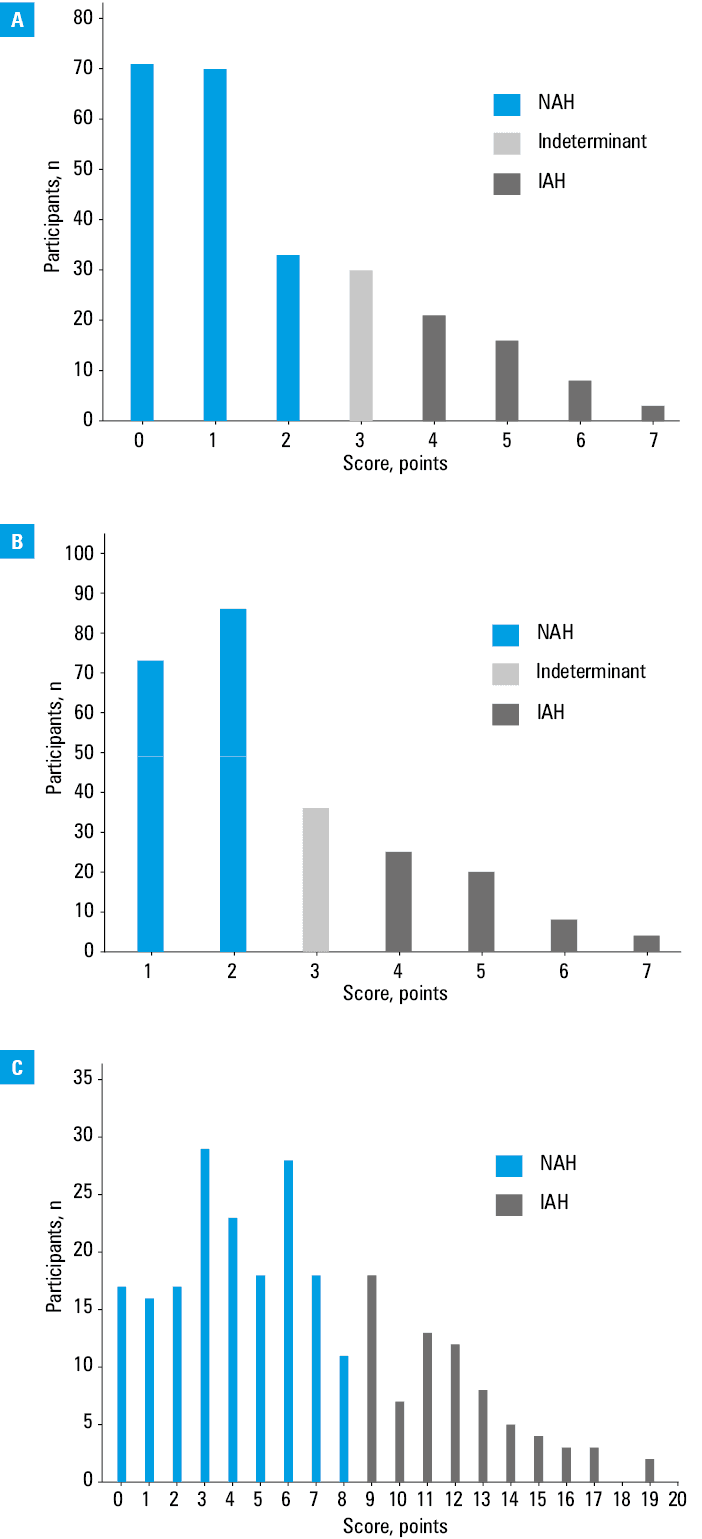
Abbreviations: NAH, normal awareness of hypoglycemia; IAH, impaired awareness of hypoglycemia
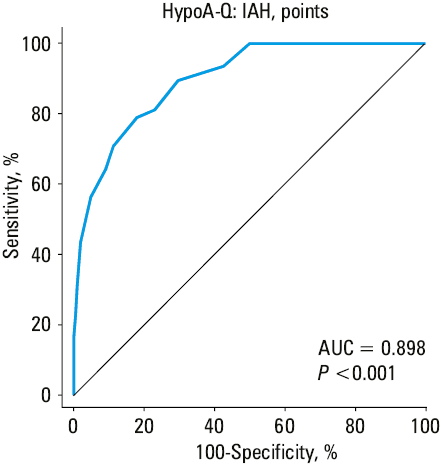
Abbreviations: AUC, area under the curve
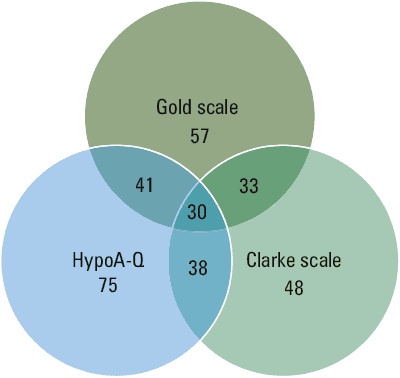
The group was divided into 2 subgroups depending on the occurrence of IAH, which was diagnosed using the aforementioned standardized questionnaires. The patients with IAH diagnosed with any questionnaire (39%), as compared with the individuals without IAH, had higher median (IQR) frequency of lifetime episodes of severe hypoglycemia (2 [0–5] vs 0 [0–1]; P <0.001). The individuals with IAH were more likely to have hypertension than the participants without IAH (n = 56 [36%] vs n = 50 [51%]; P = 0.02). The patients with IAH had lower median (IQR) of mean HbA1c values than those without IAH at the time of the study (62 [52–72] vs 66 [60–78] mmol/mol; P <0.001) and over the last 5 years (63 [53–72] vs 67 [60–76] mmol/mol; P = 0.003). They also had lower median (IQR) TC levels (175 [146–202] vs 182 [158–209] mg/dl; P = 0.03), LDL‑C levels (89 [71–108] vs 98 [77–119 mg/dl; P = 0.02), and non–HDL‑C levels (110 [90–130] vs 118 [96–143] mg/dl; P = 0.03). The patients with IAH using SMBG had lower median (IQR) of mean glycemia (185 [162–233] vs 221 [184–248] mg/dl; P = 0.006) and SD (83 [70–101] vs 92 [75–114] mg/dl; P = 0.03). No significant differences in short‑term glycemic control were observed in the patients utilizing CGM. The results are presented in Table 2. Regarding the data on glycemia levels, we present separate results for the SMBG and CGM systems. The comparison of patients with and without IAH according to individual questionnaires is summarized in Table 2.
Parameter | IAH yes (n = 98) | IAH no (n = 154) | P value | Gold scale yes (n = 57) | Gold scale no (n = 195) | P value | Clarke scale yes (n = 48) | Clarke scale no (n = 204) | P value | HypoA‑Q yes (n = 75) | HypoA‑Q no (n = 177) | P value | ||
Data are presented as median (interquartile range) or number (percentage) of patients.
a Data obtained from patients using SMBG (n = 160)
b Data obtained from patients using CGM (n = 92)
The Mann–Whitney test for continuous variables and the χ2 test for categorical variables were used; a P value below 0.05 was considered significant.
SI conversion factors, see Table 1
| ||||||||||||||
Age, y | 42 (32–56) | 40 (29–49) | 0.08 | 40 (32–56) | 41 (30–52) | 0.67 | 41 (33–57) | 41 (29–51) | 0.32 | 41 (32–55) | 40 (29–50) | 0.09 | ||
Sex | Men | 52 (53) | 83 (54) | 0.9 | 29 (51) | 106 (54) | 0.64 | 28 (58) | 107 (52) | 0.46 | 41 (55) | 94 (53) | 0.14 | |
Women | 46 (47) | 71 (46) | 28 (49) | 89 (46) | 20 (42) | 97 (48) | 34 (45) | 83 (47) | ||||||
Duration of diabetes, y | 24 (16–30) | 21 (16–29) | 0.11 | 22 (16–28) | 22 (17–30) | 0.68 | 24 (18–30) | 22 (16–30) | 0.32 | 25 (18–30) | 21 (16–28) | 0.01 | ||
Lifetime episodes of severe hypoglycemia, n | 2 (0–5) | 0 (0–1) | <0.001 | 2 (0–5) | 0 (0–1) | <0.001 | 3 (1–9) | 0 (0–1) | <0.001 | 2 (0–5) | 0 (0–1) | <0.001 | ||
Lifetime episodes of DKA, n | 0 (0–1) | 0 (0–1) | 0.49 | 0 (0–1) | 0 (0–1) | 0.99 | 0 (0–1) | 0 (0–1) | 0.14 | 0 (0–1) | 0 (0–1) | 0.49 | ||
Current smoker | 19 (19) | 24 (16) | 0.49 | 15 (26) | 28 (14) | 0.07 | 14 (29) | 29 (14) | 0.03 | 13 (17) | 30 (17) | 0.21 | ||
Hypertension | 50 (51) | 56 (36) | 0.02 | 29 (51) | 77 (39) | 0.13 | 21 (44) | 85 (42) | 0.79 | 39 (52) | 67 (38) | 0.38 | ||
Hypothyroidism | 32 (33) | 36 (23) | 0.11 | 22 (39) | 46 (24) | 0.03 | 15 (31) | 53 (26) | 0.4 | 26 (35) | 42 (24) | 0.42 | ||
Model of insulin therapy | IIT | 86 (88) | 148 (96) | 0.03 | 50 (88) | 184 (94) | 0.08 | 40 (83) | 194 (95) | 0.006 | 66 (88) | 168 (95) | 0.006 | |
Basal–bolus | 11 (11) | 6 (4) | 6 (10) | 11 (6) | 7 (15) | 10 (5) | 9 (12) | 8 (5) | ||||||
Premixed insulin | 1 (1) | 0 | 1 (2) | 0 | 1 (2) | 0 | 0 | 1 (<1) | ||||||
Insulin delivery | MDI | 77 (79) | 125 (81) | 0.61 | 43 (75) | 159 (82) | 0.31 | 39 (81) | 163 (80) | 0.83 | 59 (79) | 143 (81) | 0.55 | |
CSII | 21 (21) | 29 (19) | 14 (25) | 36 (18) | 9 (19) | 41 (20) | 16 (21) | 34 (19) | ||||||
Daily dose of insulin, U/kg body weight/day | 0.5 (0.39–0.64) | 0.57 (0.46–0.7) | 0.02 | 0.51 (0.42–0.64) | 0.57 (0.44–0.68) | 0.28 | 0.48 (0.38–0.63) | 0.57 (0.45–0.69) | <0.001 | 0.56 (0.42–0.64) | 0.56 (0.45–0.69) | <0.001 | ||
CGM use | 43 (44) | 49 (32) | 0.15 | 28 (49) | 64 (33) | 0.08 | 27 (56) | 65 (32) | 0.007 | 36 (48) | 56 (32) | 0.11 | ||
Body weight, kg | 75 (67–83) | 75 (65–86) | 0.77 | 74 (65–83) | 76 (66–86) | 0.38 | 75 (65–83) | 76 (66–86) | 0.54 | 78 (67–84) | 75 (65–85.2) | 0.49 | ||
BMI, kg/m2 | 24.4 (23.1–28) | 25.1 (22.5–28.4) | 0.85 | 24.4 (23–27.5) | 24.9 (22.6–28.4) | 0.66 | 24.6 (22.5–28) | 24.9 (23–28.4) | 0.54 | 24.9 (23.3–28.4) | 24.8 (22.5–28.1) | 0.37 | ||
Current HbA1c, %; mmol/mol | 7.8 (6.9–8.7); 62 (52–72) | 8.2 (7.6–9.3); 66 (60–78) | <0.001; 0.001 | 7.7 (6.8–8.5); 61 (51–69) | 8.2 (7.3–9.3); 66 (56–78) | 0.005; 0.005 | 7.3 (6.9–8.2); 56 (51–66) | 8.2 (7.4–9.3); 66 (57–78) | <0.001; <0.001 | 7.7 (6.9–8.3); 61 (52–67) | 8.2 (7.4–9.3); 66 (57–78) | <0.001; <0.001 | ||
Mean HbA1c last 5 years, %; mmol/mol | 7.9 (7–8.7); 63 (53–72) | 8.25 (7.6–9.1); 67 (60–76) | 0.003; 0.003 | 7.9 (7–8.7); 63 (53–72) | 8.2 (7.5–9.1); 66 (58–76) | 0.03; 0.03 | 7.7 (7–8.3); 60 (53–67) | 8.2 (7.5–9.2); 66 (58–76) | 0.006; 0.006 | 7.8 (7–8.4); 62 (53–68) | 8.3 (7.5–9.3); 67 (58–78) | 0.00; 0.002 | ||
Creatinine, mg/dl | 0.9 (0.8–1) | 0.9 (0.8–1) | 0.22 | 0.9 (0.8–1) | 0.9 (0.8–1) | 0.55 | 0.9 (0.8–1) | 0.9 (0.8–1) | 0.31 | 0.9 (0.8–1) | 0.9 (0.8–1) | 0.26 | ||
eGFR, ml/min/1.73 m2 | 93 (78–108) | 101 (81–113) | 0.05 | 92 (81–106) | 99 (80–113) | 0.21 | 93 (80–107) | 99 (80–113) | 0.19 | 93 (77–108) | 99 (81–113) | 0.11 | ||
TSH, µIU/ml | 2.1 (1.2–2.8) | 1.7 (1.1–2.4) | 0.07 | 2.2 (1.3–3) | 1.7 (1.1–2.5) | 0.02 | 2.2 (1.3–2.9) | 1.7 (1.1–2.5) | 0.07 | 2 (1.1–2.8) | 1.8 (1.2–2.5) | 0.48 | ||
Cortisol, µg/dl | 15.1 (12.7–17.4) | 15.4 (13.5–17.6) | 0.36 | 14.5 (12.4–18) | 15.4 (13.4–17.5) | 0.41 | 14.9 (12.7–17.4) | 15.3 (13.4–17.7) | 0.47 | 14.9 (13–17.4) | 15.3 (13.2–17.6) | 0.7 | ||
TC, mg/dl | 175 (146–202) | 182 (158–209) | 0.03 | 178 (150–193) | 181 (156–209) | 0.27 | 177 (146–199) | 181 (157–208) | 0.24 | 178 (149–204) | 181 (157–207) | 0.33 | ||
LDL‑C, mg/dl | 89 (71–108) | 98 (77–119) | 0.02 | 91 (72–108) | 96 (74–118) | 0.09 | 91 (71–107) | 95 (74–118) | 0.12 | 89 (71–108) | 96 (74–118) | 0.1 | ||
HDL–C, mg/dl | 60 (50–74) | 62 (53–72) | 0.69 | 64 (51–76) | 60 (51–72) | 0.37 | 67 (50–78) | 61 (52–72) | 0.4 | 63 (51–80) | 61 (52–72) | 0.54 | ||
Non–HDL‑C, mg/dl | 110 (90–130) | 118 (96–143) | 0.03 | 110 (90–128) | 115 (95–142) | 0.15 | 112 (89–130) | 115 (95–142) | 0.017 | 110 (92–130) | 116 (95–141) | 0.15 | ||
Triglycerides, mg/dl | 92 (74–124) | 100 (72–136) | 0.32 | 90 (70–124) | 98 (74–133) | 0.36 | 92 (73–127) | 98 (73–135) | 0.4 | 90 (70–131) | 100 (75–133) | 0.31 | ||
Mean glycemia, mg/dla | 185 (162–233) | 221 (184–248) | 0.006 | 176 (161–220) | 219 (177–248) | 0.003 | 173 (165–220) | 218 (174–248) | 0.04 | 192 (162–235) | 217 (180–246) | 0.051 | ||
SD, mg/dla | 83 (70–101) | 92 (75–114) | 0.03 | 83 (66–97) | 90 (73–113) | 0.04 | 85 (77–111) | 88 (73–110) | 0.72 | 80 (71–99) | 89 (74–113) | 0.08 | ||
CV, %a | 43.75 (36.8–49.7) | 42.4 (38.5–47.4) | 0.52 | 44.5 (38.9–48.6) | 42.4 (37.6–47.6) | 0.24 | 46.6 (39.9–55.5) | 42.7 (37.2–47.1) | 0.03 | 43.6 (36.9–49.7) | 42.5 (37.6–47.6) | 0.57 | ||
Mean glycemia, mg/dlb | 168 (145–193) | 174 (148–197) | 0.69 | 169 (150–193) | 170 (144.5–195) | 0.73 | 156 (145–189) | 174 (148–200) | 0.24 | 169 (149–190) | 172 (145–200) | 0.79 | ||
SD, mg/dlb | 61 (53–73) | 66 (54–84) | 0.49 | 63 (54–74) | 65 (51–83) | 0.87 | 62 (53–73) | 65 (52–78) | 0.95 | 61 (53–73) | 65 (53–83) | 0.78 | ||
CV, %b | 36.2 (34–43.3) | 38.2 (34.2–43.3) | 0.49 | 35.8 (34.1–43.5) | 37.9 (33.4–43.1) | 0.67 | 38.8 (35–44.1) | 36.9 (33–41.9) | 0.2 | 37.1 (34–43.5) | 37.5 (34–43.1) | 0.9 | ||
TAR >180 mg/dl, %b | 39 (26–52) | 41 (24–53) | 0.76 | 39 (28–53) | 40 (23.5–53) | 0.6 | 31 (26–46) | 41 (24–54) | 0.21 | 39 (28–48) | 41 (23–55) | 0.9 | ||
TIR, 70–180 mg/dl, %b | 59 (46–68) | 56 (44–72) | 0.73 | 59 (46–67) | 58 (45–72.5) | 0.73 | 63 (51–68) | 56 (42–71) | 0.27 | 59 (48–67) | 56 (42–73) | 0.73 | ||
TBR <70 mg/dl, %b | 3 (1–5) | 3 (1–5) | 0.94 | 2.5 (1–5) | 3 (1–5) | 0.52 | 3 (1–5) | 3 (1–5) | 0.34 | 3 (1–5) | 3 (1–5) | 0.75 | ||
TBR <54 mg/dl, %b | 0 (0–1) | 0 (0–1) | 0.53 | 0 (0–1) | 0 (0–1) | 0.84 | 0 (0–1) | 0 (0–1) | 0.49 | 0 (0–1) | 0 (0–1) | 0.47 | ||
SAF ratio, AU | 2.5 (1.9–3) | 2.3 (2–2.7) | 0.22 | 2.5 (1.9–2.9) | 2.3 (2–2.7) | 0.59 | 2.6 (2–3.1) | 2.3 (2–2.7) | 0.02 | 2.5 (1.9–3) | 2.3 (2–2.7) | 0.54 | ||
Clarke scale, points | 3 (2–5) | 1 (0–1) | <0.001 | 4 (3–5) | 1 (0–2) | <0.001 | 5 (4–5) | 1 (0–2) | <0.001 | 4 (2–5) | 1 (0–2) | <0.001 | ||
Gold scale, points | 4 (3–5) | 2 (1–2) | <0.001 | 5 (4–5) | 2 (1–2) | <0.001 | 4 (3–5) | 2 (1–2) | <0.001 | 4 (3–5) | 2 (1–2) | <0.001 | ||
HypoA‑Q, points | 11 (9–13) | 4 (2–6) | 0.002 | 11 (8–14) | 4 (2–7) | <0.001 | 12 (9–14) | 5 (3–7) | <0.001 | 11 (10–13) | 4 (2–6) | <0.001 | ||
In the univariable logistic regression models, the diagnosis of IAH was associated with lifetime episodes of severe hypoglycemia, hypertension, a daily dose of insulin, current HbA1c value, mean HbA1c value from the last 5 years, TC level, LDL‑C level, non–HDL‑C level, mean glycemia, and SD. The results are presented in Table 3.
Parameter | OR | 95% CI | P value |
a Data obtained from all participants (n = 252)
Abbreviations: OR, odds ratio; others, see Table 1 | |||
Age, y | 1.02 | 0.99–1.04 | 0.07 |
Male sex | 0.96 | 0.58–1.6 | 0.89 |
Duration of diabetes, y | 1.03 | 0.99–1.06 | 0.06 |
Lifetime episodes of severe hypoglycemia | 1.31 | 1.17–1.47 | <0.001 |
Lifetime episodes of DKA | 1.11 | 0.92–1.33 | 0.27 |
Current smoker | 1.05 | 0.75–1.45 | 0.79 |
Hypertension | 1.82 | 1.09–3.05 | 0.02 |
Hypothyroidism | 1.59 | 0.9–2.79 | 0.11 |
Model of insulin therapy, IIT | 3.39 | 1.27–9.05 | 0.02 |
Insulin delivery, MDI | 1.18 | 0.63–2.21 | 0.61 |
Daily dose of insulin, U/kg body weight/day | 0.15 | 0.03–0.69 | 0.02 |
CGM use | 1.68 | 0.99–2.83 | 0.05 |
Body weight, kg | 0.99 | 0.98–1.01 | 0.57 |
BMI, kg/m2 | 1 | 0.94–1.07 | 0.94 |
Current HbA1c, % | 0.74 | 0.62–0.89 | 0.002 |
Mean HbA1c in the last 5 years, % | 0.75 | 0.61–0.91 | 0.005 |
Creatinine, mg/dl | 1.44 | 0.75–2.79 | 0.28 |
eGFR, ml/min/1.73 m2 | 0.99 | 0.98–1 | 0.08 |
TSH, µIU/ml | 1.01 | 0.9–1.12 | 0.9 |
Cortisol, µg/dl | 0.96 | 0.9–1.03 | 0.29 |
TC, mg/dl | 0.99 | 0.98–0.99 | 0.02 |
LDL‑C, mg/dl | 0.99 | 0.98–0.99 | 0.01 |
HDL‑C, mg/dl | 0.99 | 0.98–1.01 | 0.94 |
Non–HDL‑C, mg/dl | 0.99 | 0.98–0.99 | 0.02 |
Triglycerides, mg/dl | 0.99 | 0.99–1 | 0.24 |
Mean glycemia, mg/dla | 0.99 | 0.98–0.99 | 0.007 |
SD, mg/dla | 0.98 | 0.97–0.99 | 0.04 |
CVa | 1 | 0.98–1.03 | 0.73 |
SAF ratio, AU | 1.36 | 0.88–2.09 | 0.15 |
In the multivariable logistic regression model (LASSO), the diagnosis of IAH was associated with the duration of diabetes (OR, 1.19; 95% CI, 1.12–1.27; P <0.001), lifetime episodes of severe hypoglycemia (OR, 2.25; 95% CI, 2.12–2.39; P <0.001), hypothyroidism (OR, 1.24; 95% CI, 1.12–1.38; P <0.001), body weight (OR, 0.91; 95% CI, 0.85–0.96; P <0.001), HbA1c level (OR, 0.92; 95% CI, 0.85–0.99; P = 0.04), creatinine level (OR, 1.09; 95% CI, 1.04–1.15; P <0.001), LDL‑C level (OR, 0.82; 95% CI, 0.78–0.87; P <0.001), and SD (OR, 0.66; 95% CI, 0.61–0.72; P <0.001). The results are presented in Figure 4.
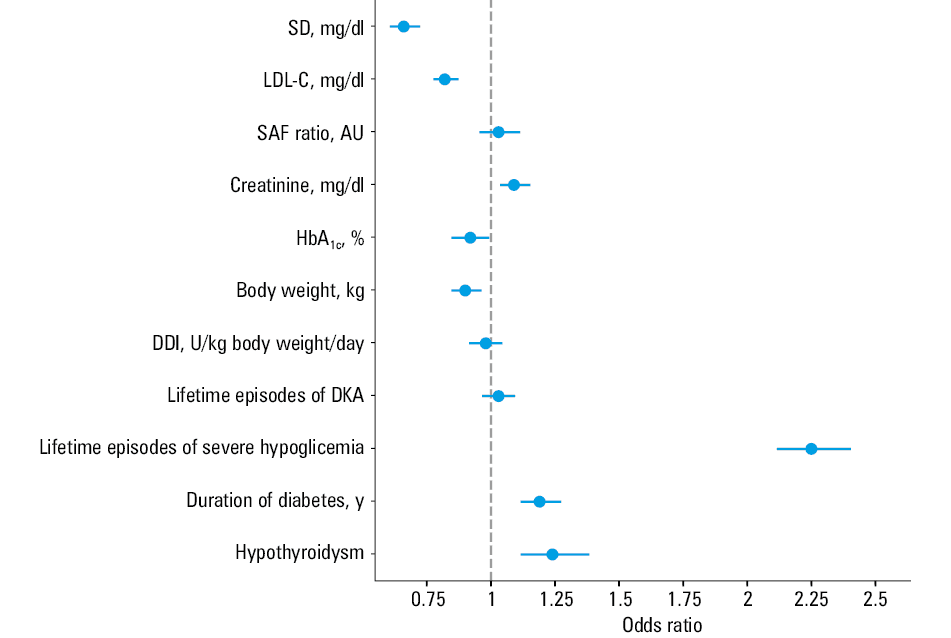
Abbreviations: DDI, daily dose of insulin; others, see Table 1
DISCUSSION
The primary finding of our study is the confirmation of the usefulness of HypoA‑Q, a new self‑report questionnaire designed to assess awareness of hypoglycemia. The traditionally used scales, such as the Clarke, Gold, and Pedersen‑Bjergaard ones, have limitations.25 There are no clear guidelines on the most accurate noninvasive tool for assessing hypoglycemia awareness status, and none of the methods widely used to date are entirely reliable. Rubin et al26 suggested using 2 questionnaires (the Clarke and the Gold) for better classification accuracy. In their study of 78 adults with T1D, the prevalence of IAH was 33% and 44%, according to the Clarke and Gold scales, respectively. Among the patients who completed both questionnaires, 32% were classified inconsistently, receiving a diagnosis of IAH in only one of them. Additionally, the authors found that IAH diagnosed with the Clarke and the Gold methods poorly predicts the counterregulatory response to hypoglycemia in patients with T1D.26 We observed a comparable occurrence of IAH diagnosed by the Clarke and the Gold scales in the patients with T1D, consistent with findings from other studies.25,27 The frequency of IAH was 19% and 23%, according to the Clarke and the Gold scales, respectively. Only 15% of the patients were classified inconsistently. Similar to the findings of Rubin et al,26 the Clarke scale detected IAH in fewer people than the Gold scale.
Speight et al22 designed HypoA‑Q as a reliable and accurate tool for the noninvasive assessment of hypoglycemia awareness status. Although they preliminarily validated this questionnaire in patients with T1D, they did not determine the cutoff for indicating IAH. They obtained similar scoring results in HypoA‑Q, that is, the participants with IAH, according to the Gold scale, scored an average of 10.8 (3.42) points, while those without IAH scored 5.09 (3.2) points. In our research, the scores were 10.53 (3.37) points and 3.63 (2.29) points, respectively.
To our knowledge, this study is one of the first to compare the Clarke, the Gold, and the HypoA‑Q questionnaires for assessing hypoglycemia awareness in the patients with T1D, and the first to utilize HypoA‑Q in the Polish population. We found that the scales above detected IAH in different patients, with the Gold scale indicating IAH more frequently than the Clarke scale, which was previously shown.26 Assessing awareness of hypoglycemia based on a single method (Clarke or Gold scale) seems insufficiently reliable.28 In our study, HypoA‑Q with a 9‑point cutoff, showed the highest sensitivity in diagnosing IAH, even identifying patients with undetected IAH according to the Clarke and the Gold scales.
Our observations contrast with a study by Matus et al,29 who were the first to propose a diagnostic threshold of 12 points to recognize IAH using HypoA‑Q. In their study, a group of 21 adults with T1D (men, 48%; median age, 36 years; and median T1D duration, 21 years) completed the HypoA‑Q, the Clarke, and hypoglycemia severity questionnaires, and underwent continuous glucose monitoring and hyperinsulinemic‑hypoglycemic clamp testing. Their findings also suggest the Clarke scoring should be modified to 5 or more points to identify IAH. We used a commonly applied and validated threshold of 4 points, resulting in lower thresholds for both the Clarke scale and HypoA‑Q in our analysis. Additionally, the population characteristics were different in our study and that of Matus et al.29 Their IAH group was older (51 years), had a longer duration of diabetes (38 years), and exhibited a lower HbA1c value (6.6%) than our study group. According to our data and other research, these factors might be associated with greater frequency of IAH.6 The limitation of the cited study was a small number of patients, but its strength was using hyperinsulinemic‑hypoglycemic clamp testing.29
Our results are also consistent with recent data presented in adults with type 2 diabetes (T2D). Henao‑Carrillo et al30 evaluated the validity of HypoA‑Q for assessing awareness of hypoglycemia in 406 insulin‑treated patients with T2D. They obtained a similar median (IQR) HypoA‑Q score of 6 (3–7) points as in our study (6 [3–9] points). They proposed a cutoff of 10 points in HypoA‑Q to diagnose IAH, whereas our data suggest a diagnostic threshold of 9 points. However, we examined individuals with T1D, not T2D. The limitation of their research was the exclusive use of the Clarke scale to assess IAH.30
Our work included a large, homogenous group of patients with T1D from Poland, suggesting that the findings may be generalizable to a broader population with T1D. We demonstrated in the multiple regression analysis that the presence of IAH is related to longer diabetes duration. This is consistent with the findings of Olsen et al,31 who reported that the intensity of autonomic symptoms and awareness of hypoglycemia decline with increasing duration of T1D. They suggested that subjective symptoms of hypoglycemia change over time.31 Likewise, Stefanon et al32 reported that the occurrence of IAH increases with a longer duration of diabetes. This is a significant clinical finding, confirming the need for repeated education of patients with long‑term T1D as well as increased alertness to the risk of hypoglycemia.
Our study also showed that the patients with IAH were more likely to have hypertension. Previous research demonstrated an association between hypoglycemia and elevated blood pressure. Severe hypoglycemia triggers counterregulatory mechanisms, such as the activation of the sympathoadrenal system, which leads to systolic blood pressure elevation.33 Feldman‑Billard et al34 supposed that hypoglycemia‑induced hypertension is more likely to occur in individuals with recurrent and severe hypoglycemia. Additionally, hypertension is a risk factor for both microvascular and macrovascular complications of diabetes.35 Therefore, more health abnormalities can be expected in the group of patients with hypertension.
Other findings indicated that the patients with IAH had lower LDL‑C and non–HDL‑C levels. Comparable results were presented in the DCCT (Diabetes Control and Complications Trial) and confirmed in later studies, showing a positive correlation between poor glycemic control and dyslipidemia.36-40 Poor glycemic control leads to quantitative and qualitative changes in lipid profiles, resulting in atherogenic lipid patterns. Higher HbA1c values are associated with increased TC, LDL‑C, and triglyceride levels.36-40 In our study, the individuals with IAH had lower HbA1c levels, corresponding to lower LDC and non–HDL‑C levels.
Patients with T1D have a higher risk of developing other autoimmune diseases, the most common being hypothyroidism.41,42 This endocrinopathy disrupts the counterregulatory response to hypoglycemia. Mohn et al43 reported that even subclinical hypothyroidism is linked to an increased risk of hypoglycemia. Moreover, hypothyroidism can cause cognitive impairment, potentially affecting recognition of hypoglycemic symptoms. In line with these findings, we observed that IAH was related to hypothyroidism, highlighting the importance of screening for thyroid dysfunction in patients with T1D.
In our study group, most patients were treated with intensive insulin therapy as per current guidelines.44 The benefits of this model of insulin therapy were demonstrated by the DCCT and the EDIC (Epidemiology of Diabetes Interventions and Complications) follow‑up study, showing better glycemic control and a lower risk of microvascular complications of diabetes in comparison with the patients receiving a conventional insulin treatment.45,46 Despite the proven advantages, not every patient is able or willing to be treated with intensive insulin therapy. In the current analysis, only 7% of the participants used conventional insulin therapy. However, fewer patients with than without IAH were treated with intensive insulin therapy, reinforcing the idea that this method leads to better treatment outcomes.
Similarly to the findings of Matus et al,29 our study showed that the individuals with IAH required less insulin per day, suggesting that factors beyond insulin dosage alone play a significant role in the awareness of hypoglycemia.
The patients with IAH reported more lifetime episodes of severe hypoglycemia, which is understandable given that recurrent exposure to hypoglycemia can lead to the development of IAH. Our observations align with those published previously.25,31 Additionally, we found that the episodes of severe hypoglycemia were associated with a 31% higher risk of diagnosing IAH. Recurrent hypoglycemia may generate a vicious cycle, where the recent episode weakens the body’s counterregulatory mechanism. This phenomenon, known as hypoglycemia‑associated autonomic failure, reduces the sympathoadrenal response to subsequent hypoglycemia due to decreased epinephrine response and reduced awareness of hypoglycemia through impaired sympathetic neural response.47 In our study, the presence of IAH was related to lower glycemia, SD, and HbA1c values. This highlights the need for regular patient education, even for those with strict glycemic control, to prevent hypoglycemia and ensure safe insulin therapy practices. A previous study by Lin et al48 showed that IAH is also related to TBR below 54 mg/dl.48 Our data suggest that low blood glucose may play a significant role in the development of IAH. Ali et al49 noticed that widespread use of CGM might have a positive effect on reducing the occurrence of IAH in T1D patients. However, in our research, only 37% of the participants utilized CGM, which may have affected our results. Our study’s timing coincided with the introduction of CGM reimbursement in the Polish health care system, which was a confounding factor. Prior to the reimbursement, the cost was a limiting factor for many patients. According to the guidelines, CGM should be used for every patient with T1D, especially those with IAH.44 It was previously reported that hypoglycemia awareness can be restored by avoidance of hypoglycemia. Sepulveda et al50 found that while CGM reduces severe hypoglycemia, it does not improve endogenous hypoglycemia awareness.4 Similarly, Lin et al48 showed that despite using CGM, IAH remains an important clinical concern in T1D patients.
Interestingly, despite better glycemic control in the individuals with IAH, they had a significantly higher accumulation of AGEs in the skin; however, only on the Clarke scale. These data suggest that the participants with IAH had poorer diabetes control in the past, as SAF reveals long‑standing glycemic control over a much longer period than the HbA1c value. These findings align with prior research linking AGEs to the occurrence of both micro- and macroangiopathic complications of diabetes.51 This may be related to metabolic memory and the negative long‑term impact of poor glycemic control, even after improvements have been made.52 Thus, good glycemic control from the onset of diabetes may be essential in preventing IAH.
Our study has some limitations, as it did not verify the assessment of awareness of hypoglycemia by hyperinsulinemic‑hypoglycemic clamp that might have increased the sensitivity of diagnosing IAH.
To conclude, IAH presents a significant challenge for individuals with T1D. Our study highlighted the variability in IAH detection across different self‑report questionnaires. To our knowledge, this is one of the few studies proposing a threshold for diagnosing IAH with HypoA‑Q. The HypoA‑Q 9‑point cutoff demonstrated the highest sensitivity in diagnosing IAH. Thus, HypoA‑Q can be considered the most valuable screening test for IAH. Our study confirmed that the presence of IAH is related to multiple factors. Further research is needed to determine the optimal HypoA‑Q cutoff and identify additional risk factors for IAH.
- Heller SR. Glucose concentrations of less than 3.0 mmol/l (54 mg/dl) should be reported in clinical trials: a joint position statement of the American Diabetes Association and the European Association for the Study of Diabetes. Diabetes Care. 2017; 40: 155‑157. | Crossref
- Elliott L, Fidler C, Ditchfield A, Stissing T. Hypoglycemia event rates: a comparison between real‑world data and randomized controlled trial populations in insulin‑treated diabetes. Diabetes Ther. 2016; 7: 45‑60. | Crossref
- Diabetes Control and Complications Trial Research Group, Nathan DM, Genuth S, et al. The effect of intensive treatment of diabetes on the development and progression of long‑term complications in insulin‑dependent diabetes mellitus. N Engl J Med. 1993; 329: 977‑986. | Crossref
- Cryer PE. Hypoglycaemia: the limiting factor in the glycaemic management of type I and type II diabetes. Diabetologia. 2002; 45: 937‑948. | Crossref
- Cryer PE. Hypoglycemia in type 1 diabetes mellitus. Endocrinol Metab Clin North Am. 2010; 39: 641‑654. | Crossref
ARTICLE INFORMATION