
Homocysteine in adult patients with cardiovascular disease: is it clinically relevant in 2025? A tribute to Hieronim Jakubowski (1946–2025)
Key words: cardiovascular disease, folate, Hcy-thiolactone, homocysteine, homocysteinylated proteins

 CC BY 4.0
Homocysteine in adult patients with cardiovascular disease: is it clinically relevant in 2025? A tribute to Hieronim Jakubowski (1946–2025)
CC BY 4.0
A history of persistently elevated plasma total homocysteine (tHcy) concentrations, that is, hyperhomocysteinemia, as a risk factor and / or biomarker of increased risk for cardiovascular disease (CVD) is largely based on multiple observational studies with robust evidence only for detrimental effects of homocystinuria. In most adult individuals, fasting plasma tHcy concentrations ranged from 8–30 µmol/l. Evidence for proatherogenic effects of mild tHcy elevation is weak given conflicting data, especially in the presence and treatment of strong risk factors, for example, hypercholesterolemia or diabetes. This statement was supported by randomized controlled trials which failed to show that reduction in tHcy following vitamin interventions improves clinical outcomes in CVD. On the other hand, some studies indicated lower risk of cerebrovascular ischemic events, which, however, is not reflected in clinical guidelines. It has been reported that other Hcy metabolites, including Hcy‑thiolactone, Nε-homocysteinyllysine isopeptide, or homocysteinylated proteins, are weakly correlated with tHcy levels and are largely resistant to vitamin interventions, which can in part explain inconsistent data linking disturbed methionine metabolism with CVD. However, high‑quality, large‑scale clinical research on Hcy metabolites has not been conducted yet. The late Professor Hieronim Jakubowski (passed away on February 22, 2025), an eminent Polish biochemist, devoted his scientific career to exploring complex biochemical and clinical interactions between Hcy and human pathology, as reflected by more than 130 papers on this topic. The present overview summarizes evidence for the current approach to tHcy measurements in individuals at risk of CVD. Based on recent data, with emphasis on the work of H. Jakubowski, we may conclude that the Hcy controversy still exists, and further research is warranted to elucidate a role of this amino acid and its metabolites in CVD.
Introduction
Homocysteine (Hcy) is a noncoded thiol group containing an amino acid, generated from methionine (Met) derived mainly from animal proteins in the diet. Hcy sparked a huge interest at the end of the 1960s, when Kilmer McCully reported premature atherosclerosis in individuals with high total Hcy (tHcy) concentrations with hereditary homocystinuria, which led to the Hcy‑based hypothesis of atherosclerosis.1,2 It has been postulated that a mild increase in circulating tHcy enhances atherosclerosis development and progression,2 and tHcy has been called a cardiovascular risk factor that could be effectively lowered with the subsequent reduction in major cardiovascular adverse events.2,3 A comprehensive summary of accumulating basic and clinical evidence to support a multifactorial active role of Hcy in atherogenesis was published in New England Journal of Medicine in 1998.4 However, later this concept has been called into question by new evidence, and its significance has been reduced in light of conflicting data from randomized trials, and when the low‑density lipoprotein (LDL)-based theory prevailed, and clinical benefits from LDL‑cholesterol lowering in primary and secondary prevention of cardiovascular disease (CVD), the number one killer worldwide, were convincingly demonstrated in high‑quality randomized trials.5,6 This gradual change in understanding the role of Hcy in CVD was commented on by Smith and Refsum in their review from 2021: “In general, it is safer to consider raised tHcy as a biomarker since the term ‘risk factor’ often implies a causal link. A causal link requires much more solid evidence, typically fulfilling the Bradford Hill criteria of causation.”7
It has been established that tHcy exceeding 15 µmol/l denotes hyperhomocysteinemia (HHcy), which can be detected in 5%–7% of the general population, with fluctuations related to folate intake and diets with varying amounts of animal proteins.4,5 Some diseases (hypothyroidism, chronic kidney disease, or diabetes), tobacco smoking, and certain medications used on a long‑term basis (in particular the folate antagonist methotrexate) are associated with higher tHcy concentrations.8,9 Vitamins of the B group, including folic acid, reduce Hcy levels by approximately 25%.5,7
tHcy concentrations above 100 µmol/l are typical of rare homocystinuria (prevalence around 1 in 200 000 individuals, but for instance in Ireland 1 in 65 000), mostly caused by cystathionine β-synthase (CBS) gene mutations, and can be also encountered in some diseases, more commonly in end‑stage renal disease.8,9 Homocystinuria, usually diagnosed in childhood or adolescence, is manifested by bone disorders (“Marfanoid” body habitus), vision defects (in particular lens subluxation), neurological pathologies (eg, seizures, myelopathy), early‑onset atherosclerotic vascular disease (ischemic stroke as the most common manifestation), and unprovoked venous thromboembolism (VTE). Such manifestations are not observed in patients with tHcy level below 30 µmol/l.
Observational studies published largely in the 1980s and 1990s showed increased prevalence of tHcy in the range of 15–30 µmol/l in patients with prior myocardial infarction (MI), established coronary artery disease (CAD), ischemic stroke, and previous VTE.3 Later, mostly prospective, studies failed to demonstrate such significant correlations of tHcy and vascular disorders, as shown, among others, in a multicenter study from 2002.10 Already in 2010, the American College of Cardiology and the American Heart Association issued the recommendation against tHcy measurements to estimate cardiovascular risk, recognizing HHcy as an insignificant risk factor at the level of public health.11
Several scientists explored Hcy in a wide spectrum of models to elucidate its role in the complex pathogenesis of CVD in hope for interventions capable of reducing this risk on top of known therapeutic strategies. However, in 2025 the prevailing view is that the clinical relevance of Hcy in the context of the primary or secondary CVD prevention is rather limited and determination of plasma tHcy has lost popularity among physicians, in contrast to a few other biomarkers, which are increasingly requested, with lipoprotein(a) as the best example of such a change.12,13
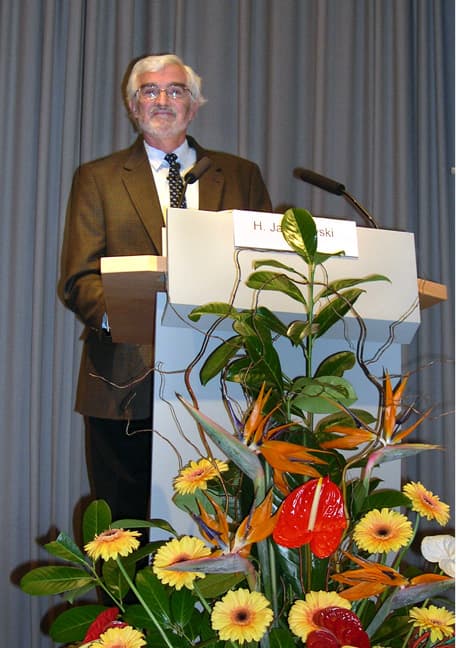
On February 22, 2025, Professor Hieronim Jakubowski (Figures 1 and 2) passed away. This Polish biochemist devoted more than 30 years to Hcy‑oriented research, and discovered novel aspects of Hcy biochemistry that help explain unresolved issues of how this sulfur amino acid may promote atherosclerosis and its thromboembolic manifestations, and why vitamin‑based Hcy‑lowering interventions turned out to be ineffective in reducing cardiovascular morbidity and mortality in most clinical trials. In a tribute to his life achievements, as his collaborators in the past, we decided to look at Hcy from the current perspective of clinicians and biochemists, and draw attention to a few Hcy‑related riddles waiting to be solved in the future.

Biochemistry of homocysteine and its metabolites
Hcy is generated from the essential, exogenous, sulfur amino acid Met. It is first converted by methionine adenosyltransferase isoenzymes into S‑adenosylmethionine (AdoMet) that is further used by methyltransferases to render various methylated substrates (X–CH3) and S‑adenosylhomocysteine (AdoHcy; Figure 3). AdoMet is considered the main source of methyl groups used in the synthesis of nucleic acids, proteins, lipids, and neurotransmitters, as well as the main regulator of epigenetic mechanisms. AdoHcy is then hydrolyzed by S‑adenosylhomocysteine hydrolase to Hcy and adenosine. There are 2 pathways leading to Met recovery in humans. One pathway is catalyzed by methionine synthase (MS), which, in the presence of vitamin B12, transfers a methyl group from 5‑methyl‑tertahydrofolate to Hcy. MS is then regenerated by methionine synthase reductase, which catalyzes reductive methylation of cob(II)alamin to methylcob(III)alamin. Tetrahydrofolate, formed during Hcy methylation, is converted to 5,10‑methylenetetrahydrofolate by a B6-dependent enzyme, serine hydroxymethyltransferase, and then irreversibly reduced to 5‑methyltetrahydrofolate by a B2-dependent enzyme, 5,10‑methylenetetrahydrofolate reductase (MTHFR). Lower MTHFR activity largely determined by 2 common genetic polymorphisms (677 C>T and 1298 A>C, old nomenclature) promotes an increase in tHcy, especially in folate deficiency.14
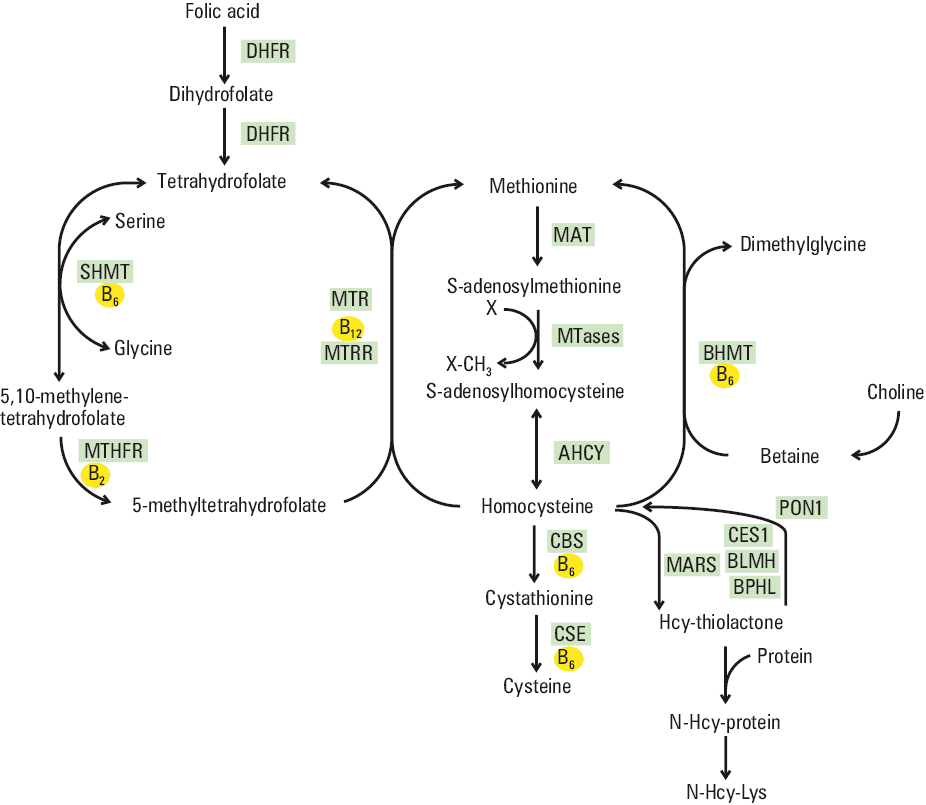
Abbreviations: AHCY, S‑adenosylhomocysteine hydrolase; BLMH, bleomycin hydrolase; BHMT, betaine‑homocysteine S‑methyltransferase; BPHL, biphenyl hydrolase like protein; CBS, cystathionine β-synthase; CES1, carboxylesterase 1; CSE, cystathionine γ-lyase; DHFR, dihydrofolate reductase; Hcy, homocysteine; Lys, lysine; MARS, Met‑tRNA synthetase; MTase, methyltransferase; MAT, methionine adenosyltransferase; MTHFR, 5,10‑methylenetetrahydrofolate reductase; MTR, methionine synthase; MTRR, methionine synthase reductase; PON1, paraoxonase 1; SHMT, serine hydroxymethyltransferase
An alternative pathway of Met restoration from Hcy is catalyzed by betaine‑Hcy S‑methyltransferase, a B6-dependent enzyme that catalyzes the transfer of a methyl group from diet- or choline‑derived betaine to Hcy, resulting in the formation of dimethylglycine. Hcy that is not used for Met restoration enters the transsulfuration pathway, where it is transformed first into cystathionine by CBS and then to cysteine (Cys) by cystathionine γ-lyase.14 Hcy can also be converted by Met‑tRNA‑synthetase to Hcy‑thiolactone and may undergo oxidation with thiol groups to form S‑Hcy‑protein or low‑molecular‑weight disulfides. Hcy‑thiolactone is removed from the body by several thiolactonases, that is, extracellular paraoxonase 1, intracellular bleomycin hydrolase, biphenyl hydrolase‑like protein,15 and carboxylesterase 116 (Figure 3). From the clinical perspective (see below), the Hcy metabolites have been demonstrated as potentially involved in CVD pathophysiology, with the most robust evidence for Hcy thiolactone.
Proatherogenic properties of homocysteine
Based mostly on in vitro studies following the use of high final Hcy concentrations, the key harmful effect of Hcy is considered endothelial injury closely associated with enhanced inflammatory state.17 In vitro studies indicated that Hcy can induce inflammation in endothelial cells18,19 and endothelial dysfunction via inhibiting nitric oxide production,20 protein S‑nitrosylation,21 and upregulating adhesion molecule expression.22,23
Prothrombotic effects of HHcy relevant for CVD involving platelets, coagulation factors, and endothelium have been reported by several groups2,4,24; however, usually these effects were absent or weakly pronounced in individuals with mild HHcy. In 2006, we found decreased permeability and lysability of plasma fibrin clots in patients with elevated tHcy levels, and a modification of this effect by concomitant diseases, for example, diabetes.25 Using another laboratory approach to assess fibrin clot characteristics, Jakubowski’s group showed that sulfur‑containing metabolites can alter clot lysis time and clot maximum absorbance in CAD patients.26 Importantly, urinary Hcy‑thiolactone and plasma Cys at baseline were significantly associated with impaired fibrinolysis, while plasma tHcy solely with clot absorbance, independently of age, sex, lipid profile, fibrinogen, and comorbidities.26 It is unclear whether fibrin‑related prothrombotic mechanisms dependent on Hcy levels may impact clinical outcomes.
Clinical relevance of mild hyperhomocysteinemia
Over 50 years ago, a large number of reports published by many groups indicated that HHcy in the range below 50 µmol/l is associated with an increased risk of CVD and stroke,7,27 though the causation remained uncertain given observational study designs and sometimes too small sample size. The key argument for the causal link between HHcy and CVD would be high‑quality evidence derived from randomized controlled trials (RCTs) showing that reduction in tHcy results in lower risk of major adverse cardiovascular events, as shown for cholesterol and statin use. However, in the case of elevated Hcy levels such evidence has not been provided yet. Most of the Hcy‑lowering trials recruited patients with a history of MI or ischemic stroke or documented advanced CVD, and despite showing reduction in stroke risk, they failed to demonstrate any impact of such an intervention on MI risk.28-32 However, this effect was observed when antiplatelet drugs were not administered.33-35 Unexpectedly, it was reported that the risk of stroke could be higher in patients on guideline‑recommended poststroke antithrombotic therapy.36 Furthermore, several studies over 30 years ago showed that elevated tHcy level markedly rises mortality among CVD patients. The strongest effect was reported in 1997, when the authors showed that CVD patients with tHcy above 20 µmol/l had a 4.5‑fold greater risk of death than those with tHcy below 9 µmol/l.37 It was confirmed in a meta‑analysis by Fan et al,38 who showed that the risk of death increased by 33.6% for each 5-µmol/l increase in the tHcy levels. In 2020, a German cohort study involving 2968 CVD patients showed that the hazard ratio (HR) for death was almost 3 times higher for those in the top quartile of tHcy (>15.6 µmol/l), as compared with those in the first quartile (tHcy <9.8 µmol/l).39
Primary prevention trials appeared to show more promising results with regard to Hcy lowering with the only positive large trial with Hcy‑lowering intervention involving 20 702 patients with hypertension conducted in China.40 In this trial, the patients free of MI or stroke were given 0.8 mg of folic acid in addition to enalapril, which resulted in a significant (by 0.7%) decrease in the risk of the first stroke during 48 months (HR, 0.79; 95% CI, 0.68–0.93; P = 0.003). However, it was calculated that approximately 143 (95% CI, 85–428) patients would need to be treated with enalapril plus folic acid for 5.4 years to prevent 1 stroke, which indicates that this effect is uncertain and weak.41
Regarding RCTs as the most reliable source of clinically useful information, the Cochrane Collaboration evaluated studies on Hcy in 2009, 2013, and 2015 with the last update published in 2017.41 Analysis of a total of 15 RCTs with 71 422 participants, including 9 trials with a low risk of bias, demonstrated that in comparison with placebo, Hcy‑lowering interventions in the form of supplementation with vitamins B6, B9, or B12, given alone or in combination, have no significant effect on the rate of MI (relative risk [RR], 1.02; 95% CI, 0.95–1.1), all‑cause death (RR, 1.01; 95% CI, 0.96–1.06), or serious adverse events (RR, 1.07; 95% CI, 1–1.14), but they lower the risk of stroke (4.3% vs 5.1%; RR, 0.9; 95% CI, 0.82–0.99; 10 trials); there were no differences between high vs low doses of vitamins with regard to the stroke risk. The authors concluded that “In terms of stroke, this review found a small difference in effect favoring to homocysteine‑lowering interventions” and “additional trials are unlikely to increase the certainty about the findings of this issue regarding homocysteine‑lowering interventions versus placebo.”
Based on 2 primary trials, that is, VISP (Vitamin Intervention for Stroke Prevention)42 and VITATOPS (Vitamins to Prevent Stroke),43 the latest 2021 American guidelines stated (recommendation 5.9): “Hyperhomocysteinemia: in patients with ischemic stroke or transient ischemic attack (TIA) with hyperhomocysteinemia, supplementation with folate, vitamin B6, and vitamin B12 is not effective for preventing subsequent stroke.”44 In their commentary to the guidelines, Spence and Hankey suggested, however, that “all patients with ischemic stroke should have their serum B12 and tHcy measured and treated if abnormal.”45 They highlighted the impact of impaired renal function on the effectiveness of B vitamins indicating that the use of cyanocobalamin is harmful at elevated creatinine levels, and generally methylcobalamin or hydroxycobalamin should be used instead (in their opinion class of recommendation 2a; level of evidence B‑R, randomized trial).45 Nevertheless, Hcy controversy around stroke persists, and the American and European prevention guidelines remained unaltered in this regard.
Another evidence aimed to clarify the Hcy controversy came from Mendelian randomization studies in which associations with CVD were sought for genetic polymorphisms known to affect tHcy, in particular the MTHFR 677 C>T polymorphism, in which 2 T alleles (present in 10% of white people) are usually associated with lower folate and higher tHcy levels. However, they yielded inconsistent results that are challenging in interpretation given differences in age, race, and first of all, folate status among patients and countries; in the United States, folic acid fortification of enriched cereal grain products is mandatory (mainly to prevent neural tube defects).46 The best examples of divergent results can be found in a meta‑analysis by Wald et al,47 in which 12 000 cases were compared with 12 000 controls, and the TT genotype showed a greater risk of CVD. Also, TT carriers, for a 5-µmol/l increase in tHcy, had an odds ratio (OR) for CAD of 1.42 (95% CI, 1.11–1.84). In contrast, a meta‑analysis by Clarke et al,48 in which 19 unpublished datasets were incorporated with more than 48 000 patients with CAD and almost 68 000 controls, showed no intergroup differences with an OR for CAD in TT carriers vs wild‑type CC individuals (OR, 1.02; 95% CI, 0.98–1.27). Moreover, in 2012 a United States meta‑analysis paradoxically found that the TT genotype was associated with a significantly lower CVD mortality in the years following introduction of mandatory folic acid fortification, suggesting that other CVD risk factors have a stronger effect.49
Additional markers of homocysteine metabolism and cardiovascular outcomes
The most commonly used marker of disturbed Hcy metabolism is tHcy, determined usually in EDTA plasma samples. However, it should be highlighted that plasma tHcy includes major oxidized Hcy forms, that is, Hcy bound via disulfide bonds to plasma protein (S‑Hcy‑protein) and to small‑molecular‑weight thiols (Hcy‑S‑S‑Cys and Hcy‑S‑S‑Hcy).48 Free reduced Hcy represents approximately 1%–2% of the circulating tHcy.
Hcy‑thiolactone, a chemically reactive cyclic thioester, modifies the ε-amino group of protein lysine residues (Figure 4), which leads to the generation of N‑Hcy‑proteins via nonenzymatic post‑translational modification, that is, N‑homocysteinylation.15 This modification has been extensively explored by H. Jakubowski and his collaborators for many years. H. Jakubowski’s group found N‑homocysteinylation sites in various proteins.15,51 Three lysine residues in human fibrinogen (Lys562 in the Aα chain, Lys344 in the Bβ chain, and Lys385 in the γ chain) were found to undergo N‑homocysteinylation, both in vitro and in vivo, while 4 N‑homocysteinylation sites at Lys4, Lys12, Lys137, and Lys525 were identified in albumin.51
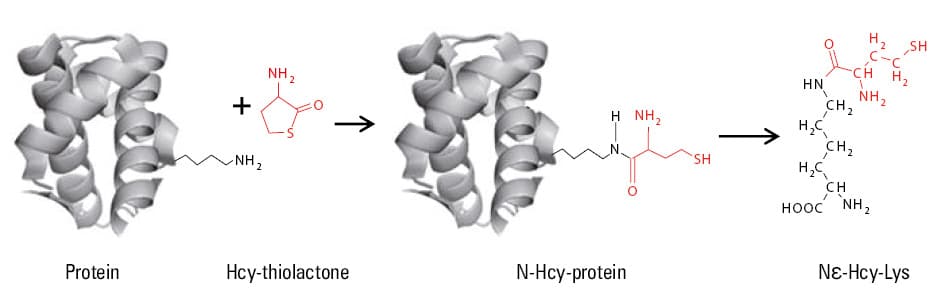
Abbreviations: see Figure 3
Of note, while measuring tHcy, Hcy metabolites including Hcy‑thiolactone, N‑Hcy‑protein, cystathionine, and AdoHcy are not assessed, and their levels show no linear associations with tHcy, though it was reported that increases in Hcy‑thiolactone,52,53 N‑Hcy‑protein,54,55 and cystathionine56-58 reflect to some extent the changes in plasma tHcy. The exception is AdoHcy, since this biomarker does not follow the changes in tHcy, as shown, among others, in homocystinuria, when high AdoHcy level was observed in individuals with tHcy exceeding 100 μmol/l.59
There is evidence from observational studies that the Hcy metabolites, such as AdoHcy,60 cystathionine,56,58,61 and Hcy‑thiolactone,62 are associated with MI, ischemic stroke, and all‑cause death. Until now, there are no data showing that incorporation of any Hcy metabolites provides any additional value for CVD risk stratification.
Another marker of potential clinical relevance is Nε-homocysteinyllysine isopeptide (Nε-Hcy‑Lys) that is generated during proteolysis of Nε-Hcy‑proteins and can be measured in serum or urine using high‑performance liquid chromatography, as shown for the first time by R. Głowacki in collaboration with H. Jakubowski in 2010.63 Nε-Hcy‑Lys concentrations, which were detectable in almost 90% of acute MI patients (>0.1 μmol/l), and were by 127.3% higher as compared with healthy controls, showed no association with tHcy or folate in the same samples.64 The measurable levels of Nε-Hcy‑Lys have been reported in about 20% of hyperhomocysteinemic individuals with peripheral artery disease, especially in current smokers and survivors of ischemic stroke, who received 0.4 mg/d of folic acid for 1 year and experienced a 70% fall in tHcy. Importantly, this subset was characterized by more severe disease and a higher risk of cardiovascular events.65 This marker is thought to reflect increased generation of N‑Hcy‑proteins in some individuals that cannot be easily abolished by vitamin‑based tHcy‑lowering strategies.
The autoimmune response to N‑Hcy‑proteins was discovered by H. Jakubowski 20 years ago. As he summarized in the first review on this topic,66 “N‑Hcy‑proteins are likely to be recognized as neo‑selfantigens and induce an autoimmune response. Indeed, we found that autoantibodies specific for an Nε-Hcy‑Lys epitope on N‑Hcy‑proteins occur in humans.” Anti‑N‑Hcy‑protein autoantibodies have been observed—largely in a positive correlation with tHcy—among individuals who suffered from ischemic stroke and early‑onset CAD, along with those on dialysis and at a high cardiovascular risk.67-70 Of note, folic acid administration failed to significantly reduce titers of autoantibodies to N‑Hcy‑proteins despite reduced tHcy levels.69 Not surprisingly, this type of antibodies was reported in typical autoimmune diseases also related to increased cardiovascular morbidity and mortality.71
In 2006, H. Jakubowski put forward a hypothesis that reaction products of Hcy‑thiolactone and aldehydes, namely thiazines, may be present in the human body, also suggesting that such a reaction may represent an additional way of Hcy‑thiolactone excretion.72 This assumption was verified by R. Głowacki and coworkers in 2022. They found that Hcy/Hcy‑thiolactone and formaldehyde adduct, namely 1,3‑thiazinane‑4‑carboxylic acid (TCA) is present in human urine.73 The actual role of TCA in living systems remains to be investigated.
Taken together, it is plausible that Hcy metabolites and their derivatives might better than tHcy reflect the intricate role of disturbed Met and Hcy metabolism in atherogenesis, but this issue calls for further experimental and clinical research. Given the studies conducted so far, it could be stated that a significant relationship with the development of CVD is demonstrated by Hcy‑thiolactone and N‑Hcy proteins, generated in the Met metabolic pathway. Importantly, despite some promising observations, these markers are not yet sufficiently validated for clinical use.
Concluding remarks
Despite the fact that at the end of April 2025, more than 30 000 hits for “homocysteine” can be found in the PubMed, the actual role of Hcy and its metabolites in atherosclerosis and its clinical manifestations remains unclear and controversial. There is a consensus that a simple measurement of plasma tHcy level in the general adult population does not add clinically useful information to guide CVD prevention and / or therapy. Lifestyle interventions, along with well‑established risk factor modification (in particular cholesterol‑lowering strategies) are relatively effective with or without tHcy reduction achieved on vegetable / folate‑rich diets. It should be clarified, as suggested by H. Jakubowski in his last comprehensive review from January 2025,74 whether indeed other Hcy metabolites, whose measurement is not routinely available and not yet validated for clinical use, might represent a better marker of abnormal Met metabolism in humans, and if they contribute to the pathogenesis of atherosclerotic vascular disease, now when the Hcy theory of atherosclerosis could not be supported by interventional evidence. It should be acknowledged that H. Jakubowski coauthored or initiated a substantial proportion of clinical research in the Hcy field, and some of his observations have offered intriguing insights into thiol‑associated mechanisms of CVD, which are yet to be deciphered. Despite extensive experimental efforts, the still inspiring enigma of Hcy remains to be solved, especially in CVD, which has multiple interacting causes. Based on available data, tHcy should not be routinely determined in clinical practice, but further research is needed to show in whom (apart from patients with homocystinuria) evaluation of disrupted Hcy metabolism might be clinically relevant.
- McCully KS. Vascular pathology of homocysteinemia: implications for the pathogenesis of arteriosclerosis. Am J Pathol. 1969; 56: 111‑128.
- McCully KS. Homocysteine and the pathogenesis of atherosclerosis. Expert Rev Clin Pharmacol. 2015; 8: 211‑219. | Crossref
- Clarke R, Daly L, Robinson K, et al. Hyperhomocysteinemia: an independent risk factor for vascular disease. N Engl J Med. 1991; 324: 1149‑1155. | Crossref
- Welch GN, Loscalzo J. Homocysteine and atherothrombosis. N Engl J Med. 1998; 338: 1042‑1050. | Crossref
- Smulders YM, Blom HJ. The homocysteine controversy. J Inherit Metab Dis. 2011; 34: 93‑99. | Crossref
ARTICLE INFORMATION