
Atypical hepatic fat sparing as a radiological red flag: a rare presentation of hepatocellular carcinoma in a noncirrhotic patient

 CC BY 4.0
Atypical hepatic fat sparing as a radiological red flag: a rare presentation of hepatocellular carcinoma in a noncirrhotic patient
CC BY 4.0
Metabolic dysfunction–associated steatotic liver disease (MASLD) is the most prevalent chronic liver disease worldwide, affecting approximately 25%–30% of the global population. MASLD includes a spectrum of liver conditions, from simple steatosis to steatohepatitis, fibrosis, and cirrhosis. Recent studies suggest that hepatocellular carcinoma (HCC) risk varies significantly in MASLD patients, with cirrhotic individuals having the highest risk (1%–3% per year), while noncirrhotic patients with advanced fibrosis remain at a lower but notable risk.1,2 Standard ultrasonography has limited sensitivity in detecting early‑stage HCC in MASLD patients, largely due to obesity and hepatic steatosis. In such cases, computed tomography and magnetic resonance imaging (MRI) should be considered.
A 64‑year‑old man was referred to a hepatology department for further investigation of liver abnormalities. He initially presented to his primary care physician with considerably elevated levels of alanine aminotransferase (ALT; 85 IU/l; reference range [RR] <40 IU/l) and γ-glutamyl transferase (GGT; 345 IU/l; RR <50 IU/l). Abdominal ultrasound showed hepatic steatosis with focal fat sparing in the right lobe. Upon admission, the patient reported unintentional weight loss of 4 kg over the previous 6 months. Liver biochemistry also showed elevated enzyme levels (ALT, 56 IU/l; aspartate aminotransferase, 54 IU/l; RR <40 IU/l; GGT, 216 IU/l). His complete blood count, electrolytes, creatinine, albumin, international normalized ratio, and viral hepatitis serology were normal. However, his α-fetoprotein (AFP) level was markedly elevated at 567 ng/ml (RR <7 ng/ml). MRI identified atypical hepatic fat distribution with segmental fat sparing in segments 6 and 7 of the posterior right lobe (Figure 1A) and possible malignant thrombosis of segmental portal vein branches (Figure 1B). Percutaneous liver biopsy confirmed chronic hepatitis due to MASLD with F2 fibrosis (Scheuer score) and HCC (Figure 1C and 1D). Given the unresectable nature of the tumor, the patient was referred for systemic therapy with sorafenib. Unfortunately, he developed hepatic decompensation and died within 5 months.
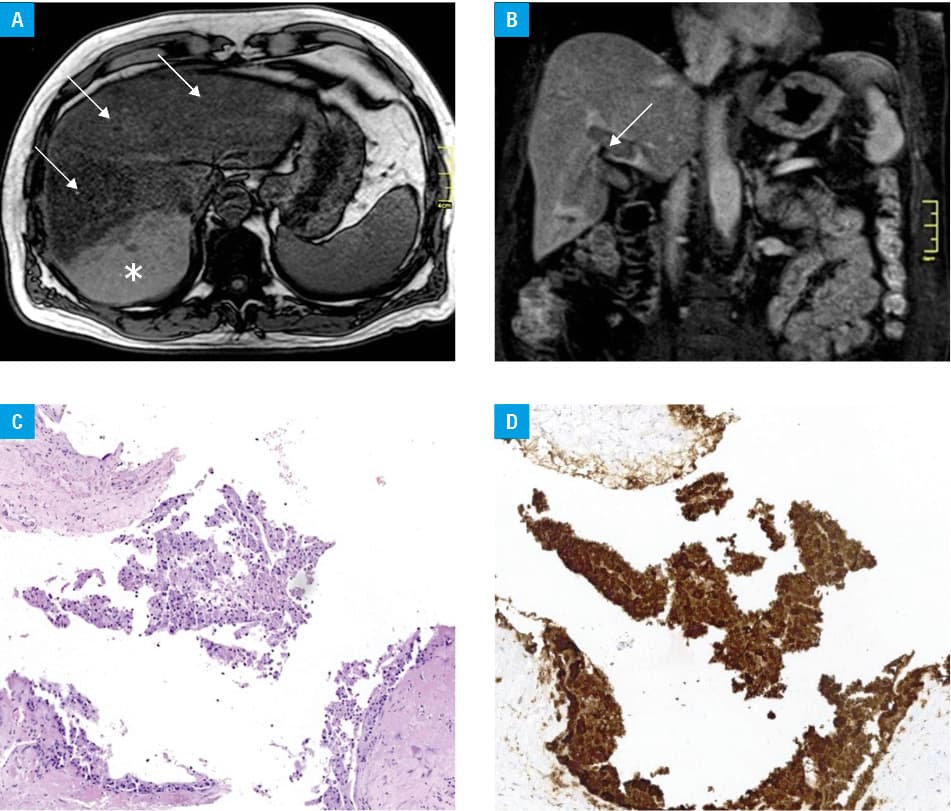
Fat sparing on imaging can mimic both benign and malignant liver lesions. Differential diagnosis includes focal confluent fibrosis, focal fat deposition, microabscesses, intrahepatic cholangiocarcinoma, and diffuse metastatic disease.3 Elevated AFP levels in patients with atypical hepatic fat distribution should prompt further imaging and possible biopsy to exclude malignancy.
Recent data emphasize that hepatic steatosis in MASLD patients may reduce diagnostic accuracy of imaging techniques, modifying typical HCC features, such as washout and capsule appearance. This can make radiological differentiation of HCC in MASLD particularly challenging. MRI, especially with dedicated fat‑suppressed sequences, remains the best modality for addressing these issues.4
This case highlights the importance of recognizing fat sparing as a radiological red flag in MASLD, particularly with an elevated AFP level. While the absolute risk of HCC in noncirrhotic MASLD remains low, patients with advanced fibrosis are at a considerably higher risk.1 Routine HCC screening in noncirrhotic patients with MASLD is not currently recommended by the European Association for the Study of the Liver guidelines,5 but targeted screening may be justified in high‑risk individuals.5 Early recognition of imaging abnormalities and biomarker assessment can facilitate timely diagnosis and improve outcomes.
- Phoolchund AGS, Khakoo SI. MASLD and the development of HCC: pathogenesis and therapeutic challenges. Cancers (Basel). 2024; 16: 259. | Crossref
- Cotter TG, Rinella M. Nonalcoholic fatty liver disease. 2020: the state of the disease. Gastroenterology. 2020; 158: 1851‑1864. | Crossref
- Reynolds AR, Furlan A, Fetzer DT, et al. Infiltrative hepatocellular carcinoma: what radiologists need to know. Radiographics. 2015; 35: 371‑386. | Crossref
- Dioguardi Burgio M, Roberto C, Federica V, et al. HCC in MASLD: radiological appearance, diagnosis and treatment. Hepatoma Research. 2025; 10: 11. | Crossref
- Tacke F, Horn P, Wai‑Sun Wong V, et al. EASL‑EASD‑EASO clinical practice guidelines on the management of metabolic dysfunction‑associated steatotic liver disease (MASLD). J Hepatol. 2024; 81: 492‑542. | Crossref
ARTICLE INFORMATION