
A novel method of diagnosing and monitoring cardiac arrhythmias in patients with chronic lymphocytic leukemia treated with ibrutinib

 CC BY 4.0
A novel method of diagnosing and monitoring cardiac arrhythmias in patients with chronic lymphocytic leukemia treated with ibrutinib
CC BY 4.0
Introduction
Chronic lymphocytic leukemia (CLL) is the most common leukemia in adult patients living in the western hemisphere. The annual incidence of CLL is 4.2/100 000 people, with median (interquartile range [IQR]) age of 70 (61–77) years at diagnosis. Continuous B‑cell antigen receptor (BCR) stimulation is important at the onset and during progression of CLL. Another important pathogenetic mechanism leading to inhibition of cell apoptosis is overexpression of the B‑cell lymphoma 2 (Bcl‑2) oncogene, resulting in accumulation of the Bcl‑2 protein in the cell. This knowledge has facilitated the search for new molecules with applications in the treatment of CLL.
The treatment of CLL has undergone a peculiar evolution over the last 30 years: from alkylating drugs (chlorambucil), purine antagonists (cladribine, fludarabine), anti‑CD20 antigen antibodies (rituximab, ofatumumab, obinutuzumab), through BCR signal transduction inhibitors (ibrutinib, idelalisib), to inhibitors of the antiapoptotic protein Bcl‑2 (venetoclax). The advent of ibrutinib and venetoclax has provided hope for the treatment of patients with refractory and relapsed CLL, particularly those with an unfavorable genetic profile (mainly del17p or TP53 gene mutation).
Ibrutinib, an irreversible inhibitor of Bruton tyrosine kinase in the B‑lymphocyte receptor signaling pathway, was more effective in clinical trials than chlorambucil in the first‑line treatment of CLL / small lymphocytic lymphoma (SLL).1 The drug has a favorable tolerability and safety profile, but the occurrence of certain adverse effects prompts physicians to be particularly cautious. One of them is atrial fibrillation (AF), as the use of ibrutinib increases the risk of its occurrence by 6%–16%1-3; however, population‑specific risk factors for AF episodes in CLL/SLL patients are not clearly defined. Meanwhile, the risk factors associated with AF development in the general population include hypertension, heart failure (HF), left atrial abnormality, diabetes, obesity, sleep apnea, and unhealthy lifestyle.4 During an observational study based on the early access to ibrutinib treatment in Poland, including 35 patients with CLL/SLL with del17p13, AF was reported in 5.8% of the study population. During the observation period, 5 patients received a reduced dose of ibrutinib‑based therapy.5,6
There is a need to develop a protocol that would not involve discontinuation or reduction of the drug dose when ibrutinib‑triggered arrhythmias (particularly AF) are detected. AF is known to be considerably more common in patients with malignant tumors. This is due to the presence of neoplasm itself, as well as comorbidities and chemotherapy treatment used.7 The incidence of AF also increases in elderly patients, which includes individuals with CLL.8 In fact, the results of the phase 3 RESONATE trial proved that different doses of ibrutinib can affect progression‑free survival (PFS).9 During the 8‑year follow‑up of the RESONATE‑2 trial, the incidence of adverse events, such as AF, was consistent with the previous 5‑year follow‑up data collected during phase 3. Median (IQR) observation time was 83.7 (0.1–96.6) months. The incidence of AF amounted to 9% in years 5–6, 7% in years 6–7, and 7% in years 7–8. The treatment was discontinued due to AF detected in 5 patients.10 Thus, developing a reliable and effective method of diagnosing cardiac arrhythmias would allow for the initiation of appropriate antiarrhythmic and anticoagulant treatment.
Patients and methods
An analysis of long‑term, nonstandard electrocardiography (ECG) recordings in patients with CLL treated with ibrutinib was carried out in search of drug‑generated cardiac arrhythmias, including episodes of silent AF, which are even more threatening due to possible thromboembolic complications. The individuals included in the study were being treated under a National Health Fund drug program or were participating in clinical trials studying ibrutinib. The aim of the study was to assess patients starting and continuing hematologic treatment for the occurrence of AF, which could result in the need to discontinue drug administration or reduce dosage. The collected data consisted of minimum, maximum, and median values, the changes of which were observed during the study. The data were assessed with Microsoft Excel (Microsoft Corporation, Redmont, Washington, United Sates) statistical tools.
A total of 22 patients (8 women and 14 men) with CLL who were started on ibrutinib between April 2019 and December 2020 were included in the analysis, based on established inclusion and exclusion criteria (Supplementary material, Table S1). Median (IQR) age was 68 (51–86) years. Median (IQR) age for women was 68.5 (51–86) years, and for men, it was 68 (58–86) years. At the time of treatment initiation, 32% of the patients were below 65 years old, 50% were between 65–75 years old, and 18% were over 75 years (Supplementary material, Table S2). Median (IQR) body mass index (BMI) of the patients was 26.6 (21.6–43) kg/m², with 32% of the participants in the range of 18.5–24.9 kg/m², 36% in the range of 25–29.9 kg/m², and 32%, above 30 kg/m² (Supplementary material, Table S2). Patient comorbidity burden was assessed using the Cumulative Illness Rating Scale, and the median (IQR) score was 6 (4–10) points.
Two patients received anticoagulant treatment (rivaroxaban) prior to the initiation of ibrutinib. Five individuals were treated with antiarrhythmic drugs: 2 patients received metoprolol and 3, bisoprolol (Supplementary material, Table S2). Among the patients eligible for treatment, 14 (64%) had significant comorbidities. The most common comorbidities were hypertension (50%), diabetes mellitus (41%), paroxysmal AF (9%), hyperlipidemia (9%), HF (9%), and coronary artery disease (5%). In some patients, ibrutinib was used as the first‑line treatment for CLL, but most participants had already been treated with other chemotherapy regimens. Median (IQR) number of lines of treatment administered before ibrutinib was 2 (0–4). The most common prior regimen was biological therapy with anti‑CD20 molecules, such as rituximab and ofatumumab (73%), bendamustine (50%), fludarabine (45%), and chlorambucil (23%).
In all patients, laboratory tests were performed prior to initiating ibrutinib treatment. Parameters that might influence the course of the disease and the occurrence of cardiac arrhythmias were analyzed, including complete blood count, potassium, calcium, NT‑proBNP, and troponin I levels (Supplementary material, Table S3). These tests were performed immediately prior to the initiation of ibrutinib treatment, as well as 2 and 4 weeks after the onset of treatment. Thyroid hormone and thyroid‑stimulating hormone (TSH) levels were assessed in all participants before ibrutinib administration.
All patients started treatment with 420 mg of ibrutinib, taken as 3 capsules once daily.
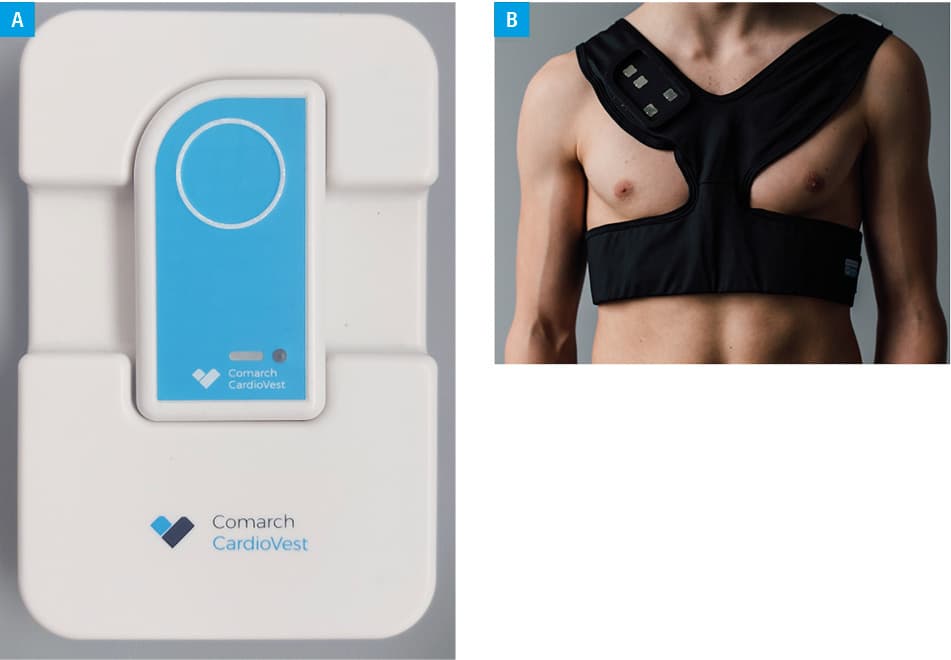
Before ibrutinib was provided for ambulatory treatment, ECG was performed and long‑term electrocardiographic monitoring was initiated using the CardioVest system (Comarch, Kraków, Poland). Resting ECG was repeated twice: 2 weeks after treatment initiation and 4 weeks after the CardioVest was removed. The patients were fitted with the CardioVest system ahead of treatment initiation to be continuously monitored (live monitoring) throughout the entire duration of the study. The CardioVest device allows an ECG signal to be recorded and cardiac rhythm disturbances to be analyzed over several weeks. Long‑term observation is possible through the use of a comfortable‑to‑wear vest with textile electrodes that do not need to be glued on. The obtained ECG recording is transmitted via a GSM network to a certified telemedicine analysis platform. Artificial intelligence–based algorithms implemented in the platform analyze the recording, identifying significant heart rhythm disturbances. Each recording obtained during the study was analyzed by 2 independent experts according to the standard principles of electrocardiographic analysis.11
The CardioVest system consists of 2 independent recorders, interchangeably attached to the vest via a magnetic holder (Figure 1). Patients can easily change the recorders every 24 hours. When one of them is attached to the device, recording the ECG signal, the other is placed in the charging station, simultaneously transmitting the recording to a telemedicine platform. Thanks to this solution, it was possible to analyze the patients’ ECG recordings after a few hours and promptly respond to the detected heart rhythm disturbances.
The study was approved by the local Bioethics Committee for Scientific Research at the Medical University of Gdansk (NKBBN/213/2019).
Results
All 22 patients had normal thyroid hormone and TSH levels prior to ibrutinib initiation. Most participants had a slight increase in lactate dehydrogenase (LDH) activity during the ibrutinib treatment. Median (IQR) LDH level before treatment initiation was 192 (120–267) U/l (reference range [RR], 125–220 U/l). After 2 weeks of treatment, it was 210 (128–292) U/l, and after 4 weeks of ibrutinib, 216 (134–434) U/l.
Median (IQR) hemoglobin (Hb) levels were stable during the 4 weeks of the study. Before treatment, the Hb level was 12.7 (7.4–16.4) g/dl, after 2 weeks of treatment, it was 12.9 (6.8–15.4) g/dl, and after 4 weeks, 12.8 (8.1–15.6) g/dl (RR, 13.5–16.5 g/dl [men]; 12–16 g/dl [women]). Two patients had significant anemia (Hb <10 g/dl) prior to ibrutinib introduction. In the first case, the initial Hb level was 7.4 g/dl, and it increased to 8.1 g/dl after 1 month of treatment. In the second case, the Hb level was 9.2 g/dl before treatment, and reached 9.7 g/dl after 1 month (Supplementary material, Table S3).
Potassium and calcium levels before and during the study were normal in all patients. Median (IQR) potassium levels before treatment initiation, after 2 weeks, and after 4 weeks of treatment were all 4.3 (3.5–4.8) mmol/l (RR, 3.6–5.1 mmol/l). Median (IQR) calcium levels reached 2.3 (2.16–2.5) mmol/l (RR, 2.25–2.75 mmol/l) at each of the aforementioned time points (Supplementary material, Table S3).
During the ibrutinib therapy, a consecutive decrease in N‑terminal pro–B‑type natriuretic peptide (NT‑proBNP) levels was observed. Median (IQR) NT‑proBNP level before treatment initiation was 222.3 (18.9–13393.7) pg/ml (RR <25 pg/ml ). After 2 weeks of treatment, it was 173.5 (20.8–1245.6) pg/ml, and after 4 weeks, it dropped to 109.7 (22.4–2638.4) pg/ml. In 2 patients with New York Heart Association class II chronic heart failure, the NT‑proBNP level was initially significantly elevated, and decreased after 4 weeks of CLL treatment (Supplementary material, Table S3). A positive correlation between the increase in NT‑proBNP and troponin I levels was observed. The highest troponin I values were found in patients with circulatory failure.
Sinus rhythm was confirmed on 12‑lead ECG recordings in all patients at every time point. In 1 patient with HF, single premature ventricular contractions (PVCs) were observed on resting ECG.
All participants provided qualitatively satisfactory electrocardiographic recordings obtained via the CardioVest system. The analysis included signals from the vest electrodes placed in 2 positions: left and precordial. Episodes of nonsustained ventricular tachycardia (nsVT) were observed in 5 patients. These were insertions consisting of 4 to 17 beats in the frequency range of 140–204 bpm. The number of episodes ranged from 1 (2 patients), through 2 (2 patients), to 9 episodes of nsVT (1 patient). In addition, 1 episode of sVT and PVCs were observed in 1 individual with concomitant HF (Supplementary material, Table S3).
Out of 22 patients who received ibrutinib treatment for CLL, AF episodes were observed in 10 individuals (45%), and paroxysmal AF was detected in 8 of them (36%). Median (IQR) age of the patients with AF was 69 (60–76) years, most of whom had comorbidities. Median (IQR) number of comorbidities was 2 (0–4). Median (IQR) number of AF episodes per month was 1 (1–4). Median (IQR) duration of an AF episode was 25 minutes (17 s–21 d). On average, median (IQR) time in which the first AF episode occurred was 15 (2–28) days after the initiation of ibrutinib. Two patients who experienced an AF episode had previously been treated with rivaroxaban (Supplementary material, Table S3). The main mechanism of AF events was frequent bursts of atrial extrasystoles preceding the onset of an episode (Supplementary material, Table S4). The ventricular response rate during AF ranged from 90 to 170 bpm.
Discussion
Ibrutinib has become a game‑changing drug in the management of patients treated for CLL. Adverse events observed in clinical trials were mostly transient and occurred at the beginning of treatment.11 Recently, there have been alarming data on treatment discontinuation and a reduction of ibrutinib dose used in therapy.12-14 Given the adverse impact of ibrutinib dose reduction on PFS,9 diagnostic and treatment management methods should be developed to prevent drug dose modifications. This primarily concerns safe management of the patient through cardiac arrhythmias during ibrutinib treatment, less commonly blood coagulation disorders.
The patients in our study included in the ibrutinib treatment were examined for laboratory parameters that could affect cardiac arrhythmias. All individuals had normal potassium and calcium levels throughout 1‑month follow‑up. Anemia with Hb levels below 10 g/dl was observed in 2 patients, with stable values during observation. Paroxysmal AF was recorded in 1 of these individuals.
Three patients had significantly elevated NT‑proBNP level before treatment. It decreased noticeably after 4 weeks. Paroxysmal AF was found in all these patients. Interestingly, the decrease of median NT‑proBNP levels during the ibrutinib therapy may be due to a treatment‑related reduction in nodal mass. An increase in the median LDH activity was observed at the start of treatment, most probably due to an increase in lymphocyte counts during the initial period of drug administration.
As many as 10 out of 22 analyzed patients (45%) who received ibrutinib experienced AF. This is more than was reported in clinical trials of this molecule (6%–16%).1-3 In addition, literature data collected from patients treated in standard clinical practice report 11.9% of new AF episodes in patients after ibrutinib initiation.15 In our study, the participants with arrhythmia were mostly elderly (median [IQR] age of 69 [60–76] y) with multiple comorbidities (median [IQR], 2 [0–4]). Similar conclusions have been drawn by other authors.15,16 In our study, the higher number of AF diagnoses in the study group is due to the use of a novel way of monitoring ECG recordings with the CardioVest device. None of the clinical trials and retrospective observational studies conducted to date in patients treated with ibrutinib have used long‑term ECG monitoring.16 It should be noted that no AF episodes were detected on recurrent resting ECG recordings (repeated 3 times in each patient). However, previous exposure to proarrhythmic drugs and interventions may have varied in the participants who had previously received a median (IQR) number of 2 (0–4) lines of CLL/SLL treatment, which may have also affected the incidence of AF.
Median (IQR) time to AF onset was 15 (2–28) days in our study group. In contrast, in the analysis by Brown et al,16 it was 2.8 (0.3–17.5) days. The patients diagnosed with paroxysmal AF on the telemedicine platform were eligible for anticoagulation treatment based on the CHA2DS2VASc score (Supplementary material, Table S4).17 In 4 patients, the CHA2DS2VASc score was 1. Taking into account the antiplatelet effect of ibrutinib, anticoagulant treatment was initiated only in 1 patient, in whom AF episodes were observed for 24 days. In other 4 individuals whose CHA2DS2VASc score was 3–4, oral anticoagulation treatment was recommended immediately after an episode of AF was detected. All patients were treated with rivaroxaban at the standard dose (20 mg per day). One patient required a dose reduction to 15 mg due to recurrent epistaxis. In addition, antiarrhythmic drugs (metoprolol or bisoprolol) were included. Antiplatelet therapy was not used. Anticoagulant therapy was maintained after the inclusion of ibrutinib in the participants with previous AF episodes. Median (IQR) duration of treatment was 25 (16–32) months. No severe hemorrhagic complications were observed. All patients continued treatment with ibrutinib at the initial dose of 420 mg per day, regardless of the reported arrhythmia. Median follow‑up after the CardioVest monitoring was 20.5 (15–32) months.
Monitoring the first month of ibrutinib treatment with the CardioVest system vest can effectively detect episodes of paroxysmal AF and other significant cardiac arrhythmias. In our observation, resting ECG did not allow for the diagnosis of AF. Inclusion of anticoagulant prophylaxis and antiarrhythmic treatment allows for an early diagnosis of AF and continuation of ibrutinib treatment in a safe manner without dose reduction.
- Burger JA, Tedeschi A, Barr PM, et al. Ibrutinib as initial therapy for patients with chronic lymphocytic leukemia. N Engl J Med. 2015; 373: 2425‑2437. | Crossref
- Thompson PA, Lévy V, Tam CS, et al. Atrial fibrillation in CLL patients treated with ibrutinib. An international retrospective study. Br J Haematol. 2016; 175: 462‑466. | Crossref
- Leong DP, Caron F, Hillis C, et al. The risk of atrial fibrillation with ibrutinib use: a systematic review and meta‑analysis. Blood. 2016; 128: 138‑140. | Crossref
- Van Gelder IC, Rienstra M, Bunting KV, et al. 2024 ESC Guidelines for the management of atrial fibrillation developed in collaboration with the European Association for Cardio‑Thoracic Surgery (EACTS). Eur Heart J. 2024; 45: 3314‑3414.
- Pula B, Iskierka‑Jazdzewska E, Dlugosz‑Danecka M, et al. Long‑term efficacy of ibrutinib in relapsed or refractory chronic lymphocytic leukemia: results of the Polish Adult Leukemia Study Group observational study. Anticancer Res. 2020; 40: 4059‑4066. | Crossref
SUPPLEMENTARY MATERIAL
ARTICLE INFORMATION