
The gut as a mediator of environmental harm: unveiling microbial pathways in climate-related disease. Author’s reply


 CC BY-NC-SA 4.0
The gut as a mediator of environmental harm: unveiling microbial pathways in climate-related disease. Author’s reply
CC BY-NC-SA 4.0
Author’s reply
I am grateful to Marlicz et al1 for their insightful comments on the role of the gut as a mediator of cardiovascular and renal complications through the impact of pollutants on microbiota. It is true that I did not cover the role of the gut microbiome in my review, and I apologize for having missed this important issue. As pointed out, in last decades, increasing evidence has been gathered indicating that the gut microbiome is associated with blood pressure regulation and, more recently, with the development of some forms of experimental hypertension.2 However, data from human studies are still scarce. There is also evidence of a gut–kidney axis linking the gut microbiome and renal function / diseases via a bidirectional relationship.3,4
In their comprehensive review, Hou et al5 summarized the multiple links between microbiota dysbiosis and several diseases affecting not only the cardiovascular and renal systems but also the brain, the lung, and the gastrointestinal tract, as well as diabetes and cancer (Figure 1). Hence, I agree that one should “incorporate gut microbial ecology into the broader climate‑health paradigm” as concluded by Marlicz et al.1
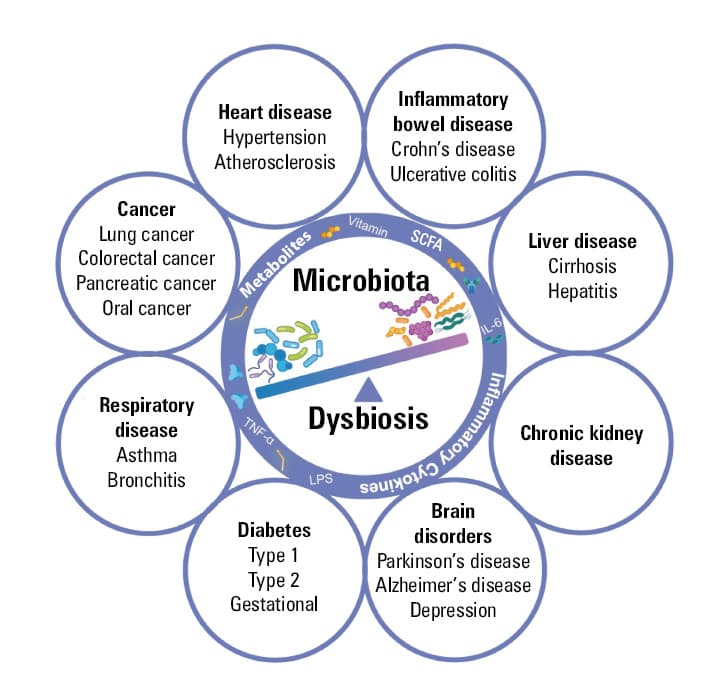
Abbreviations: IL‑6, interleukin 6; LPS, lipopolysaccharide; TNF-α, tumor necrosis factor α; SCFA, short‑chain fatty acids
That said, I am also glad to read that the World Gastroenterology Organization and the United European Gastroenterology group have now joined the growing number of organizations representing various medical specialties (nephrology, intensive care, and others) concerned about the consequences of climate change and all forms of pollution on health, and promote recommendations to act.
- Marlicz W, Koulaouzidis G, Charispoulou D, et al. The gut as a mediator of environmental harm: unveiling microbial pathways in climate‑related disease. Pol Arch Intern Med. 2025; 135: 17100. | Crossref
- O’Donnell JA, Zheng T, Meric G, et al. The gut microbiome and hypertension. Nat Rev Nephrol. 2023; 19: 153‑167. | Crossref
- Yang T, Richards EM, Pepine CJ, Raizada MK. The gut microbiota and the brain‑gut‑kidney axis in hypertension and chronic kidney disease. Nat Rev Nephrol. 2018; 14: 442‑456. | Crossref
- Rukavina Mikusic NL, Kouyoumdzian NM, Choi MR. Gut microbiota and chronic kidney disease: evidences and mechanisms that mediate a new communication in the gastrointestinal‑renal axis. Pflugers Arch. 2020; 472: 303‑320. | Crossref
- Hou K, Wu ZX, Chen XY, et al. Microbiota in health and diseases. Sig Transduct Target Ther. 2022; 7: 135 | Crossref
ARTICLE INFORMATION