
Unexplained microcytic anemia with hepatic and cerebral iron deposition: a diagnostic challenge


 CC BY-NC-SA 4.0
Unexplained microcytic anemia with hepatic and cerebral iron deposition: a diagnostic challenge
CC BY-NC-SA 4.0
A 50‑year‑old man presented with persistent hyperferritinemia (serum ferritin, 1500–2100 ng/ml; reference range [RR], 30–400 ng/ml), elevated serum iron level (300 µg/dl; RR, 60–170 µg/dl), and long‑standing microcytic anemia (hemoglobin, 10 g/dl; RR, 13.5–17.5 g/dl; mean corpuscular volume, about 60 fl; RR, 80–100 fl). Liver enzymes and blood pressure were normal. Initial hematology evaluation excluded leukemia, myelodysplastic syndrome, and β-thalassemia; bone marrow biopsy showed mild, nonspecific dyserythropoiesis.
Given splenomegaly and biochemical evidence of iron overload, hepatology evaluation was performed. Liver biopsy demonstrated advanced fibrosis with marked iron deposition (shear‑wave elastography, 9.3 kPa; RR <7 kPa), and magnetic resonance imaging (MRI) confirmed hepatic iron overload (15 mg/g; RR <1.8 mg/g; Figure 1A). Initial genetic testing for hereditary hemochromatosis, including the HFE (C282Y, H63D, S65C), HFE2, HAMP, TFR2, and SLC40A1 genes, was negative.
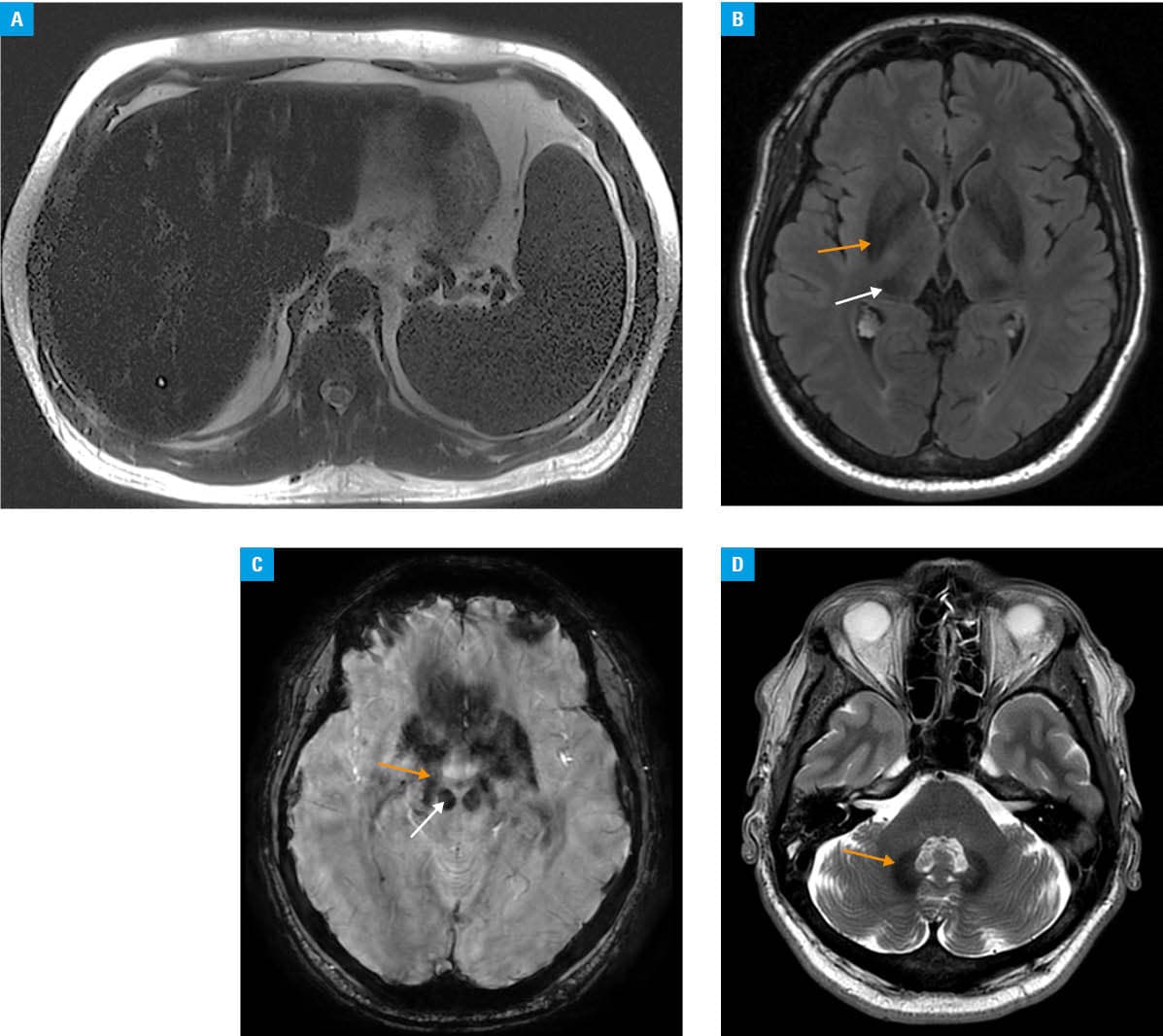
Brain MRI showed symmetrical hypointensities in the globus pallidus, thalami, substantia nigra, and dentate nuclei (Figure 1B–1D). Low serum ceruloplasmin and copper levels suggested Wilson disease or aceruloplasminemia, but urinary copper excretion, ophthalmologic examination, and ATP7B gene sequencing were negative.
Extended genetic testing targeted genes associated with neurodegeneration with brain iron accumulation (NBIA). Ceruloplasmin was negative, which excluded aceruloplasminemia; pantothenate kinase 2 was negative, which ruled out pantothenate kinase‑associated neurodegeneration; ferritin light chain was negative, which excluded hereditary hyperferritinemia–cataract syndrome; and ferritin heavy chain 1 was also negative, thus ruling out neuroferritinopathy.
Whole‑exome sequencing identified a heterozygous pathogenic δ-aminolevulinic acid synthase (ALAS2, erythroid‑specific) variant (c.1355G>A; p.Arg452His; rs863223904), confirming X‑linked sideroblastic anemia (XLSA). Mutations in ALAS2 impair erythroid heme synthesis, leading to microcytosis, ineffective erythropoiesis, and secondary systemic iron overload.
The patient received deferoxamine (discontinued for ocular toxicity) and later deferasirox, achieving partial ferritin reduction (844 ng/ml). Phlebotomy was not indicated due to anemia. Despite recommendations, no dietary or lifestyle modifications were made. Over 8 months, the patient gained 7 kg, with worsening metabolic parameters: homeostatic model assessment of insulin resistance rose to 12.8 (RR <2.5), triglyceride level increased to 470 mg/dl (RR <150 mg/dl), high‑density lipoprotein cholesterol level decreased to 29 mg/dl (RR >40 mg/dl), with persistent hyperinsulinemia and poor glycemic control despite metformin therapy. Metabolic disorder therapy was initiated with a 12‑month delay.
This case demonstrates the interplay between rare genetic anemia and common metabolic comorbidities. The patient’s phenotype—microcytic anemia, hyperferritinemia, hepatic and cerebral iron overload—required a multidisciplinary, stepwise diagnostic process.
The ALAS2 mutation provided a unifying molecular diagnosis for XLSA. While rare, XLSA should be considered in unexplained microcytic anemia with iron overload after exclusion of myelodysplastic syndrome, β-thalassemia, hereditary hemochromatosis, and NBIA syndromes. Similar cases in the literature describe multiorgan iron deposition, underscoring systemic consequences even in the presence of anemia.1,2
Therapeutic options for XLSA are limited to iron chelation (deferoxamine, deferasirox) and occasionally pyridoxine supplementation, often with incomplete efficacy.1 Phlebotomy is generally contraindicated.
Beyond the genetic basis, the patient’s severe insulin resistance, dyslipidemia, and obesity contributed to a dysmetabolic iron overload syndrome (DIOS) phenotype.3 DIOS can worsen hepatic fibrosis independently of genetic predisposition. Iron overload and insulin resistance form a self‑perpetuating cycle, accelerating metabolic and organ injury.4
This case emphasizes that precision diagnosis does not guarantee improved prognosis without addressing modifiable metabolic factors early. A combined genetic, metabolic, and lifestyle‑focused approach is essential.
- Abu‑Zeinah G, DeSancho MT. Understanding sideroblastic anemia: an overview of genetics, epidemiology, pathophysiology and current therapeutic options. J Blood Med. 2020; 11: 305‑318. | Crossref
- Sussman NL, Lee PL, Dries AM, et al. Multi‑organ iron overload in an African‑American man with ALAS2 R452S and SLC40A1 R561G. Acta Haematol. 2008; 120: 168‑173. | Crossref
- Deugnier Y, Bardou‑Jacquet E, Laine F. Dysmetabolic iron overload syndrome (DIOS). Presse Med. 2017; 46: e306‑e311. | Crossref
- Simcox JA, McClain DA. Iron and diabetes risk. Cell Metab. 2013; 17: 329‑341. | Crossref
ARTICLE INFORMATION