
New fever in adults in the intensive care unit: current insights from the 2024 Society of Critical Care Medicine and Infectious Diseases Society of America guidelines
Key words: clinical practice guidelines, critical illness, fever, infection, intensive care unit

 CC BY 4.0
New fever in adults in the intensive care unit: current insights from the 2024 Society of Critical Care Medicine and Infectious Diseases Society of America guidelines
CC BY 4.0
Fever is among the most frequent clinical signs encountered in an intensive care unit (ICU). It often triggers broad diagnostic evaluation and empiric treatment, with implications for patient outcomes and resource use. The 2024 joint guidelines from the Society of Critical Care Medicine and the Infectious Diseases Society of America offer updated, evidence‑based recommendations for the evaluation of new‑onset fever in adults hospitalized in the ICU. Replacing the 2008 guidelines, this iteration integrates advances in diagnostic methods, a structured guideline development process, and renewed emphasis on antimicrobial stewardship. The panel issued 1 strong recommendation, 12 weak recommendations, 9 best practice statements, and identified 4 areas where no recommendation was feasible. This review distills the guideline’s most relevant insights, clarifies points of uncertainty, and presents a practical framework for applying its recommendations at the bedside.
Introduction
Fever is one of the most frequent and diagnostically challenging findings encountered in an intensive care unit (ICU).1,2 While often an indicator of infection, it can result from a broad array of noninfectious processes, such as drug reactions, thromboembolic events, malignancy, and postoperative inflammation. In critically ill patients, where physiological reserves are limited and confounding variables are abundant, fever demands careful and judicious evaluation. Mismanagement—either through omission or overreach—can expose patients to avoidable harm. Overdiagnosing may lead to false positives, unnecessary antimicrobial therapy, direct and indirect drug‑induced side effects, prolonged hospital stays, and increased resource utilization and hospital costs.3-5 Conversely, underdiagnosing may lead to delayed or missed identification of a treatable cause, which may result in clinical deterioration. Both over- and underdiagnosing can be associated with worse morbidity and mortality.
The complexity of ICU patients contributes to diagnostic ambiguity. The ICU patients are often sedated, mechanically ventilated, and connected to multiple invasive devices. Fever may be their only discernible sign of pathology. The challenge lies not only in identifying whether the fever is a result of an infection, but also in rapidly determining its source and clinical relevance. This careful discrimination between vigilance and intense investigation is central to critical care practice.
The original 2008 guidelines marked a pivotal step toward standardizing the diagnostic approach to fever in the ICU.6 Since then, diagnostic modalities have evolved, with increasing availability of rapid molecular diagnostics, growing emphasis on antimicrobial stewardship, and the use of point‑of‑care ultrasound. In response to this shifting landscape, the 2024 guidelines aimed to deliver an updated, comprehensive framework that incorporates newer evidence and reflects on contemporary priorities in critical care. This manuscript distills their key recommendations into a practical reference for clinicians, emphasizing a clear and structured pathway for evaluating new fever in adult ICU patients.
Guideline methodology
These guidelines were developed jointly by the Society of Critical Care Medicine (SCCM) and the Infectious Diseases Society of America (IDSA) using the Grading of Recommendations Assessment, Development and Evaluation (GRADE) approach.7 A multidisciplinary international panel of 12 experts led the effort. Methodologists from the Guidelines in Intensive Care, Development, and Evaluation (GUIDE) Group oversaw evidence synthesis and appraisal.
The panel formulated 26 structured clinical questions using the PICO (Population, Intervention, Comparator, Outcome) format. A medical librarian conducted systematic literature searches of 2 major databases (Cochrane Central and MEDLINE) from inception through June 2022. For each PICO domain, the panel prioritized outcomes based on the approach recommended by GRADE.8 Risk of bias was assessed using the Cochrane Collaboration’s tool for randomized trials.9 We summarized the evidence using meta‑analytic techniques whenever possible.
The panel used the GRADE approach to assess the quality of evidence and to issue recommendations as strong, weak, or best‑practice statements. Decision‑making incorporated quality of evidence, magnitude of benefit, patient preferences, resource use, acceptability, and feasibility. Consensus required at least 80% agreement by at least 75% of the panel. No industry funding was involved in the development of these guidelines.
How to apply the guidelines at the bedside?
The first step is to review the guideline PICO questions, as this enables clinicians to assess indirectness—if their patient population, intervention, comparator, and outcomes are not fully represented, the recommendation may not apply.
Clinicians should interpret recommendation strength using the GRADE approach. Strong recommendations (“We recommend…”) indicate that the desirable consequences of the intervention clearly outweigh the undesirable consequences, and most patients in the specified context would choose to follow the recommended intervention. These recommendations apply broadly, and may serve as the basis for institutional protocols, quality metrics, or performance indicators. Conditional recommendations (“We suggest…”) reflect either low quality of evidence or that the desirable consequences of the intervention may (or slightly) outweigh the undesirable consequences. In these cases, different choices may be appropriate for different patients, and clinicians should engage in shared decision‑making that incorporates patient values, goals of care, and clinical context. For policy makers, strong recommendations may be adopted with confidence across settings, whereas conditional recommendations often require local deliberation and adaptation before implementation.
To effectively apply recommendations on diagnostic tests at the bedside, clinicians should begin by estimating the probability of infection prior to ordering a test. This may require skill and science in equal proportions. Clinicians typically start with clinical gestalt, which integrates patient presentation, epidemiology, comorbidities, and clinical trajectory to generate a working estimate of disease likelihood. This estimate is refined by available data, such as the local prevalence of fever due to infection in ICU populations, and specific clinical risk factors. Once a reasonable pretest estimate is established, clinicians may apply the Bayesian reasoning to interpret diagnostic results. The Fagan nomograms remain a practical bedside tool for linking pretest probability with likelihood ratios (LRs) to derive post‑test probability.10 This approach can be replicated using online calculators that incorporate test sensitivity and specificity. We provide examples in the sections below to illustrate how this method sharpens interpretation and ensures that test results meaningfully affect clinical decision‑making. When no recommendation is issued, clinicians should acknowledge uncertainty and use their best judgement to help their patient.
Definition of fever in the intensive care unit patients
There is no universal definition of fever, and thresholds vary across patient populations and clinical settings. Normal body temperature is influenced by age, sex, circadian rhythm, and measurement site.11,12
In the SCCM/IDSA guidelines, fever was defined as a single temperature measurement of 38.3 °C or higher.13 Clinicians should not rely on fever to diagnose infection. In fact, fewer than 60% of the ICU patients with confirmed infection present with fever. In septic shock, only 45% of patients are febrile at presentation,14 and across ICU cohorts, 30%–50% of infected patients remain afebrile or even hypothermic.15 Even in the context of viral sepsis, such as COVID‑19, only 69% of critically ill patients develop fever during ICU hospitalization, and fewer than half present with fever on admission.16 Furthermore, specific populations, such as the elderly and immunocompromised patients, may not manifest fever despite active infection.17,18 Therefore, clinicians should apply the ICU‑specific definition with awareness of its limitations and recognize that thresholds may differ in other populations or in settings outside the ICU.
Measurement of body temperature in the intensive care unit
Temperature measurement in the ICU often guides decisions to start or withhold antibiotics, prompts workups for suspected sepsis, and shapes therapeutic targets in neurocritical care and hypothermia protocols. A misclassified fever can delay treatment or lead to unnecessary investigations. Therefore, it is essential that clinicians use reliable methods to measure body temperature.
Core temperature is usually measured using invasive devices, such as pulmonary artery catheters, bladder catheters, or esophageal probes. When in place, clinicians should use these devices to measure body temperature. Peripheral thermometers (including oral, axillary, tympanic, and temporal artery) are more accessible but less accurate.
The SCCM/IDSA guidelines cite a meta‑analysis of 75 studies (n = 8682) comparing peripheral and central thermometers.19 Although the average difference between the methods was small, the limits of agreement (LOA) were wide, often exceeding approximately 1 °C. This range undermines diagnostic confidence, particularly when thresholds such as 38 °C guide clinical action. Among febrile adults, LOA ranged from –1.44 °C to 1.46 °C. Diagnostic accuracy was similarly poor. Pooled sensitivity of peripheral thermometers for detecting fever was 64%, with a negative LR (LR–) of 0.38, indicating a substantial risk of false negatives. On the other hand, specificity was 96%, and the positive LR (LR+) was 14.5, meaning peripheral thermometers can confirm but not rule out fever.
Initial diagnostic workup
Chest radiographs
The fever guidelines issued the best practice statement regarding chest radiography in patients with new fever. Although normal chest radiography cannot exclude infection, it may reveal infiltrates, effusions, or other findings that may guide further workup.13 If chest radiography is abnormal, clinicians should consider additional tests to clarify the source of the abnormalities.
Bedside thoracic ultrasound can improve detection of pleural effusion or consolidation, especially in patients who are supine or cannot be mobilized. In parallel, testing for respiratory viral pathogens may be appropriate based on seasonality and exposure risk. When chest radiography is normal and there are no respiratory symptoms, the diagnostic value of additional thoracic imaging is unclear. The guidelines highlight that the role of lung ultrasound in patients with normal chest radiography is uncertain and lacks strong supporting evidence. Therefore, further imaging should be guided by clinical context, and not routinely ordered.
Blood cultures
Blood cultures provide essential information for identifying bloodstream infections, guiding antimicrobial therapy and narrowing or discontinuing empirical treatment.
The guideline issued the best practice statement to obtain at least 2 simultaneous sets of blood cultures from different sites, preferably before starting or escalating antimicrobials. This reduces delays and allows to avoid misinterpretation due to transient bacteremia or procedural contamination. Each set should include 1 aerobic and 1 anaerobic bottle.
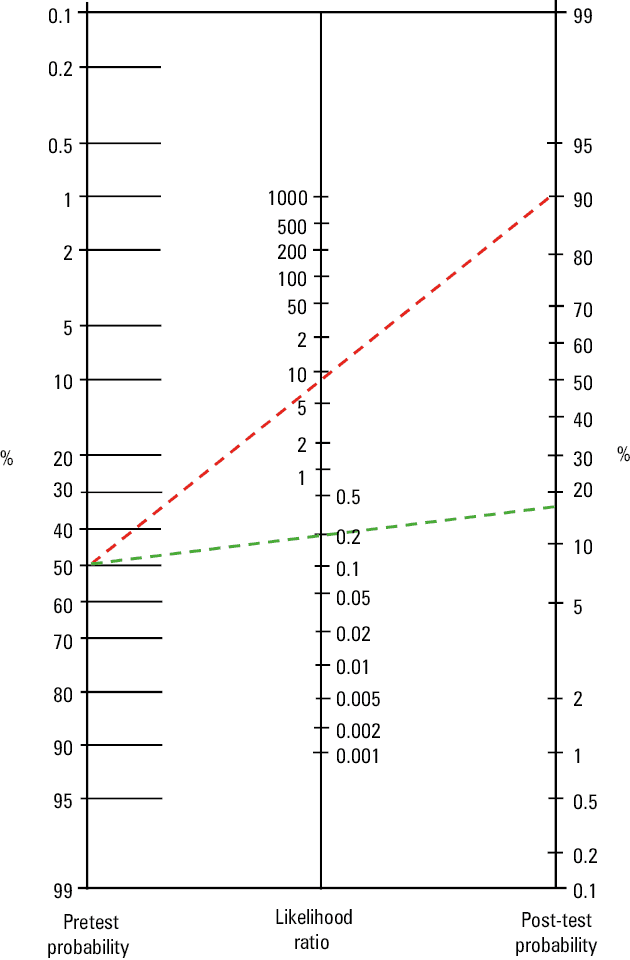
In patients with central venous catheters (CVCs) and suspected central line–associated blood stream infections (CLABSIs), the cultures should be drawn from 2 catheter lumens and 1 peripheral vein. This enables assessment of differential time to positivity (DTP), a diagnostic approach that compares how quickly each culture turns positive. A CVC culture that becomes positive at least 2 hours earlier than the peripheral one suggests CLABSI.20 A recent meta‑analysis of 23 studies including over 2500 suspected CLABSI cases reported that DTP had pooled sensitivity of 81.3% (95% CI, 72.8%–87.7%) and specificity of 91.8% (95% CI, 84.5%–95.8%), with LR+ of 9.89 and LR– of 0.2.21 To apply the DTP results in practice, consider a patient with a CVC and new fever, where you estimate a pretest probability of CLABSI at 50%. Knowing that the LR+ of DTP is 9.89, if the DTP is positive (central culture becomes positive at least 2 h before the peripheral one), the post‑test probability rises to about 91%, supporting the CVC as the likely source. If the DTP is negative, the LR– of 0.2 lowers the post‑test probability to roughly 17%, making catheter infection less likely and potentially avoiding unnecessary removal of the CVC (Figure 1).
Urine sampling strategies
Urinary tract infections (UTIs) remain a common cause of fever in the ICU, particularly in patients with long‑standing indwelling catheters. The guideline issued the best practice statement to replace the urinary catheter before collecting a urine sample if a UTI is suspected. This minimizes contamination and may improve diagnostic yield by removing biofilm‑associated organisms from the collection path.
If the patient is not catheterized, midstream clean‑catch urine should be obtained when feasible. Suprapubic aspiration may be considered in patients unable to void and where catheterization is not possible. Routine urine testing in all febrile ICU patients is not recommended. Instead, collection should be limited to patients with clinical suspicion of UTI. Positive cultures in the absence of systemic signs should not be assumed to indicate the cause of fever, especially in colonized patients.
Viral molecular testing
The SCCM/IDSA guidelines suggest using rapid molecular diagnostic testing selectively in febrile ICU patients based on clinical context. For patients with new fever and suspected pneumonia or upper respiratory symptoms, the panel issued a weak recommendation to use viral nucleic acid amplification tests (NAATs), such as multiplex respiratory polymerase chain reaction (PCR) panels. This recommendation was based on very low‑quality evidence.
These tests offer rapid pathogen identification, and may help reduce unnecessary antibiotics when used in appropriate clinical setting. NAATs, including reverse‑transcription PCR, detect viral or bacterial genetic sequences with high sensitivity and faster turnaround than traditional culture methods.22 Multiplex respiratory panels detect multiple viral targets in a single run, surpassing diagnostic yield of conventional methods.23
The guidelines issued the best‑practice statement for PCR testing for SARS‑CoV‑2 in critically ill adults with new fever when community transmission is present.
The panel found insufficient evidence to support routine rapid molecular blood testing for viral pathogens, such as herpes simplex virus, adenovirus, or cytomegalovirus in immunocompetent ICU patients. These tests should be reserved for patients with compatible clinical features or relevant immunosuppression.
Rapid blood molecular tests
The guidelines issued a weak recommendation for performing rapid molecular tests in conjunction with blood cultures in patients with new fever of unclear origin. This recommendation was based on very low‑quality evidence, and acknowledges both the promise and limitations of these technologies. The recommendation was based on evidence showing that molecular assays have moderate sensitivity and high specificity for detecting bloodstream infections. These tests can identify bacterial or fungal DNA within hours, but their limited pathogen coverage, lack of susceptibility data, and uncertainty about impact on patient outcomes restrict their role. They are best used as confirmatory tools alongside cultures, not as stand‑alone diagnostics. Relying solely on molecular results poses a risk of missing infections, especially if cultures are delayed or affected by prior antibiotics and a risk of false‑positive results (nonpathogenic DNA).
Despite these limitations, these tests may be useful in selected cases where blood cultures are negative or delayed, particularly if antibiotics have already been started. Clinicians should interpret results within the clinical context and not delay cultures while awaiting rapid test results. At present, implementation studies are needed to define clinical benefit, optimal integration, and cost‑effectiveness of such tests in the ICU populations.
Since the publication of the SCCM/IDSA guidelines, a meta‑analysis of 75 studies (11 000 patients) assessed the diagnostic performance of rapid molecular assays directly against blood cultures.24 The results showed specificity of 85.8% (95% CI, 83%–88.3%) and sensitivity of 65.9% (95% CI, 59.4%–72%), further confirming that rapid molecular assays cannot replace blood cultures owing to their high false‑negative rate. Additionally, another meta‑analysis of 74 studies demonstrated that molecular tests run on positive culture bottles were associated with high sensitivity and specificity in detecting gram‑positive, gram‑negative, and yeast pathogens, as well as resistance genes in gram‑negative bacteria.25 Together, these findings suggest that rapid molecular assays serve best as confirmatory adjuncts to standard diagnostics, particularly when culture results are delayed or when resistance gene detection is clinically urgent.
Targeted diagnostic workup
Thoracic ultrasound
Based on very low‑quality evidence, the SCCM/IDSA guidelines issued a weak recommendation for using thoracic ultrasound to evaluate the ICU patients with new fever when chest radiography is abnormal and local expertise is available. The panel considered thoracic ultrasound potentially helpful in clarifying radiographic abnormalities, such as pleural effusions or pulmonary consolidation, but noted that its utility depends heavily on the operator skills and clinical context.
On the other hand, there was insufficient evidence to recommend for or against the use of thoracic ultrasound when chest radiography was normal.
Thoracic ultrasound may be considered in mechanically ventilated or nontransportable patients when radiographic findings are unclear, but it should not replace chest radiography as the initial imaging modality. The panel emphasized that ultrasound should be used selectively and only when the results are likely to influence further diagnostic or therapeutic decisions.
Abdominal ultrasound
The SCCM/IDSA guidelines suggest abdominal ultrasound in the ICU patients with new fever and clinical suspicion of abdominal pathology. This includes patients with recent abdominal surgery, abnormal liver function tests, or localized signs, such as abdominal tenderness or distension. The recommendation is weak and based on very low‑quality evidence.
The panel found no evidence that routine use of abdominal ultrasound improves diagnostic accuracy or clinical outcomes. Therefore, it is not recommended in febrile ICU patients without abdominal symptoms.
The utility of abdominal ultrasound depends on image quality, which may be limited by bowel gas, body habitus, or surgical dressings. It should not replace computed tomography (CT), when higher resolution is necessary or deeper structures require evaluation. In patients with hemodynamic instability or contraindications to contrast‑enhanced imaging, ultrasound offers a safe bedside option for rapid assessment.
Inflammatory biomarkers
C‑reactive protein (CRP) is an acute‑phase protein synthesized by hepatocytes during systemic inflammation. CRP serves as a nonspecific marker of inflammation, with some utility in cardiovascular risk stratification26 and monitoring autoimmune diseases, but it lacks specificity for infection. In sepsis and ICU settings, CRP can assist in tracking disease progression,27 but its isolated use for diagnosis is limited.
Acknowledging the low‑quality evidence, the SCCM/IDSA guidelines issued a weak recommendation for CRP measurement in patients with low‑to‑intermediate pretest probability of bacterial infection and no clear focus of infection. In addition, the guidelines advise against using CRP to rule out infection in patients with high clinical suspicion. A meta‑analysis of 9 studies (n = 1368) that investigated the diagnostic utility of CRP in adults with sepsis found sensitivity of 0.8 (95% CI, 0.63–0.9) and specificity of 0.61 (95% CI, 0.5–0.72).28 Clinicians should not rely on CRP levels alone but integrate it with clinical judgment and other diagnostic findings.
The SCCM/IDSA guidelines issued a weak recommendation for using procalcitonin (PCT) to assist in ruling out infection in critically ill patients with new fever and low‑to‑intermediate pretest probability of a bacterial infection. In patients with high clinical suspicion, the panel advised against using PCT alone to exclude infection. These recommendations were based on a very low‑quality evidence. A meta‑analysis of 9 studies (n = 1368) reported pooled sensitivity of 0.8 (95% CI, 0.65–0.89) and specificity of 0.77 (95% CI, 0.62–0.87) for PCT in sepsis.28
Despite its diagnostic value, PCT interpretation must consider clinical context. False positives may occur in patients with recent surgery, trauma, burns, cardiogenic shock, or pancreatitis.29 False negatives can result from early sampling, localized infections, fungal infections, or atypical bacteria.29 Therefore, PCT should not be used in isolation to guide antimicrobial decisions but may support clinical judgment when interpreted in conjunction with other findings.
Collectively, in critically ill patients with new fever of unclear source and low‑to‑intermediate probability of bacterial infection, the SCCM/IDSA guidelines suggest using CRP or PCT to assist with ruling out infection. In patients with high clinical suspicion, neither biomarker should be used to exclude infection.
Advanced imaging in persistent unexplained fever
18F‑fluorodeoxyglucose positron emission tomography (18F‑FDG‑PET) is a functional imaging modality that detects metabolically active cells by tracking the uptake of a radiolabeled glucose analogue, 18F‑FDG. Once administered, 18F‑FDG is taken up by glucose‑avid cells (such as activated leukocytes or malignant cells), becoming intracellularly trapped. The fluorine‑18 isotope emits positrons, which annihilate the electrons, producing paired photons detected on a PET scanner. This enables generation of high‑resolution, 3‑dimensional maps of metabolic activity. When combined with CT, 18F‑FDG‑PET/CT allows for precise anatomical localization of hypermetabolic foci, making it particularly useful in identifying occult infections, sterile inflammation, and malignancies.
The SCCM/IDSA guidelines issued a weak recommendation, supported by very low‑quality evidence, to use 18F‑FDG‑PET/CT in critically ill patients with fever of unclear origin and acceptable transfer risk. The recommendation was based on the results of a systematic review and meta‑analysis of 4 studies (n = 87) that assessed the diagnostic performance of 18F‑FDG‑PET in ICU patients with suspected infection. The pooled sensitivity was 0.94 (95% CI, 0.79–0.99), and specificity was 0.66 (95% CI, 0.45–0.83). Despite high sensitivity (ie, low false‑negative rate), specificity was modest, highlighting a potential risk of false positive (34% false positive rate) in complex ICU environments. These misclassifications have serious clinical implications, that is, false positives may lead to unnecessary interventions (eg, surgical explorations or pericardiocentesis). Therefore, clinicians should remember that the diagnostic yield is context‑dependent—sensitivity and specificity do not account for disease prevalence, and predictive values shift accordingly. For instance, in high‑prevalence settings of infection in the ICU, high sensitivity supports 18F‑FDG‑PET as a useful rule‑out tool, especially when conventional diagnostics fail. However, the absence of CT in the included studies limits anatomical correlation, possibly contributing to the low specificity. Adverse events related to 18F‑FDG‑PET were rare (2%), and most patients were either ventilated or on vasopressors at the time of scanning, underscoring its feasibility in unstable ICU populations. Further studies with integrated PET/CT and standardized safety protocols are needed to validate its clinical utility and guide therapeutic decision‑making in sepsis workups.
Although white blood cell (WBC) scan is sometimes used for detecting focal neutrophilic infections, such as osteomyelitis, prosthetic infections, and intra‑abdominal abscesses, an evidence on its diagnostic utility in the ICU is lacking. The technique involves isolating the WBCs, labeling them with a radionuclide, and reinjecting them to detect sites of leukocyte accumulation via delayed γ imaging. As compared with 18F‑FDG‑PET, WBC scans are more labor‑intensive, slower, and restricted to neutrophil‑predominant inflammation. Given the lack of data and operational challenges, the panel appropriately judged that current evidence does not justify a formal recommendation for their use in patients with fever in the ICU.
Antipyretics for fever management
The SCCM/IDSA guidelines advised against routine antipyretic use solely for temperature reduction in critically ill patients, citing moderate‑quality evidence and lack of outcome benefit. However, the panel issued a weak recommendation to use antipyretics when the primary goal is patient comfort or symptom control.
The recommendation was informed by a meta‑analysis of 13 randomized clinical trials (RCTs; n = 1963), which found that antipyretic therapy modestly reduced body temperature (mean difference, –0.41 °C; 95% CI, –0.66 to –0.16) but had no effect on 28‑day mortality (relative risk [RR], 1.03; 95% CI, 0.79–1.35), hospital mortality (RR, 0.97; 95% CI, 0.73–1.3), or shock reversal (RR, 1.11; 95% CI, 0.76–1.62).30
After the guidelines were issued, a multicenter RCT was published31 that compared intravenous acetaminophen and placebo in sepsis patients (n = 447) requiring organ support. Acetaminophen did not improve days alive and free‑of‑organ‑support or 28‑day mortality, and no significant safety concerns were reported. We conducted a pragmatic meta‑analysis to incorporate the results of this RCT. The updated meta‑analysis included 16 trials (n = 2186) and showed no to little effect on 28‑day mortality (RR, 0.98; 95% CI, 0.78–1.24). A subgroup analysis by intervention showed no effect modification (Figure 2). These findings reinforce the guideline stance that while antipyretics may modestly reduce temperature and improve comfort, they probably have little to no effect on other patient‑important outcomes and should not be used routinely in all ICU patients with fever.
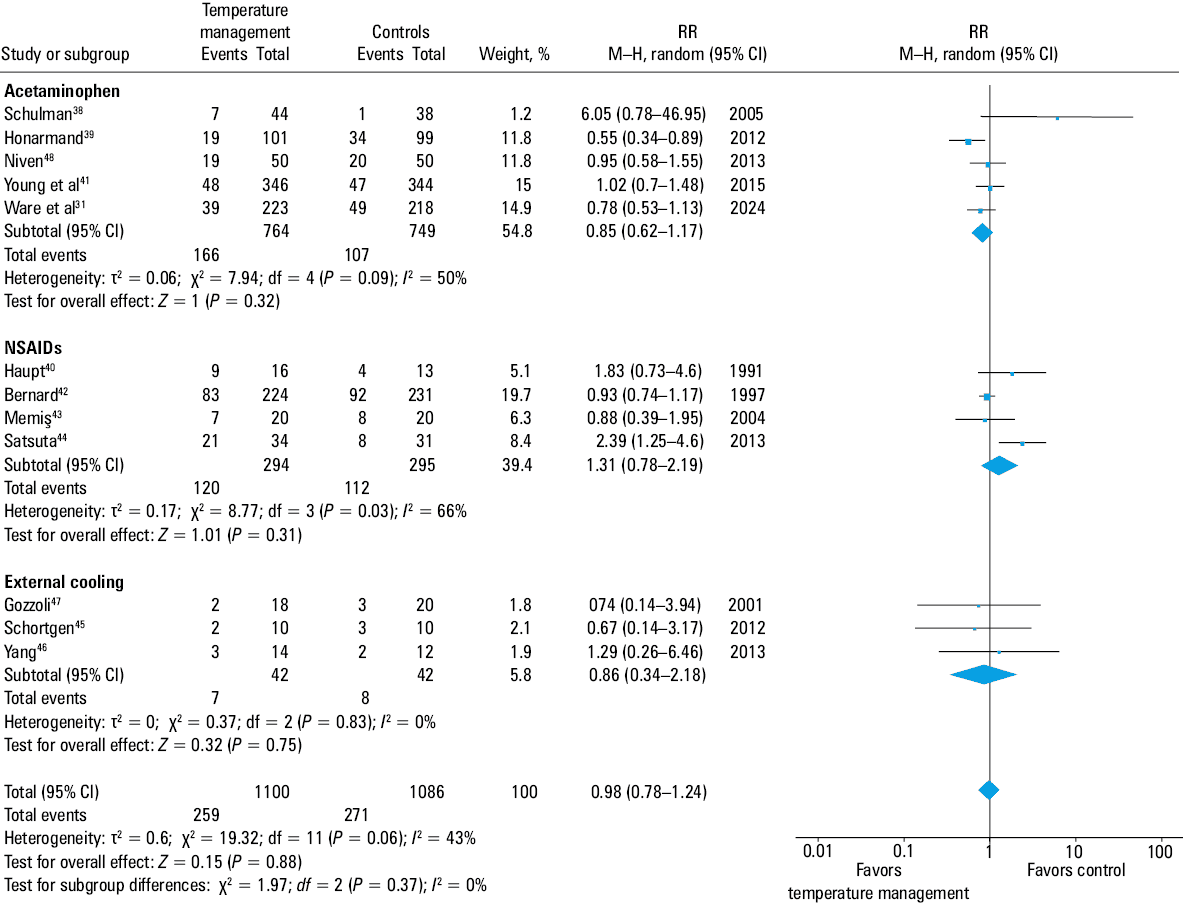
Abbreviations: df, degree of freedom; M–H, Mantel–Haenszel
Guideline limitations
While the SCCM/IDSA guidelines offer a structured, evidence‑based approach to evaluating fever in the ICU, several important limitations must be highlighted. The guideline panel did not include patient representatives, a factor that may limit incorporation of patient‑centered values, such as preferences for testing intensity, tolerance for uncertainty, and acceptable thresholds for empiric treatment decisions. Inclusion of such perspectives has been shown to improve the relevance and acceptability of guideline recommendations.32
The scope of the guidelines did not extend to several types of common and high‑risk subpopulations. Immunocompromised patients, including those with hematologic malignancies, organ transplants, or prolonged neutropenia, were not explicitly addressed, despite having distinct diagnostic challenges and outcome profiles. However, readers may refer to other published guidelines that focus on these populations.33,34 In addition, while the GRADE approach enhances transparency and methodological rigor, implementation of the recommendations, most of which address diagnostic interventions, requires an understanding of diagnostic test performance, including sensitivity, specificity, LRs, and their implications for post‑test probability. These concepts, although fundamental to clinical reasoning, were not always presented clearly in the guidelines. This may limit usability for clinicians unfamiliar with these parameters.
Gaps and future focus
Fever evaluation in the ICU continues facing critical blind spots that must inform future research and innovation. Rapid molecular diagnostics and artificial intelligence (AI)-powered support systems show early promise in predicting fever onset and identifying sepsis from continuous physiological data, yet none have been tested in prospective diagnostic trials focused on new‑onset fever.35,36
Another research need is the integration of diagnostics, combining biomarker trends with rapid panels or imaging that could improve diagnostic performance. The inconsistent biomarker thresholds and reliance on single measurements further limit interpretability and clinical utility. Future research should evaluate whether integrating repeated biomarker trajectories, such as interleukin‑6, PCT, and others, into diagnostic algorithms enhances accuracy, supports antimicrobial stewardship, and reduces unnecessary interventions in critically ill patients with new fever. In addition, recent work has highlighted the potential role of omics technologies, including transcriptomics, proteomics, and metabolomics, in refining sepsis diagnostics and prognosis.37 Integrated biomarker panels and molecular signatures may enable earlier recognition of infection, improved risk stratification, and movement toward personalized approaches in sepsis care. These methods remain largely investigational and require validation in prospective ICU fever cohorts before they can influence everyday clinical practice.
Financial information on diagnostic strategies is largely absent from ICU contexts. Cost‑effectiveness studies in general ICU populations, including models incorporating AI or multiplex testing, are scarce. Finally, additional evidence from resource‑limited settings is needed to guide practical recommendations for low- and middle‑income countries.
Conclusions
The 2024 SCCM/IDSA guidelines offer a clinically useful and methodologically robust approach to evaluating new‑onset fever in critically ill adults. This review translates the guideline recommendations into actionable strategies, integrating recent evidence and clarifying areas of uncertainty. Applying the guideline at the bedside requires not only familiarity with diagnostic tools and test characteristics but also sound clinical judgment, particularly when recommendations are conditional or absent. Future updates may focus on integrating novel diagnostics, tailoring strategies to high‑risk populations, and aligning diagnostic pathways with patient‑centered outcomes and implementation feasibility.
- Niven DJ, Laupland KB. Pyrexia: aetiology in the ICU. Crit Care. 2016; 20: 247. | Crossref
- Marik PE. Fever in the ICU. Chest. 2000; 117: 855‑869. | Crossref
- Bates DW, Goldman L, Lee TH. Contaminant blood cultures and resource utilization. The true consequences of false‑positive results. JAMA. 1991; 265: 365‑369. | Crossref
- Flokas ME, Andreatos N, Alevizakos M, et al. Inappropriate management of asymptomatic patients with positive urine cultures: a systematic review and meta‑analysis. Open Forum Infect Dis. 2017; 4: of × 207. | Crossref
- Metlay JP, Waterer GW, Long AC, et al. Diagnosis and treatment of adults with community‑acquired pneumonia. An official clinical practice guideline of the American Thoracic Society and Infectious Diseases Society of America. Am J Respir Crit Care Med. 2019; 200: e45‑e67. | Crossref
ARTICLE INFORMATION