

 CC BY 4.0
Argyria, or silver poisoning, is a rare condition resulting from chronic exposure to silver salts or colloidal silver, leading to characteristic blue‑gray pigmentation of the skin or diffuse discoloration.1 Although silver can accumulate in internal organs, no definitive evidence has linked chronic exposure to the development of other diseases or organ failure.2
A 40‑year‑old man with a history of bipolar disorder and schizotypal features, as well as long‑standing alcohol use disorder was admitted to a psychiatric department. On admission, he presented with low mood, which over the following days evolved into manic symptoms, including pressured speech, tangential and digressive thoughts, and grandiose ideation. A mixed episode was diagnosed, and treatment with quetiapine of 600 mg/day was initiated, leading to improvement of mood symptoms.
The patient reported that since early childhood he had considered himself to be a girl rather than a boy. His wife confirmed that he had been wearing female clothing and expressing a female gender identity consistently for many years, independent of manic symptoms and long before the onset of bipolar disorder.
The patient also exhibited eccentric behaviors and unusual beliefs (including a belief in magic) that were not related to psychotic episodes and were present before the onset of bipolar disorder. He maintained an interest in runes and possessed a collection of bladed weapons at home.
Physical examination showed striking bluish‑gray discoloration of the skin on the face, neck, tongue, oral mucosa, conjunctivae, and arms (Figure 1A and 1B). Detailed anamnesis demonstrated that the patient had been self‑administering silver: he purchased 1‑ounce silver bars, immersed them in 40% vodka, specifically manufactured in Ukraine or Russia, and connected the mixture to a charger. After changing the color from white to bluish, the solution was ready to drink. He chopped the bars into smaller pieces with an axe and consumed the resulting solution daily, believing this preparation to be a universal remedy. For example, he believed that it had cured him of lung cancer, which he was never medically diagnosed with. The patient reported ingesting approximately 2–3 grams of silver per month for over 18 years.
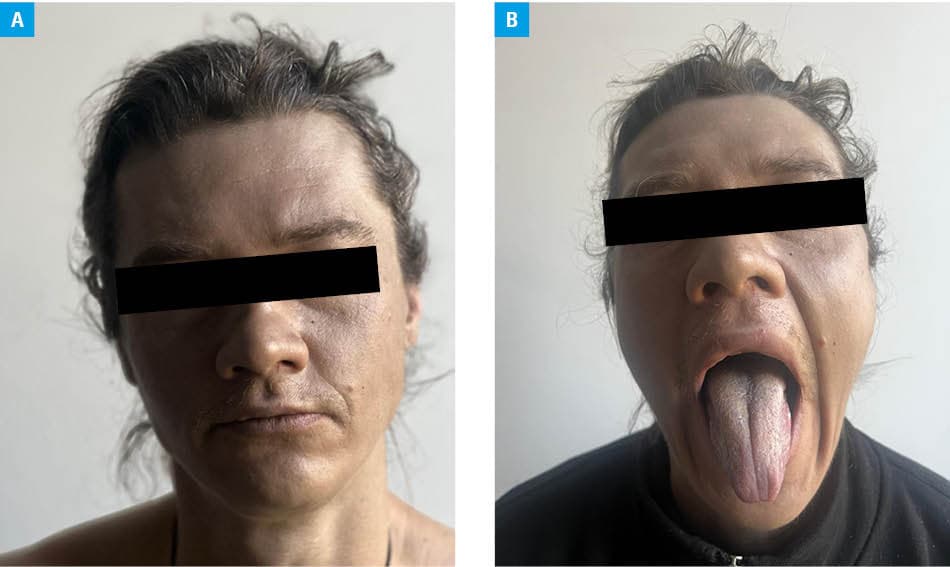
During his psychiatric hospitalization, he expressed further grandiose ideas, claiming that he had cured a friend’s mother of cancer and that “the Germans” had adopted his method of preparing silver solutions. Laboratory testing of blood silver levels and skin biopsy were not performed due to the patient’s refusal. He had never consulted any physician regarding his silver consumption, and remained indifferent to the discoloration of his skin.
To the best of our knowledge, this is the first reported case of argyria in a patient with bipolar disorder. Prior reports have only described argyria in patients with schizophrenia.3-5 In this case, the ingestion of silver was motivated by the patient’s eccentric belief in its life‑prolonging and curative properties. It is important to remember that similar discoloration might occur in systemic diseases, such as hemochromatosis or Addison disease, and can be related to the intake of drugs, such as amiodarone or phenothiazines. This case highlights the need for clinicians to consider argyria in the differential diagnosis of the above‑mentioned conditions.
- Mota L, Dinis‑Oliveira RJ. Clinical and forensic aspects of the different subtypes of argyria. J. Clin. Med. 2021; 10: 2086. | Crossref
- Prescott R, Wells S. Systemic argyria. J Clin Pathol. 1994; 47: 556‑557. | Crossref
- Ohbo Y, Fukuzako H, Takeuchi K, Takigawa M. Argyria and convulsive seizures caused by ingestion of silver in a patient with schizophrenia. Psychiatry Clin Neurosci. 1996; 50: 89‑90. | Crossref
- Anderson EL, Janofsky J, Jayaram G. Argyria as a result of somatic delusions. Am J Psychiatry. 2008; 165: 649‑650. | Crossref
- Schrauben SJ, Bhanusali DG, Sheets S, Sinha AA. A case of argyria: multiple forms of silver ingestion in a patient with comorbid schizoaffective disorder. Cutis. 2012; 89: 221‑224. | Crossref
ARTICLE INFORMATION