
Ten-year national trends in the prevalence and outcomes of gestational diabetes mellitus in Poland: a population-based study
Key words: gestational diabetes mellitus, macrosomia, perinatal complications, population-based study, retrospective study

 CC BY 4.0
Ten-year national trends in the prevalence and outcomes of gestational diabetes mellitus in Poland: a population-based study
CC BY 4.0
Introduction: Gestational diabetes mellitus (GDM) is one of the most common metabolic disorders in pregnancy, and its prevalence has been rising worldwide in parallel with increasing maternal age and obesity.
Objectives: We aimed to describe nationwide 10‑year trends in GDM prevalence, management, and perinatal outcomes.
Patients and methods: We conducted a retrospective, population‑based cohort study including all deliveries recorded in the Polish National Health Fund database from 2015 to 2024. GDM and complications were identified based on the International Classification of Diseases, Tenth Revision codes. GDM was diagnosed according to the International Association of Diabetes and Pregnancy Study Groups / World Health Organization 2013 criteria. Maternal age was categorized into 5 groups (<18, 18–24, 25–34, 35–44, and 45–54 y). We calculated the prevalence of GDM, assessed temporal trends, and estimated odds ratios for key maternal and neonatal complications.
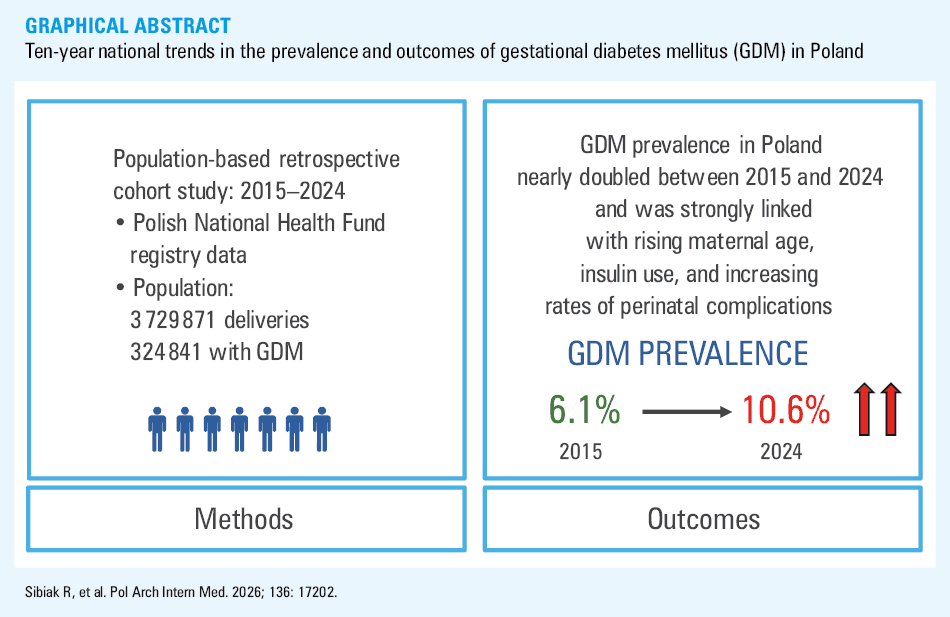
Results: The cohort comprised 3 729 871 deliveries. Over the 10‑year study period, the total annual number of deliveries in Poland declined by 25%, while GDM prevalence rose from 6.1% to 10.6%. Women with GDM were on average older, and the proportion of individuals with insulin‑dependent GDM increased modestly. GDM was consistently associated with higher risks of hypertensive disorders, cesarean delivery, macrosomia, congenital malformations, and neonatal hypoglycemia, among other complications.
Conclusions: GDM prevalence in Poland nearly doubled from 2015 to 2024, partly reflecting delayed childbearing. Pregnancies affected by GDM showed substantially greater maternal and neonatal morbidity.
What's new?
This nationwide analysis of almost 4 million deliveries provides comprehensive evidence that prevalence of gestational diabetes mellitus (GDM) is rapidly increasing across the entire European population, and this condition is now affecting over 1 in 10 pregnancies. The study demonstrates that women diagnosed with GDM experience a markedly higher risk of complications during pregnancy and delivery, even within a uniform health care system using standardized diagnostic criteria. These findings suggest that rising maternal age alone does not fully explain the trend, and highlight the need for more effective public health strategies, earlier risk identification, and targeted obstetric care. Together, these observations emphasize that GDM represents not only a metabolic disorder but a growing obstetric challenge with major implications for future clinical practice and health care policy.
Introduction
Gestational diabetes mellitus (GDM) is defined as glucose intolerance first identified during pregnancy, excluding overt diabetes diagnosed prior to conception. The International Association of Diabetes and Pregnancy Study Groups (IADPSG) criteria, endorsed by the World Health Organization (WHO), recommend performing a 2‑hour 75‑g oral glucose tolerance test (OGTT) between 24 and 28 weeks of gestation, using thresholds linked to adverse perinatal outcomes, to screen for GDM.1
The global prevalence of GDM ranges from 6%–7% to over 20%, depending on the population studied and diagnostic criteria applied.2,3 The rising prevalence is closely linked to increasing rates of obesity, sedentary lifestyle, and delayed childbearing—factors that have reshaped the metabolic landscape of pregnancy in recent decades.4
GDM develops in the context of progressive insulin resistance associated with pregnancy, particularly in the second and third trimesters, compounded by an inadequate β-cell compensatory response. Placental hormones, including human placental lactogen, progesterone, and cortisol, exacerbate insulin resistance, tipping the balance toward hyperglycemia in susceptible individuals.5 This dysglycemia can have profound effects on maternal metabolism, fetal development, and placental function, establishing a trajectory toward adverse outcomes.
GDM is associated with significant short- and long‑term risks for both the mother and offspring. In the perinatal period, GDM is believed to increase the risk of hypertensive disorders of pregnancy, operative delivery, fetal macrosomia, shoulder dystocia, and neonatal complications, such as hypoglycemia and respiratory distress.6 Offspring of the affected pregnancies are also predisposed to obesity, glucose intolerance, and metabolic syndrome in later life.7,8
Despite the clinical importance of GDM, key knowledge gaps persist. First, population‑level data on long‑term trends in GDM prevalence are limited, particularly across regions where diagnostic thresholds and screening practices have changed over time. These shifts complicate the interpretation of temporal and geographic patterns in disease burden. Second, while GDM is known to increase the risk of adverse outcomes, robust analyses linking GDM to specific obstetric complications in large, diverse national datasets remain limited. Existing studies often rely on heterogeneous definitions and outcome reporting.9-11 Comprehensive data are urgently needed to guide public health interventions aimed at reducing the incidence of GDM across populations.
In this study, we aimed to evaluate national trends in the prevalence of GDM over the past decade (2015–2024) in Poland, and to examine the association of GDM with key obstetric outcomes using data from a large, population‑based national health registry.
Patients and methods
Study design and data source
We conducted a retrospective, nationwide, population‑based cohort study using administrative health care data from the Polish National Health Fund (NHF), which covers the entire Polish population (approximately 38 million inhabitants). The dataset includes all hospitalizations and outpatient visits reimbursed by the NHF, with the International Classification of Diseases, Tenth Revision (ICD‑10) diagnosis codes, procedure codes, and delivery‑related records, between January 1, 2015, and December 31, 2024. The data were extracted from the central NHF database in June 2025.
In accordance with national regulations governing retrospective analyses of deidentified administrative data, this study did not require formal approval from an institutional bioethics committee or patient consent.
Study population
We identified all NHF‑reimbursed deliveries in Poland between January 1, 2015, and December 31, 2024, using delivery‑related ICD‑10 codes. Pregnancies complicated by GDM were defined by the presence of an ICD‑10 code O24.4 or, for women without this diagnosis code, by the first prescription for insulin or glucose meter test strips issued within 12 months prior to delivery. Throughout the study period, in all Polish centers, GDM was diagnosed according to the Polish Diabetes Association’s adoption of the IADPSG/WHO 2013 diagnostic criteria (75‑g OGTT with plasma glucose level ≥92 mg/dl [5.1 mmol/l] at fasting, ≥180 mg/dl [10 mmol/l] at 1 hour, or ≥153 mg/dl [8.5 mmol/l] at 2 hours).12 Maternal age at delivery was recorded and categorized as <18, 18–24, 25–34, 35–44, or 45–54 years. Within the GDM cohort, we further stratified the women by treatment modality—those managed with insulin vs those managed without insulin—based on reimbursement records for antidiabetic therapies. We excluded all pregnancies in women with pre‑existing type 1 or type 2 diabetes (ICD‑10 codes E10, E11, or O24.0–O24.3).
Neonatal clinical outcomes were obtained through Poland’s routine practice of linking each infant’s medical and billing records to the mother’s unique NHF identifier, ensuring comprehensive capture of perinatal events.
Maternal and neonatal outcomes
We captured a comprehensive panel of maternal and neonatal end points from the NHF discharge and procedure records, coded by ICD‑10 codes. The maternal outcomes comprised: 1) hypertensive disorders: chronic hypertension (with / without proteinuria; O10/O11), gestational hypertension (O13), preeclampsia (O14), and eclampsia (O15); 2) hepatobiliary and obstetric complications: intrahepatic cholestasis of pregnancy (O26.6), polyhydramnios (O40), oligohydramnios (O41.0), chorioamnionitis (O41.1), and preterm premature rupture of membranes (pPROM; O42); 3) placental and labor events: placenta previa (O44), placental abruption (O45), failed induction of labor (O61), obstetric care for isoimmunization (O36.0–O36.1), twin and higher‑order multiple gestations (O30, O30.1–O30.2); 4) trauma and delivery mode: perineal laceration (O70), uterine rupture (O71.0–O71.1), other obstetric trauma (O71.3–O71.9), vaginal birth after cesarean (O75.7), spontaneous vaginal and breech delivery (O80, O80.1), forceps and vacuum extraction (O81.0–O81.3, O81.4), elective and emergency cesarean section (O82.0, O82.1), and cesarean hysterectomy (O82.2); and 5) postpartum complications: postpartum hemorrhage (O72), retained placenta (O73), puerperal sepsis (O85), anemia complicating pregnancy (O99.0), and maternal death (O95–O97).
The neonatal outcomes included: 1) congenital anomalies: hydrops fetalis (O36.2), congenital malformations of the nervous system (Q00–Q07), congenital malformations of the eye, ear, face, and neck (Q10–Q18), congenital malformations of the circulatory system (Q20–Q28), congenital malformations of the respiratory system (Q30–Q34), cleft lip and cleft palate (Q35–Q37), other congenital malformations of the digestive system (Q38–Q45), congenital malformations of the genital organs (Q50–Q56), congenital malformations of the urinary system (Q60–Q64), congenital malformations and deformations of the musculoskeletal system (Q65–Q79), and chromosomal abnormalities (Q90–Q99); 2) infection and fetal injury: fetal damage from maternal viral infection (O35.3), stillbirth (O36.4); 3) birth trauma: central nervous system injury (P10, P11–P11.0), cephalhematoma (P12.0), clavicle fracture (P13.4), peripheral nerve injury (P14), and other birth injuries (P15); 4) respiratory and metabolic complications: respiratory distress syndrome (P22.0), transient tachypnea of the newborn (P22.1), neonatal jaundice (P58), neonatal hypoglycemia (P70.0–P70.1), fetal growth restriction (O36.5), macrosomia (O36.6), and preterm birth (O60).
Data availability
The data that support the findings of this study were provided by the NHF, Warsaw, Poland, but restrictions apply as to their availability. The data were used under a license for the current study and therefore are not publicly available. However, they may be obtained from the authors upon reasonable request and with permission of the NHF.
Statistical analysis
Annual delivery volumes and GDM case counts (2015–2024) were presented as bar charts showing both absolute numbers and GDM percentages with overbar labels. Maternal age distributions by GDM status were depicted as bar plots across 5 age groups (<18, 18–24, 25–34, 35–44, and 45–54 y).
Linear and quadratic regression models were fitted to assess temporal trends. Specifically, we used ordinary least‑squares linear regression with calendar year as the predictor to evaluate changes in GDM prevalence and total deliveries; the model fit was quantified by the coefficient of determination (R2). To capture nonlinear patterns in delivery volume, we fitted a second‑degree (quadratic) polynomial model.
For each age group, annual percentages of deliveries and age‑specific GDM rates were analyzed in a similar manner by linear regression; the reported metrics include slope, R2 coefficient, and 2‑tailed P value. Differences in categorical variables, including age group distributions, were assessed using the χ2 test. To assess the impact of several parameters on GDM and macrosomia risk, we fitted multivariable logistic regression models. The models included maternal age group and year of delivery, and additionally GDM status in the macrosomia analysis. Covariates were selected based on their clinical relevance and availability in the NHF dataset. Unadjusted odds ratios (ORs) and 95% CIs for selected maternal and neonatal complications between GDM and non‑GDM cohorts were visualized in forest plots. Statistical significance was set at a P value below 0.05. All statistical analyses were performed in Python (v3.11; Python Software Foundation, Wilmington, Delaware, United States).
Results
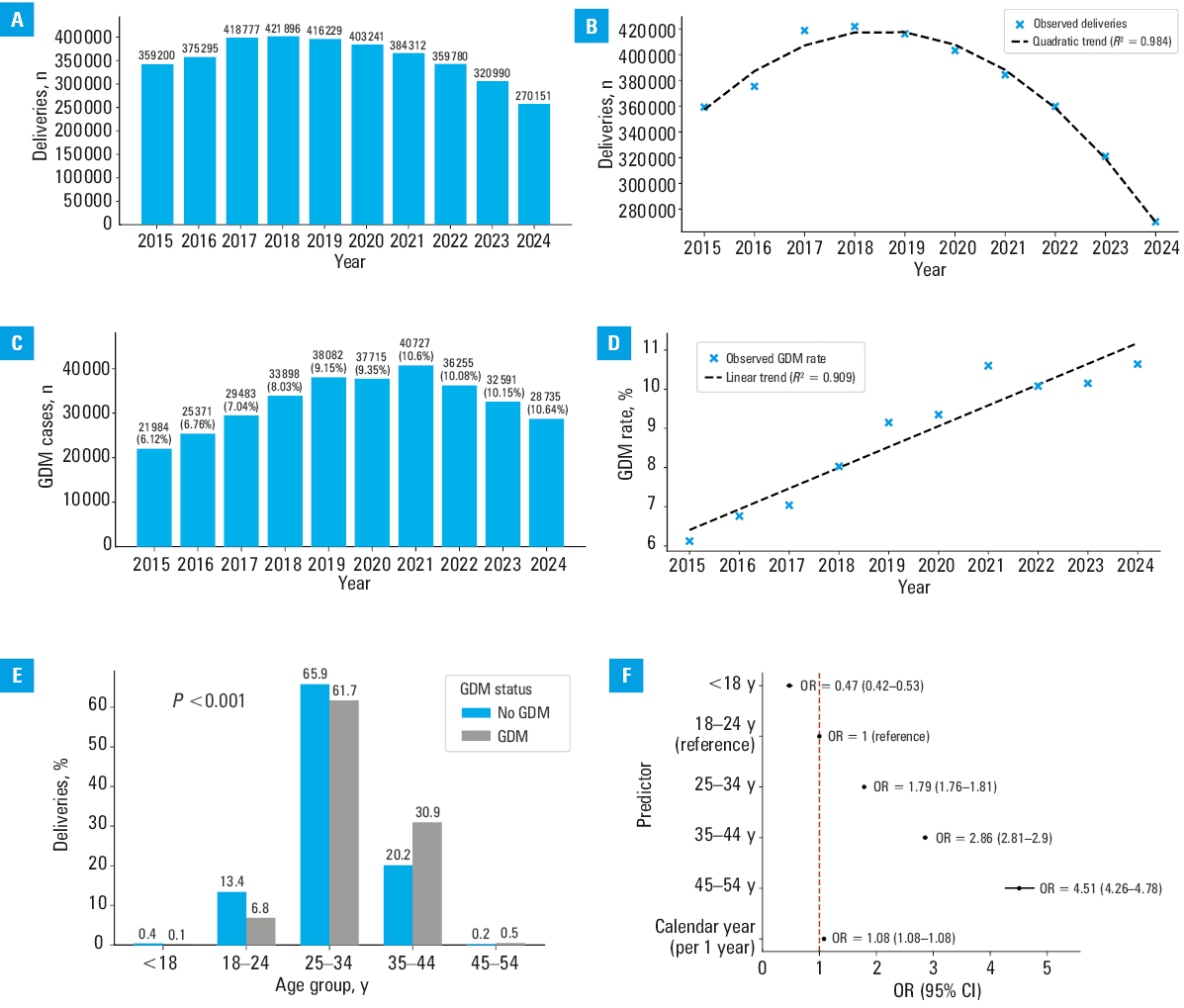
The final study population comprised 3 729 871 deliveries, including 324 841 from pregnancies complicated by GDM. As shown in Figure 1A, the total annual number of deliveries fell from 359 200 in 2015 to 270 151 in 2024, with a quadratic trend of changes over time represented in Figure 1B. The number of GDM cases rose from 21 984 to 28 735 over the same period (Figure 1C and 1D). Consequently, the proportion of deliveries complicated by GDM rose markedly, nearly doubling from approximately 6% in 2015 to over 10% in 2024 (R2 = 0.91; P <0.001; Figure 1D). Women diagnosed with GDM were, on average, older than their non‑GDM counterparts. A χ2 test of age‑group proportions confirmed this difference to be highly significant (Figure 1E). Multivariable logistic regression models demonstrated a positive association between the presence of GDM and both calendar year and maternal age category (Figure 1F).
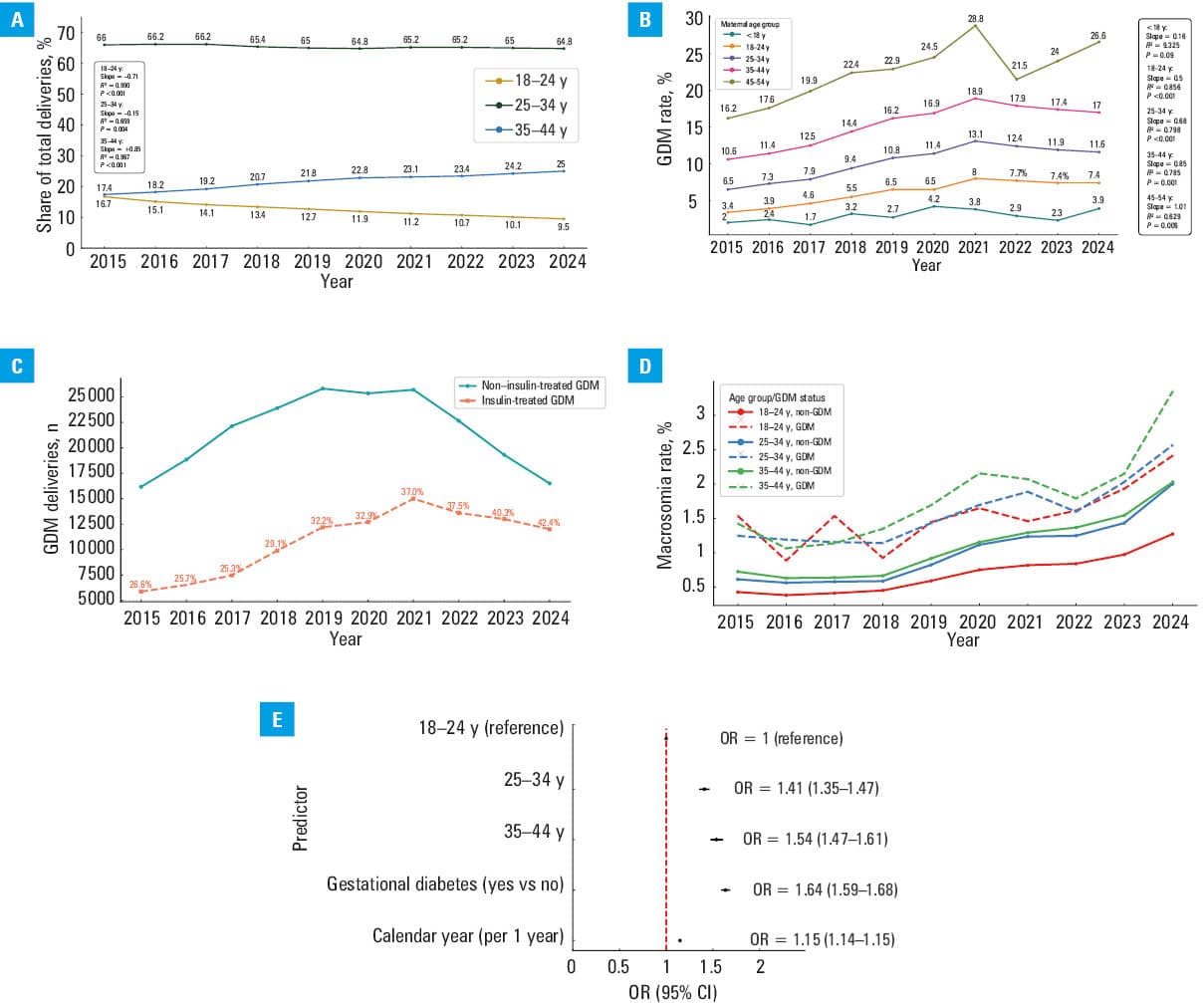
The distribution of maternal age shifted markedly over the study period: the 25–34‑year age group remained predominant, while the 35–44‑year cohort steadily increased in number and the 18–24‑year cohort declined (Figure 2A). GDM rates rose across nearly all age groups, with the steepest increases seen in the women aged 18–24 and 25–34 years (Figure 2B). Among the GDM pregnancies, the frequency of cases managed without insulin initially rose before plateauing and then falling, whereas the number of insulin‑treated cases and their share of all GDM pregnancies rose markedly (P <0.001), indicating a growing reliance on pharmacologic therapy (Figure 2C). Between 2015 and 2024, macrosomia prevalence increased across all maternal age groups, with consistently higher rates among the women with than those without GDM (Figure 2D). The differences in macrosomia prevalence between the GDM and non‑GDM groups were significant. Multivariable logistic regression models demonstrated a positive association between the presence of macrosomia and calendar year, maternal age category, and a diagnosis of GDM (Figure 2E).
GDM was associated with an increase in maternal risk across a broad range of obstetric complications (Figure 3). While a small subset of events—such as spontaneous breech deliveries—occurred less frequently in the GDM pregnancies, most adverse outcomes showed elevated odds, with the steepest associations seen for hypertensive disorders and notably higher rates of elective and emergency cesarean sections and peripartum hysterectomy. Moderate increases were observed for operative vaginal births and obstetric trauma, whereas events such as oligohydramnios and pPROM clustered near unity. This pattern highlights GDM as a key driver of maternal morbidity.
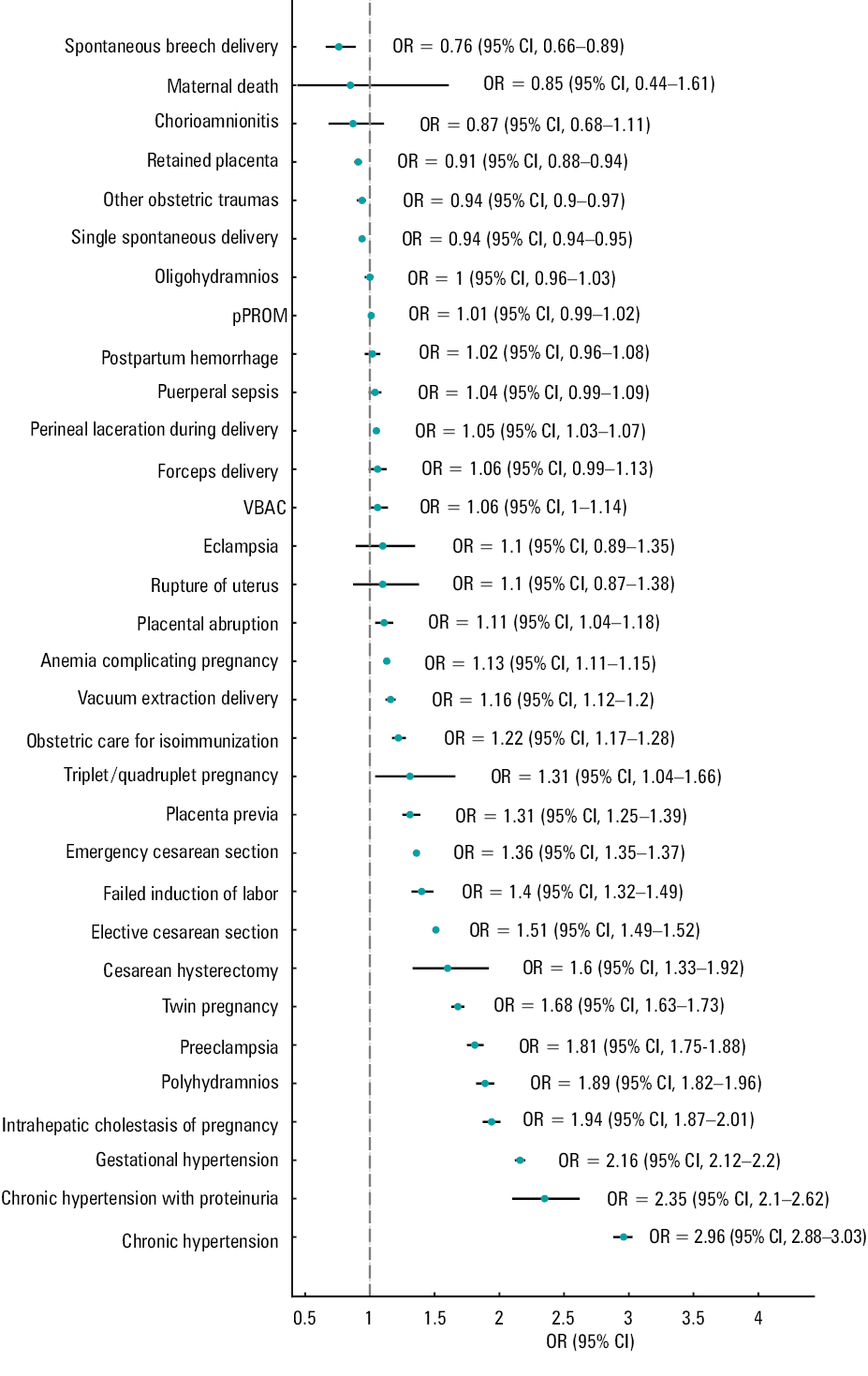
Abbreviations: pPROM, preterm premature rupture of membranes; VBAC, vaginal birth after cesarean
Figure 4 illustrates the heterogeneous impact of maternal GDM on neonatal outcomes. Infants of GDM pregnancies had lower odds of mechanical birth injuries—such as clavicle fracture and cephalhematoma. In contrast, metabolic and growth‑related complications were markedly more common in this group: neonatal hypoglycemia (OR, 48.21; 95% CI, 47.27–49.17), macrosomia, and congenital malformations showed the strongest associations, accompanied by moderate increases in preterm birth, transient tachypnea, respiratory distress syndrome, and fetal growth restriction.
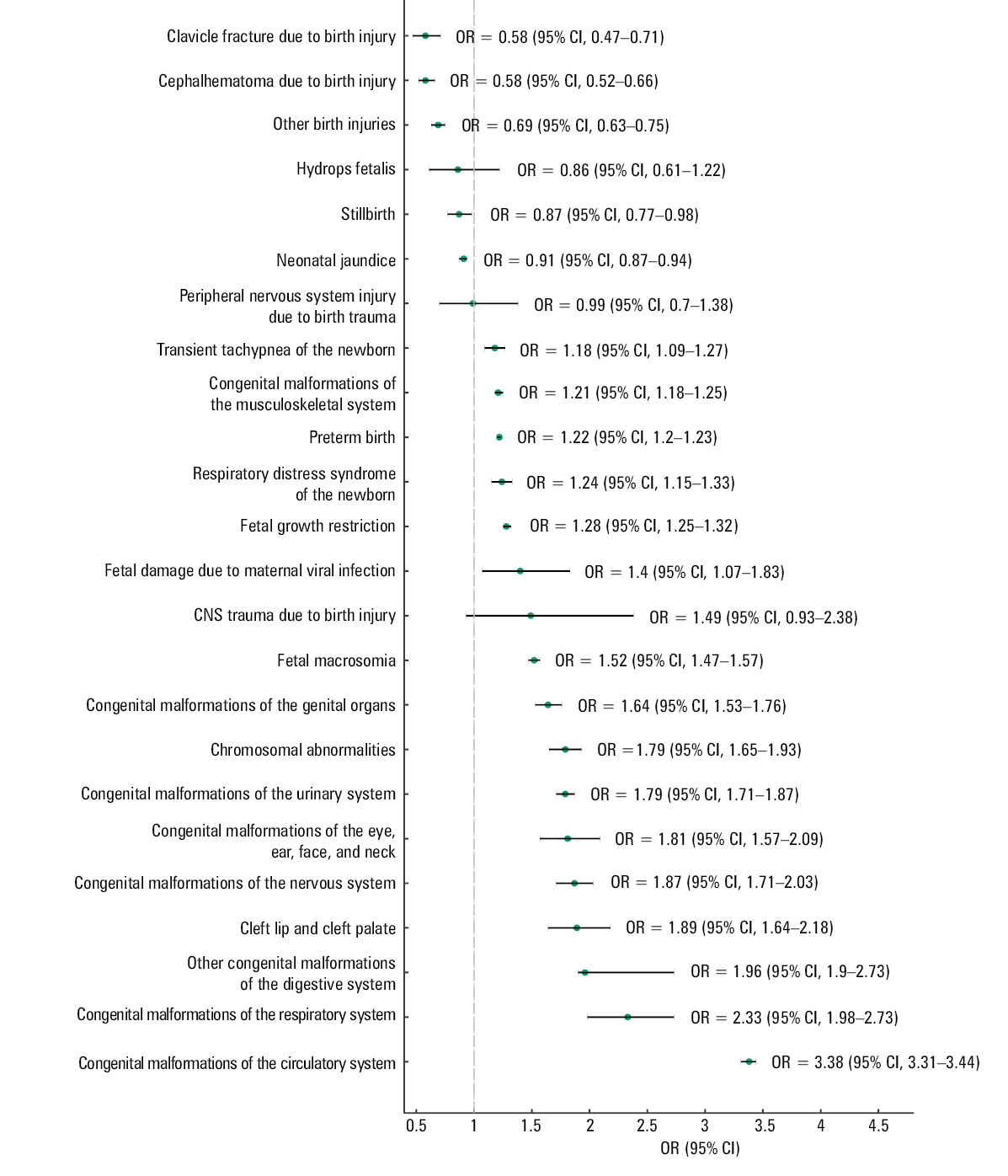
Abbreviations: CNS, central nervous system; PNS, peripheral nervous system
Discussion
In this comprehensive, population‑based cohort study of all NHF‑reimbursed deliveries in Poland from 2015 to 2024, we observed a marked and sustained increase in the prevalence of GDM, a concurrent shift toward older maternal age among the affected women, and significantly elevated risks of both maternal and neonatal complications. These findings, derived from the complete administrative NHF database, shed light on the evolving perinatal epidemiology in a large Central European population and have important implications for public health strategy and clinical practice.
Over the 10‑year period, the proportion of deliveries complicated by GDM rose steadily from 6.1% in 2015 to 10.6% in 2024. This near doubling of GDM prevalence was corroborated by a highly significant positive linear trend. International studies from the United States, Australia, and Western Europe have reported similar upward trajectories in GDM prevalence, often attributed to parallel increases in maternal age, prepregnancy body mass index (BMI), and the adoption of more sensitive diagnostic criteria (IADPSG/WHO 2013).13-17
In a recent multicenter Polish study, Bomba‑Opoń et al18 reported a GDM prevalence of 6.62% among 17 654 deliveries in 2016. Notably, this estimate closely aligns with our nationwide prevalence for the same year, supporting the robustness and external validity of our registry‑based findings. Another Polish analysis demonstrated that changes in diagnostic criteria can substantially modify the observed prevalence of GDM.19 However, neither study evaluated long‑term nationwide trends. Our findings therefore complement existing evidence by providing a decade‑long, population‑based assessment of GDM prevalence in Poland.
A key driver of the rising GDM burden appears to be demographic changes. Women with GDM in our cohort were significantly older than their non‑GDM counterparts. The predominance of GDM in the age groups of 25–34 and 35–44 years aligns with prior observations that maternal age of 30 years or older is an independent risk factor for glucose intolerance during pregnancy.20,21 Given the trend toward delayed childbearing in many societies, these findings underscore the importance of tailored screening policies and preconception counseling for women over 30 years. Furthermore, age‑stratified analyses demonstrated a continuous, significant increase in GDM prevalence across every age group except the women younger than 18 years, underscoring that the rise in GDM is pervasive and not confined to older mothers.
Within the GDM cohort, the proportion of women managed with insulin rose significantly from 26.6% in 2015 to 42.4% in 2024. While insulin remains the gold standard for glucose management in GDM unresponsive to diet and lifestyle interventions, the growing insulin‑treated fraction may reflect increasing disease severity, more precise monitoring, unlimited access to insulins in recent years, and evolving clinical guidelines favoring pharmacotherapy.22-24
Our data show that GDM is associated with a broad spectrum of peripartum risks for both the mother and the child. In mothers, forest plots indicated higher odds of hypertensive disorders and cesarean delivery; in infants, they showed a greater likelihood of metabolic and growth‑related complications (eg, excessive birth weight, hypoglycemia, respiratory morbidity), with no increase in birth injuries. These associations—derived from unadjusted ORs in nationwide administrative data—are consistent with the pathophysiologic consequences of maternal hyperglycemia and a more intervention‑intensive perinatal course.5,6 A plausible explanation for the lower rate of peripartum injuries in the GDM cohort is a management pathway effect. In Poland, women with GDM are more often cared for in higher‑level referral centers, where precise fetal weight estimation and structured shoulder dystocia risk stratification facilitate referral for elective cesarean section when indicated. Additionally, it appears that cardiotocography monitoring during the antenatal period, which is advised in Poland for pregnancies complicated by GDM, helps prevent and lower the risk of intrauterine fetal death.
Moreover, the apparent reduction in both neonatal and maternal birth trauma events among GDM pregnancies should be interpreted considering our inclusion of all GDM cases—rather than isolating vaginal deliveries. In our cohort, the women with GDM underwent cesarean section at substantially higher rates than those without GDM, effectively bypassing the mechanical forces that give rise to maternal trauma and infant fractures.25 As a result, aggregate comparisons of trauma prevalence understate the risk that would be observed if only spontaneous or operative vaginal births had been analyzed. A subgroup analysis restricted to vaginal deliveries would likely reveal the expected increase in both neonatal injury (eg, clavicle fracture, cephalhematoma) and maternal trauma (eg, perineal tears, obstetric lacerations) associated with macrosomia and labor dystocia in GDM.26,27
The higher prevalence of congenital malformations in the GDM cohort should be interpreted cautiously. Nevertheless, consistent with our findings, large contemporary cohort studies also reported an elevated anomaly risk in GDM—typically lower than that observed in pregestational diabetes.28,29 Although patients with pregestational diabetes were excluded, some women labeled as GDM may have had unrecognized pre‑existing disease or early‑pregnancy dysglycemia. In addition, the GDM group was older, and advancing maternal age is a major determinant of chromosomal and selected structural anomalies.30 These considerations argue for careful adjustment for maternal age and early glycemic status to address potential bias. Clinically, these findings underscore the need for preconception / early‑pregnancy glycemic assessment and intensified prenatal surveillance (targeted ultrasound, laboratory testing), which may further elevate detection rates, particularly in GDM patients.
Interestingly, our analysis also showed that the GDM diagnosis was associated with lower odds of neonatal jaundice and stillbirth. This counterintuitive finding likely reflects the intensive surveillance and timely interventions to which women with GDM are routinely subjected—such as more frequent prenatal visits, fetal monitoring, and early delivery planning—which may mitigate risks of severe hyperbilirubinemia and stillbirth.31 These observations underscore how heightened clinical vigilance in GDM pregnancies can confer protective benefits for specific neonatal outcomes, even as other risks increase.
Our study’s strengths include using a complete national registry, which minimizes selection bias and provides adequate statistical power. A crucial methodological strength of our research is the use of uniform, nationwide diagnostic criteria for GDM throughout the entire 2015–2024 period. At all Polish centers, GDM was diagnosed by the Polish Diabetes Association’s adoption of the IADPSG/WHO 2013 thresholds (75‑g OGTT with plasma glucose ≥92 mg/dl [5.1 mmol/l] at fasting, ≥180 mg/dl [10 mmol/l] at 1 hour, or ≥153 mg/dl [8.5 mmol/l] at 2 hours).12 By applying these identical criteria across every year and region, we minimized temporal and geographic heterogeneity in case ascertainment, ensuring that the observed rise in GDM prevalence reflects a genuine epidemiologic change rather than shifts in diagnostic practice. In this nationwide cohort, the application of the IADPSG diagnostic criteria for GDM over a 10‑year period was associated with a consistently higher risk of multiple adverse perinatal outcomes among the women diagnosed with GDM. These findings suggest that the IADPSG thresholds, despite ongoing debate regarding their stringency, may indeed capture a clinically relevant risk group. Nevertheless, these results should be interpreted with caution and warrant further confirmation in other populations and study designs.
Limitations
Certain limitations of our study merit discussion. First, the NHF database lacks individual‑level clinical parameters—such as BMI, blood pressure readings, glycemic indices during pregnancy, and lifestyle factors—that are known to influence the GDM risk and outcomes. Second, diagnostic coding may vary between institutions and over time, potentially introducing misclassification bias; we attempted to mitigate this by including prescription data to capture undiagnosed or miscoded GDM. Third, our analysis did not adjust the ORs for potential confounders (eg, obesity, parity, socioeconomic status); thus, the reported associations represent crude estimates. Another limitation of this study is the ethnic homogeneity of the Polish population, which may restrict the generalizability of the findings to more diverse populations. An additional limitation relates to the use of a 12‑month window for identifying first prescriptions of insulin or glucose meter test strips, which, in retrospect, may be broader than the physiological duration of pregnancy. This approach was chosen to maximize sensitivity in detecting potentially miscoded GDM cases; however, the likelihood of meaningful misclassification appears low, particularly as women with pregestational diabetes would generally be identifiable through ICD‑10 codes (E10, E11, O24.0–O24.3) used as exclusion criteria. Finally, the NHF data do not include home births or deliveries in fully private, noncontracted facilities; however, these represent a very small proportion of all births in Poland, and their omission is unlikely to meaningfully affect the overall national estimates.
Conclusions
Our population‑wide analysis indicates that GDM prevalence in Poland nearly doubled over the last decade, driven in part by an aging maternal population. GDM pregnancies carry substantially higher risks of both maternal and neonatal complications, and an increasing proportion now require insulin therapy. These findings underscore the urgent need for enhanced preventive measures—such as preconception counselling, targeted screening for older and overweight women, and optimized glycemic management—to curb the growing GDM epidemic and improve perinatal outcomes. Future research should integrate clinical covariates to refine risk stratification and assess the long‑term health trajectories of mothers and their children.
- Metzger BE. International Association of Diabetes and Pregnancy Study Groups recommendations on the diagnosis and classification of hyperglycemia in pregnancy. Diabetes Care. 2010; 33: 676‑682. | Crossref
- Guariguata L, Linnenkamp U, Beagley J, et al. Global estimates of the prevalence of hyperglycaemia in pregnancy. Diabetes Res Clin Pract. 2014; 103: 176‑185. | Crossref
- Zhu Y, Zhang C. Prevalence of gestational diabetes and risk of progression to type 2 diabetes: a global perspective. Curr Diab Rep. 2016; 16: 7. | Crossref
- Ferrara A. Increasing prevalence of gestational diabetes mellitus. Diabetes Care. 2007; 30: S141‑S146. | Crossref
- Barbour LA, McCurdy CE, Hernandez TL, et al. Cellular mechanisms for insulin resistance in normal pregnancy and gestational diabetes. Diabetes Care. 2007; 30: S112‑S119. | Crossref
ARTICLE INFORMATION