
Impact of sodium-glucose cotransporter 2 inhibitors on bleeding, hospitalizations, and other adverse outcomes in atrial fibrillation patients with and without diabetes
1,5,6* Key words: atrial fibrillation, arrhythmias, outcomes, SGLT2 inhibitors

 CC BY 4.0
Impact of sodium-glucose cotransporter 2 inhibitors on bleeding, hospitalizations, and other adverse outcomes in atrial fibrillation patients with and without diabetes
CC BY 4.0
Introduction: Emerging evidence suggests that sodium‑glucose cotransporter 2 inhibitors (SGLT2is) may be associated with a reduced risk of arrhythmias and related complications.
Objectives: We aimed to evaluate the impact of SGLT2is on atrial fibrillation (AF)-associated adverse outcomes.
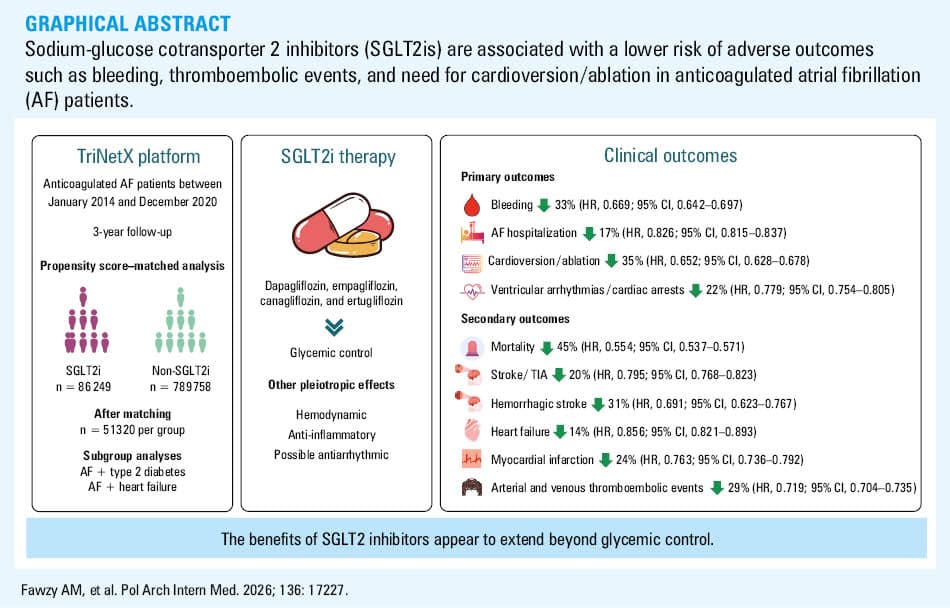
Patients and methods: All anticoagulated patients with AF diagnosed between January 2014 and December 2020 were identified from a federated electronic medical record database (TriNetX), and followed‑up for 3 years. A 1:1 propensity score matching (PSM) analysis was performed to balance SGLT2i and non‑SGLT2i cohorts. Primary outcomes were bleeding, hospitalizations for AF/atrial flutter (AFl), composite of cardioversion and ablations, and ventricular arrhythmias (VAs) and cardiac arrests. Secondary outcomes included all‑cause mortality, ischemic stroke / transient ischemic attack (TIA), hemorrhagic stroke, incident heart failure (HF), myocardial infarction, and composite of arterial and venous thrombotic events (TEs). Subanalyses were performed on AF‑diabetes and AF‑HF cohorts.
Results: As many as 789 758 and 86 249 patients were identified from the non‑SGLT2i and SGLT2i groups, respectively. After PSM, each group had 51 320 patients. The SGLT2i use was associated with a significantly lower risk of bleeding (hazard ratio [HR], 0.669; 95% CI, 0.642–0.697), hospitalization for AF/AFl (HR, 0.826; 95% CI, 0.815–0.837), composite of cardioversion / ablation (HR, 0.652; 95% CI, 0.628–0.678), and VAs and cardiac arrests (HR, 0.779; 95% CI, 0.754–0.805). A lower risk of all‑cause mortality (HR, 0.554; 95% CI, 0.537–0.571), ischemic stroke/TIA (HR, 0.795; 95% CI, 0.768–0.823), hemorrhagic stroke (HR, 0.691; 95% CI, 0.623–0.767), incident HF (HR, 0.856; 95% CI, 0.821–0.893), myocardial infarction (HR, 0.763; 95% CI, 0.736–0.792), and composite of arterial / venous TEs (HR, 0.719; 95% CI, 0.704–0.735) was also observed.
Conclusions: The SGLT2i use was associated with a lower risk of AF‑related complications.
What's new?
This study evaluates the association between the use of sodium‑glucose cotransporter 2 inhibitors (SGLT2is) and bleeding and other clinical outcomes in anticoagulated patients with atrial fibrillation (AF), with and without diabetes. Prespecified subanalyses were conducted in patients with AF and diabetes, as well as in nondiabetic patients with AF and heart failure (HF). This real‑world study examines the impact of SGLT2is exclusively in nondiabetic AF patients with HF for whom data are only just emerging. The findings suggest that the pleiotropic effects of SGLT2is may extend to a reduced risk of bleeding and potential antiarrhythmic effects.
Introduction
After years of serving as antidiabetic drugs, sodium‑glucose cotransporter 2 inhibitors (SGLT2is) expanded into the cardiovascular domain following evidence from cardiovascular outcomes trials (CVOTs) and subsequent randomized controlled trials (RCTs) that demonstrated significant benefits in terms of mortality and heart failure (HF) hospitalization reduction.1-7 SGLT2is now form an integral part of guideline‑directed medical therapy in HF.
Recent evidence suggests that SGLT2is may have a role in reducing the risk of atrial fibrillation (AF). In an analysis from the DECLARE‑TIMI58 trial (Multicenter Trial to Evaluate the Effect of Dapagliflozin on the Incidence of Cardiovascular Events), treatment with dapagliflozin was seen to reduce the risk of incident AF/atrial flutter (AFl), as well as subsequent episodes of AF/AFl in those with and without a history of AF/AFl, even after considering factors such as atherosclerotic cardiovascular disease, history of HF, sex, and body mass index (BMI).8 In contrast, a substudy from the CREDENCE trial (Evaluation of the Effects of Canagliflozin on Renal and Cardiovascular Outcomes in Participants With Diabetic Nephropathy) showed no significant difference in AF/AFl risk with canagliflozin but the total number of events recorded in the trial was small (n = 115). When these results were pooled with those from the 3 other CVOTs, the reduction in the AF/AFl risk was found to be significant.9 In line with this, several meta‑analyses of RCTs and cohort studies have demonstrated a lower risk of incident AF associated with SGLT2is.10-18 Though the aforementioned trials were not designed to assess AF as a prespecified end point, these data suggest that SGLT2is may have some relevance in modulating arrhythmia risk.
Further to the above, there is limited evidence to suggest that SGLT2is may be beneficial in patients who already have AF. In an analysis from the EMPA‑REG OUTCOME trial (BI10773 [Empagliflozin] Cardiovascular Outcome Event Trial in Type 2 Diabetes Mellitus Patients), empagliflozin had a more pronounced absolute treatment effect in patients with than without AF, indicating that they may stand to achieve more benefit.19 A holistic approach to the management of patients with AF has been put forward for several years, and SGLT2is may be relevant in this context considering the several possible benefits mentioned above.20,21 However, the number of patients with pre‑existing AF in the available RCTs has been relatively small and at present, there is little information on how SGLT2is affect certain AF‑related adverse outcomes in this specific patient population. Thus, we sought to evaluate this in a real‑world population of AF patients, including individuals with and without diabetes.
Patients and methods
Study design and population
This retrospective, observational cohort study was conducted using the TriNetX research network, a global federated administrative database with real‑time updates of electronic medical records (EMRs). It holds data on approximately 85 million patients from over 70 health care organizations (HCOs) across 7 countries, with the majority of centers based in the United States. Other participating countries include Germany, United Kingdom, Italy, Singapore, and Israel. A detailed description of the database is provided by Topaloglu et al22 and can be found online (https://trinetx.com/company‑overview/).
Briefly, the TriNetX research network database encompasses anonymized EMRs of patients registered with the network, and holds information on patient demographics, clinical details including diagnoses, medications, and investigations as well as any procedures, from settings such as general practice surgeries, community and secondary hospitals, providing detailed real‑world data.
All anticoagulated patients with AF diagnosed between January 1, 2014 and December 31, 2020 were identified from the TriNetX database using the International Classification of Diseases, Tenth Revision (ICD‑10) code I48 for AF. The patients were categorized into 2 groups of individuals treated and not treated with SGLT2is (Figure 1). The searches were run on January 23, 2026. At the time of the search, there were 97 participating HCOs within the TriNetX research network, and 88 responded with the patient data.
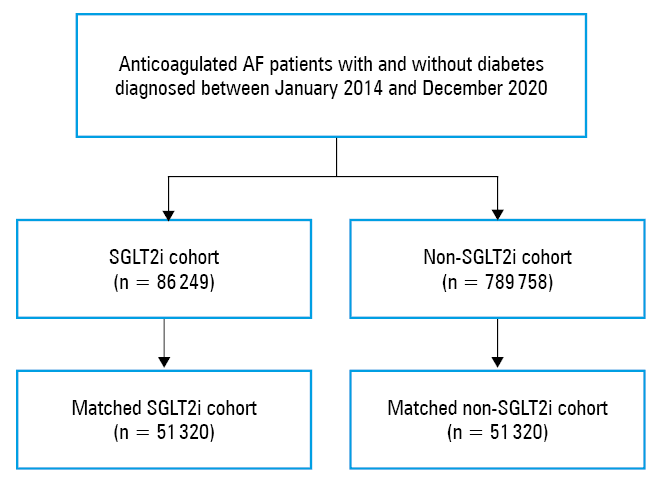
Abbreviations: AF, atrial fibrillation; SGLT2i, sodium‑glucose cotransporter 2 inhibitor
As TriNetX only provides access to deidentified data, research studies conducted using the network do not require ethical approval. Nonetheless, extensive data quality assessments are performed to ensure adherence of the platform to the institutional review board requirements and conformance, completeness, and plausibility of the available data.22,23 Study proceedings were carried out according to the Declaration of Helsinki.
Outcomes
The main objective of the study was to determine the effects of SGLT2is on an AF population with and without diabetes over a 3‑year follow‑up period. Primary outcomes included bleeding events, hospitalizations for AF/AFl, composite of cardioversion and ablations, and ventricular arrhythmias (VAs) and cardiac arrests. Secondary outcomes comprised all‑cause mortality, ischemic stroke (IS) / transient ischemic attack (TIA), hemorrhagic stroke, incident HF, myocardial infarction (MI), and composite of arterial and venous thrombotic events (TEs). These were identified using the corresponding ICD‑10 Clinical Modification codes for diagnostic outcomes and relevant procedural codes for procedural outcomes.
Exploratory analyses were also performed with the analysis repeated only in the AF patients with diabetes (AF‑diabetes cohort) and nondiabetic AF patients with HF (AF‑HF cohort).
Statistical analysis
Baseline characteristics were represented using continuous variables expressed as mean (SD) or median (interquartile range), and categorical variables expressed as counts and percentages. Differences between the groups were assessed using the t test for continuous variables and the χ2 test for categorical variables.
To account for large differences in the number of patients between the 2 comparator groups as well as the baseline characteristics and potential confounding effects, data analyses were performed after propensity score matching (PSM) using the greedy nearest‑neighbor matching (with a caliper of 0.1 of pooled standard deviations). The PSM was calculated for the covariates shown in Table 1. Standardized mean differences (SMDs) indicated the distribution of demographic data and clinical characteristics between the 2 groups, and were calculated as the difference in the means or proportions of a particular variable divided by the pooled estimate of SD for that variable. Any baseline characteristic with an SMD below 0.1 between the cohorts was considered well‑matched.
Parameter | SGLT2i (n = 86 249) | Non‑SGLT2i (n = 789 758) | SMD | SGLT2i (n = 51 320) | Non‑SGLT2i (n = 51 320) | SMD | ||||||
Before matching | After matching | |||||||||||
Data are presented as number and percentage unless indicated otherwise.
a The sum of all anticoagulants is over 100%, as the categories are not mutually exclusive and account for patients that may have switched from one anticoagulant to another. Each category represents the number and proportion of patients who have taken the drug at any point in time prior to the point of inclusion in the study.
b IQRs are presented in the format that is available on the TriNetX website.
SI conversion factors: to convert glucose to mmol/l, multiply by 18; hemoglobin to g/l, by 10; total cholesterol, LDL cholesterol, and HDL cholesterol to mmol/l, by 0.0259; HbA1c to mmol/mol, by 10.93 and then subtract 23.5.
Abbreviations: ACE, angiotensin‑converting enzyme; AV, atrioventricular; BMI, body mass index; CRT, cardiac resynchronization therapy; EP, electrophysiology; HbA1c, glycated hemoglobin; HDL, high‑density lipoprotein; ICD, implantable cardioverter‑defibrillator; IQR, interquartile range; LDL, low‑density lipoprotein; SMD, standardized mean difference; TIA, transient ischemic attack; others, see Figure 1 | ||||||||||||
Age at index, y, mean (SD) | 70.6 (10.4) | 67.8 (10.5) | 0.263 | 70.2 (10.6) | 70.1 (9.1) | 0.009 | ||||||
Women | 29 116 (33.8) | 315 602 (40.3) | 0.135 | 18 057 (35.2) | 18 068 (35.2) | <0.001 | ||||||
Ethnicity | ||||||||||||
White | 63 417 (73.5) | 606 366 (77.4) | 0.089 | 37 918 (73.9) | 37 722 (73.5) | 0.009 | ||||||
Black or African American | 11 136 (12.9) | 79 487 (10.1) | 0.087 | 6160 (12) | 6264 (12.2) | 0.006 | ||||||
Asian | 3644 (4.2) | 24 992 (3.2) | 0.055 | 2175 (4.2) | 2172 (4.2) | <0.001 | ||||||
Comorbidities | ||||||||||||
Hypertension | 80 019 (92.8) | 559 314 (71.4) | 0.581 | 46 258 (90.1) | 46 586 (90.8) | 0.022 | ||||||
Ischemic heart disease | 59 402 (68.9) | 299 062 (38.2) | 0.647 | 31 808 (62) | 32 016 (62.4) | 0.008 | ||||||
Heart failure | 60 718 (70.4) | 239 497 (30.6) | 0.869 | 30 863 (60.1) | 31 217 (60.8) | 0.014 | ||||||
Other cardiac arrhythmias | 43 359 (50.3) | 180 432 (23) | 0.59 | 20 893 (40.7) | 20 486 (39.9) | 0.016 | ||||||
Cardiomyopathy | 34 281 (39.7) | 96 291 (12.3) | 0.659 | 15 082 (29.4) | 14 761 (28.8) | 0.014 | ||||||
Nonrheumatic aortic valve disorders | 20 517 (23.8) | 80 858 (10.3) | 0.364 | 10 067 (19.6) | 10 051 (19.6) | 0.001 | ||||||
Nonrheumatic mitral valve disorders | 28 967 (33.6) | 100 977 (12.9) | 0.506 | 13 196 (25.7) | 12 988 (25.3) | 0.009 | ||||||
Hyperlipidemia | 73 214 (84.9) | 414 678 (52.9) | 0.736 | 41 191 (80.3) | 41 613 (81.1) | 0.021 | ||||||
Diabetes mellitus | 59 952 (69.5) | 231 808 (29.6) | 0.871 | 34 498 (67.2) | 33 200 (64.7) | 0.053 | ||||||
Metabolic disorders | 78 092 (90.5) | 498 894 (63.7) | 0.675 | 44 612 (86.9) | 45 023 (87.7) | 0.024 | ||||||
Overweight and obesity | 45 784 (53.1) | 166 335 (21.2) | 0.698 | 23 062 (44.9) | 23 396 (45.6) | 0.013 | ||||||
BMI 30–39 kg/m2 | 25 052 (29) | 64 800 (8.3) | 0.553 | 11 413 (22.2) | 11 436 (22.3) | 0.001 | ||||||
Peripheral vascular disease | 16 004 (18.6) | 64 821 (8.3) | 0.305 | 8159 (15.9) | 8375 (16.3) | 0.011 | ||||||
Previous stroke | 13 849 (16.1) | 81 885 (10.4) | 0.166 | 7515 (14.6) | 7474 (14.6) | 0.002 | ||||||
Previous TIA | 7952 (9.2) | 34 064 (4.3) | 0.195 | 3943 (7.7) | 3921 (7.6) | 0.002 | ||||||
Thyroid disease | 25 732 (29.8) | 137 580 (17.6) | 0.292 | 13 493 (26.3) | 13 492 (26.3) | <0.001 | ||||||
Kidney disease | 45 796 (53.1) | 202 350 (25.8) | 0.581 | 23 532 (45.9) | 23 679 (46.1) | 0.006 | ||||||
Liver disease | 18 304 (21.2) | 60 966 (7.8) | 0.389 | 8713 (17) | 8779 (17.1) | 0.003 | ||||||
Lung disease | 64 466 (74.7) | 380 560 (48.6) | 0.559 | 35 126 (68.4) | 35 266 (68.7) | 0.006 | ||||||
Neoplasms | 40 926 (47.5) | 214 422 (27.4) | 0.425 | 21 495 (41.9) | 21 566 (42) | 0.003 | ||||||
Aplastic and other anemias and other bone marrow failure syndromes | 38 836 (45) | 183 631 (23.4) | 0.468 | 19 904 (38.8) | 19 968 (38.9) | 0.003 | ||||||
Bleeding disorders | 21 804 (25.3) | 82 942 (10.6) | 0.39 | 10 241 (20) | 10 262 (20) | 0.001 | ||||||
Nontraumatic intracerebral hemorrhage | 1495 (1.7) | 9078 (1.2) | 0.048 | 816 (1.6) | 777 (1.5) | 0.006 | ||||||
Nontraumatic subarachnoid hemorrhage | 814 (0.9) | 4032 (0.5) | 0.05 | 419 (0.8) | 410 (0.8) | 0.002 | ||||||
Gastrointestinal hemorrhage | 8844 (10.3) | 28 008 (3.6) | 0.266 | 4021 (7.8) | 4013 (7.8) | 0.001 | ||||||
Melena | 8526 (9.9) | 21 832 (2.8) | 0.295 | 3696 (7.2) | 3669 (7.1) | 0.002 | ||||||
Hematemesis | 1306 (1.5) | 4811 (0.6) | 0.088 | 613 (1.2) | 618 (1.2) | 0.001 | ||||||
Slipping, tripping, stumbling, and falls | 17 938 (20.8) | 58 773 (7.5) | 0.389 | 8435 (16.4) | 8365 (16.3) | 0.004 | ||||||
Tobacco use | 6995 (8.1) | 26 400 (3.4) | 0.205 | 3433 (6.7) | 3452 (6.7) | 0.001 | ||||||
Procedures | ||||||||||||
Pacemaker or ICD insertion | 15 348 (17.8) | 21 358 (2.7) | 0.513 | 5476 (10.7) | 5278 (10.3) | 0.013 | ||||||
ICD insertion | 6201 (7.2) | 6745 (0.9) | 0.326 | 2123 (4.1) | 2041 (4) | 0.008 | ||||||
Subcutaneous ICD | 377 (0.4) | 231 (0.03) | 0.085 | 100 (0.2) | 96 (0.2) | 0.002 | ||||||
Pacemaker upgrade to CRT | 3929 (4.6) | 3212 (0.4) | 0.269 | 1162 (2.3) | 1093 (2.1) | 0.009 | ||||||
CRT insertion, percutaneous approach | 162 (0.2) | 403 (0.1) | 0.039 | 79 (0.2) | 76 (0.1) | 0.002 | ||||||
CRT insertion, open approach | 493 (0.6) | 653 (0.1) | 0.086 | 171 (0.3) | 169 (0.3) | 0.001 | ||||||
EP study ± ablation | 14 849 (17.2) | 23 386 (3) | 0.486 | 4456 (8.7) | 4152 (8.1) | 0.021 | 3652 (4.2) | 2410 (0.3) | 0.266 | 667 (1.3) | 586 (1.1) | 0.014 |
AV node ablation | 1600 (1.9) | 699 (0.1) | 0.181 | 253 (0.5) | 220 (0.4) | 0.009 | ||||||
Cardioversion | 16 875 (19.6) | 24 631 (3.1) | 0.536 | 4956 (9.7) | 4621 (9) | 0.022 | ||||||
Medications | ||||||||||||
β-Blockers | 81 183 (94.1) | 576 884 (73.6) | 0.581 | 46 915 (91.4) | 47 230 (92) | 0.022 | ||||||
Antilipemic agents | 76 282 (88.4) | 451 830 (57.6) | 0.74 | 43 842 (85.4) | 44 480 (86.7) | 0.036 | ||||||
Statins | 74 563 (86.5) | 433 058 (55.3) | 0.731 | 42 679 (83.2) | 43 250 (84.3) | 0.03 | ||||||
Diuretics | 75 334 (87.3) | 417 016 (53.2) | 0.805 | 42 096 (82) | 42 810 (83.4) | 0.037 | ||||||
ACE inhibitors | 50 847 (59) | 257 885 (32.9) | 0.542 | 27 686 (53.9) | 28 153 (54.9) | 0.018 | ||||||
Calcium channel blockers | 58 357 (67.7) | 349 036 (44.5) | 0.479 | 32 006 (62.4) | 32 223 (62.8) | 0.009 | ||||||
Antianginals | 42 096 (48.8) | 179 398 (22.9) | 0.561 | 21 475 (41.8) | 21 662 (42.2) | 0.007 | ||||||
Digitalis glycosides | 18 894 (21.9) | 88 142 (11.2) | 0.29 | 8868 (17.3) | 8750 (17) | 0.006 | ||||||
Angiotensin II inhibitor | 49 611 (57.5) | 159 837 (20.4) | 0.823 | 24 295 (47.3) | 24 675 (48.1) | 0.015 | ||||||
Antihypertensives | 38 222 (44.3) | 171 025 (21.8) | 0.492 | 19 517 (38) | 19 760 (38.5) | 0.01 | ||||||
Platelet aggregation inhibitors | 65 605 (76.1) | 395 635 (50.5) | 0.551 | 36 318 (70.8) | 36 704 (71.5) | 0.017 | ||||||
Loop diuretics | 66 187 (76.7) | 314 568 (40.1) | 0.8 | 35 360 (68.9) | 35 976 (70.1) | 0.026 | ||||||
Thiazides / related diuretics | 38 232 (44.3) | 173 216 (22.1) | 0.486 | 20 478 (39.9) | 20 983 (40.9) | 0.02 | ||||||
Potassium sparing / combinations diuretics | 37 250 (43.2) | 81 288 (10.4) | 0.798 | 16 614 (32.4) | 16 796 (32.7) | 0.008 | ||||||
Sacubitril | 17 298 (20.1) | 7007 (0.9) | 0.659 | 4787 (9.3) | 4342 (8.5) | 0.03 | ||||||
Insulin | 51 142 (59.3) | 218 610 (27.9) | 0.668 | 27 510 (53.6) | 28 602 (55.7) | 0.043 | ||||||
Exenatide | 2055 (2.4) | 2149 (0.3) | 0.185 | 931 (1.8) | 967 (1.9) | 0.005 | ||||||
Liraglutide | 4702 (5.5) | 3950 (0.5) | 0.294 | 2007 (3.9) | 1965 (3.8) | 0.004 | ||||||
Dulaglutide | 5739 (6.7) | 2015 (0.3) | 0.356 | 1689 (3.3) | 1431 (2.8) | 0.029 | ||||||
Pramlintide | 63 (0.1) | 157 (0.02) | 0.025 | 39 (0.1) | 48 (0.1) | 0.006 | ||||||
Semaglutide | 4875 (5.7) | 554 (0.1) | 0.34 | 733 (1.4) | 496 (1) | 0.042 | ||||||
Lixisenatide | 211 (0.2) | 105 (0.013) | 0.064 | 70 (0.1) | 64 (0.1) | 0.003 | ||||||
Metformin | 42 360 (49.1) | 91 188 (11.6) | 0.892 | 22 997 (44.8) | 24 591 (47.9) | 0.062 | ||||||
Glipizide | 13 354 (15.5) | 30 477 (3.9) | 0.4 | 7104 (13.8) | 7430 (14.5) | 0.018 | ||||||
Glimepiride | 9887 (11.5) | 19 059 (2.4) | 0.361 | 5317 (10.4) | 5655 (11) | 0.021 | ||||||
Sitagliptin | 12 125 (14.1) | 18 948 (2.4) | 0.433 | 6249 (12.2) | 6586 (12.8) | 0.02 | ||||||
Linagliptin | 4393 (5.1) | 5194 (0.7) | 0.267 | 2138 (4.2) | 2160 (4.2) | 0.002 | ||||||
Repaglinide | 1255 (1.5) | 2476 (0.3) | 0.122 | 642 (1.3) | 673 (1.3) | 0.005 | ||||||
Saxagliptin | 1236 (1.4) | 1816 (0.2) | 0.133 | 652 (1.3) | 696 (1.4) | 0.008 | ||||||
Nateglinide | 414 (0.5) | 1120 (0.1) | 0.061 | 246 (0.5) | 265 (0.5) | 0.005 | ||||||
Warfarina | 36 718 (42.6) | 334 191 (42.6) | 0.001 | 18 949 (36.9) | 18 077 (35.2) | 0.035 | ||||||
Rivaroxaban | 25 451 (29.5) | 142 149 (18.1) | 0.269 | 12 390 (24.1) | 12 333 (24) | 0.003 | ||||||
Edoxaban | 1033 (1.2) | 3047 (0.4) | 0.091 | 481 (0.9) | 476 (0.9) | 0.001 | ||||||
Dabigatran etexilate | 6853 (7.9) | 40 410 (5.2) | 0.113 | 2842 (5.5) | 2742 (5.3) | 0.009 | ||||||
Apixaban | 51 588 (59.8) | 288 371 (36.8) | 0.473 | 26 812 (52.2) | 27 008 (52.6) | 0.008 | ||||||
Amiodarone | 30 454 (35.3) | 123 911 (15.8) | 0.459 | 13 830 (26.9) | 13 655 (26.6) | 0.008 | ||||||
Flecainide | 4897 (5.7) | 26 478 (3.4) | 0.111 | 2077 (4) | 1944 (3.8) | 0.013 | ||||||
Laboratory values | ||||||||||||
Glucose, mg/dl, mean (SD) | 140.1 (61.7) | 118.9 (43.6) | 0.396 | 140.8 (62.1) | 131.7 (54.1) | 0.157 | ||||||
Hemoglobin, g/dl, mean (SD) | 12.8 (2.2) | 12.4 (2.4) | 0.154 | 12.8 (2.2) | 12.1 (2.3) | 0.336 | ||||||
Total cholesterol, mg/dl, mean (SD) | 145.8 (41.8) | 160.6 (46.6) | 0.336 | 147.9 (42.2) | 151 (45.6) | 0.071 | ||||||
LDL cholesterol, mg/dl, mean (SD) | 75.4 (32.8) | 89.0 (36.4) | 0.395 | 76.7 (32.9) | 80.9 (35.4) | 0.122 | ||||||
HDL cholesterol, mg/dl, mean (SD) | 42 (16.5) | 45.9 (18.3) | 0.222 | 42.4 (16.6) | 42.6 (17) | 0.009 | ||||||
Triglycerides, mg/dl, median (IQR)b | 115 (87) | 108 (77) | 0.114 | 114 (83) | 106 (73) | 0.042 | ||||||
HbA1c,%, mean (SD) | 7.1 (1.7) | 6.4 (1.5) | 0.422 | 7.1 (1.7) | 6.8 (1.7) | 0.189 | ||||||
Body mass index, kg/m2, mean (SD) | 32.7 (8) | 30.7 (7.7) | 0.247 | 32.5 (8) | 32.2 (7.8) | 0.039 | ||||||
Cox regression models were used to evaluate the association between treatment with or without SGLT2i and the outcomes of interest. Where incident outcomes were evaluated, the patients with a history of the outcome of interest were excluded from that particular analysis. For example, the patients with prevalent HF were excluded when examining incident HF. The Kaplan–Meier survival curves were used to visualize time‑to‑event outcomes, with group comparisons performed with the log‑rank test. This test provides a nonparametric comparison of the empirical survival distributions between the groups without assumptions regarding proportional hazards.
Cox proportional hazards regression was used to estimate hazard ratios (HRs) and 95% CIs, assuming proportional and time‑independent hazards. Thus, the log‑rank test and Cox regression address complementary aspects of group differences, with the former comparing overall survival curves, and the latter quantifying relative hazard over time under model assumptions. No imputations were made for missing data.
The statistical analysis was performed on the TriNetX Analytics platform, which provides a virtual interface with real‑time browser‑based analytics features.
Results
A total of 876 007 patients were initially identified. Of these, 789 758 were not on an SGLT2i (mean [SD] age, 67.8 [10.5] y) and 86 249 (mean age, 70.6 [10.4] y) were on an SGLT2i (Figure 1). The patients in the SGLT2i group were older, less often women, and were more likely to have cardiac risk factors, such as hypertension, ischemic heart disease and HF, as well as comorbidities such as diabetes, liver and kidney disease than those not treated with SGLT2is. This group also had a higher proportion of patients with a history of bleeding and predisposition to falls, was more likely to have undergone cardiac procedures, be prescribed other cardiac and antidiabetic medications, and had poorer blood sugar control and triglyceride levels and higher BMI in comparison with the non‑SGLT2i cohort (Table 1).
After PSM, each group had 51 320 patients (mean [SD] age, 70.1 [9.1] y in the non‑SGLT2i group and 70.2 [10.6] y in the SGLT2i group). The outcomes were evaluated in the matched cohorts and are summarized in Table 1 with HRs for risk illustrated in Figure 2.
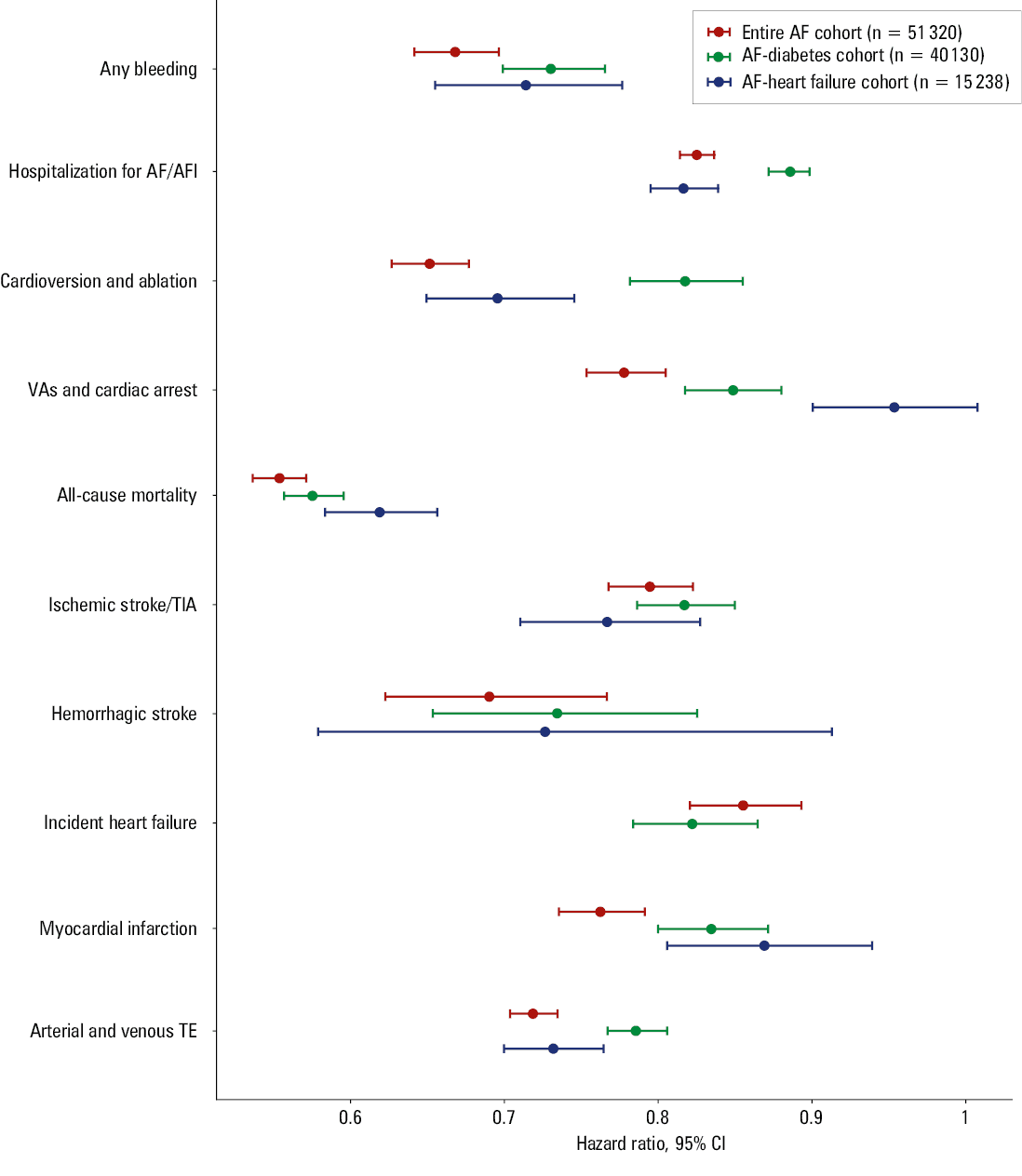
Abbreviations: AFl, atrial flutter; TE, thromboembolism; VA, ventricular arrhythmia; others, see Figure 1 and Table 1
Any bleeding
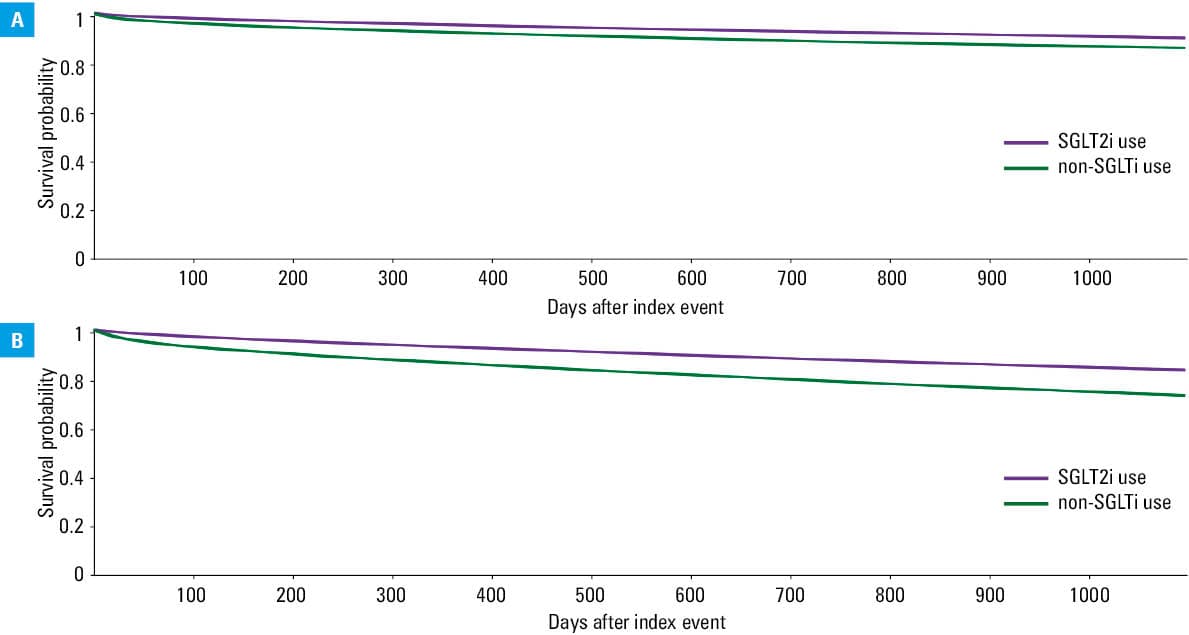
There were 3848 and 6057 bleeding events observed in the SGLT2i and non‑SGLT2i groups, respectively. The SGLT2i use was associated with a lower risk of bleeding (HR, 0.669; 95% CI, 0.642–0.697; log‑rank P <0.001). The Kaplan–Meier curve for bleeding is shown in Figure 3A.
Hospitalizations for atrial fibrillation / atrial flutter
As many as 40 739 patients in the SGLT2i cohort and 41 834 in the non‑SGLT2i group were hospitalized. SGLT2is were associated with a lower risk of hospitalizations for AF/AFl (HR, 0.826; 95% CI, 0.815–0.837; log‑rank P <0.001).
Composite of cardioversions and ablations
Cardioversion / ablation was performed in 4287 patients in the SGLT2i group and 6638 in the non‑SGLT2i group. The SGLT2i use was associated with a less frequent need for ablation / cardioversion over the 3‑year follow‑up period (HR, 0.652; 95% CI, 0.628–0.678; log‑rank P <0.001).
Ventricular arrhythmias and cardiac arrest
The number of VAs and cardiac arrests was lower in the SGLT2i group (n = 6426) than the non‑SGLT2i one (n = 8515; HR, 0.779; 95% CI, 0.754–0.805; log‑rank P <0.001).
Secondary outcomes
All‑cause mortality
The number of deaths in the non‑SGLT2i group was nearly twice as high as in the SGLT2i group (12 307 vs 6314). The largest difference in the risk was observed for this outcome, where the SGLT2i use was associated with a 45% lower risk of all‑cause mortality (HR, 0.554; 95% CI, 0.537–0.571; log‑rank P <0.001; Figure 3B).
Ischemic stroke / transient ischemic attack
IS/TIA occurred in 5768 patients in the SGLT2i group and 7471 individuals in the non‑SGLT2i group over the follow‑up period. The risk of IS/TIA was lower in those on SGLT2is (HR, 0.795; 95% CI, 0.768–0.823; log‑rank P <0.001; Figure 2).
Hemorrhagic stroke
Hemorrhagic stroke occurred in 585 patients in the SGLT2i group and 916 patients in the non‑SGLT2i group, demonstrating a lower risk with the SGLT2i use (HR, 0.691; 95% CI, 0.623–0.767; log‑rank P <0.001).
Incident heart failure
There were 30 863 patients in the SGLT2i group and 31 217 patients in the non‑SGLT2i group with a known history of HF. After excluding these patients, 3991 and 4750 individuals in the SGLT2i and non‑SGLT2i groups, respectively, developed de novo HF over the follow‑up period. The risk of incident HF was lower on SGLT2is (HR, 0.856; 95% CI, 0.821–0.893; log‑rank P <0.001).
Myocardial infarction
As many as 4952 patients in the SGLT2i group and 6766 in the non‑SGLT2i group had MI. The risk reduction associated with SGLT2i use was considerable (HR, 0.763; 95% CI, 0.736–0.792; log‑rank P <0.001).
Composite of arterial and venous thrombotic events
The patients in the SGLT2i group had a lower rate of TEs than those in the non‑SGLT2i group (15 433 vs 20 469, respectively) and a lower risk of these events (HR, 0.719; 95% CI, 0.704–0.735; log‑rank P <0.001).
Exploratory analyses
Given that studies to date are limited to AF patients with type 2 diabetes, we performed an exploratory analysis to determine how the results in our population including individuals with and without diabetes compared with those in a population with type 2 diabetes only. The outcomes were also evaluated in another subcohort of AF patients with HF without diabetes, as data for this population are limited. Baseline characteristics before and after matching are included in Supplementary material, Tables S1 and S2. Significant risk reductions were observed for all the outcomes in the AF‑diabetes cohort (Table 2). In the AF‑HF cohort (Supplementary material, Table S2), the SGLT2i use was associated with a significantly lower risk of all outcomes except for VAs and cardiac arrests, where no significant differences were observed (Figure 2 and Supplementary material, Figure S3).
Outcome | Entire AF cohort | AF‑diabetes cohort | ||||||
Total (n = 102 640) | SGLT2i, n (%) | Non‑SGLT2i, n (%) | HR (95% CI) | Total (n = 80 260) | SGLT2i, n (%) | Non‑SGLT2i, n (%) | HR (95% CI) | |
Primary outcomes | ||||||||
Any bleeding | 9905 | 3848 (7.5) | 6057 (11.8) | 0.669 (0.642–0.697) | 7756 | 3264 (8.1) | 4492 (11.2) | 0.731 (0.699–0.765) |
Hospitalization for AF/AFl | 82 573 | 40 739 (79.4) | 41 834 (81.5) | 0.826 (0.815–0.837) | 65 598 | 32 771 (81.7) | 32 827 (81.8) | 0.886 (0.872–0.899) |
Composite of cardioversion / ablation | 10 925 | 4287 (8.4) | 6638 (12.9) | 0.652 (0.628–0.678) | 7650 | 3450 (8.6) | 4200 (10.5) | 0.818 (0.782–0.856) |
Composite of ventricular arrhythmias / cardiac arrests | 14 941 | 6426 (12.5) | 8515 (16.6) | 0.779 (0.754–0.805) | 11 182 | 5126 (12.8) | 6056 (15.1) | 0.849 (0.818–0.881) |
Secondary outcomes | ||||||||
All‑cause mortality | 18 621 | 6314 (12.3) | 12 307 (24) | 0.554 (0.537–0.571) | 14 504 | 5243 (13.1) | 9261 (23.1) | 0.576 (0.557–0.596) |
Ischemic stroke/TIA | 13 239 | 5768 (11.2) | 7471 (14.6) | 0.795 (0.768–0.823) | 10 713 | 4835 (12) | 5878
(14.6) | 0.818 (0.787–0.85) |
Hemorrhagic stroke | 1501 | 585 (1.1) | 916 (1.8) | 0.691 (0.623–0.767) | 1170 | 488 (1.2) | 682 (1.7) | 0.735 (0.654–0.826) |
Incident heart failure | 8741 | 3991 (7.8) | 4750 (9.3) | 0.856 (0.821–0.893) | 6408 | 2898 (7.2) | 3510 (8.7) | 0.823 (0.784–0.865) |
Myocardial infarction | 11 718 | 4952 (9.6) | 6766 (13.2) | 0.763 (0.736–0.792) | 9026 | 4093 (10.2) | 4933 (12.3) | 0.835 (0.801–0.871) |
Composite of arterial and venous thrombotic events | 35 902 | 15 433 (30.1) | 20 469 (39.9) | 0.719 (0.704–0.735) | 28 212 | 12 818 (31.9) | 15 394 (38.4) | 0.786 (0.768–0.805) |
Discussion
In this real‑world study, the SGLT2i use was associated with a significantly lower risk of AF‑related complications, such as bleeding, hospitalizations for AF/AFl, need for cardioversion / ablation, and VAs and cardiac arrests. Second, reduced risks of all‑cause mortality, IS/TIA, hemorrhagic stroke, incident HF, MI, and TEs were also observed with the SGLT2i use, as compared with their nonuse in this population of anticoagulated AF patients. Indeed, these observations suggest that SGLT2is might be useful in the holistic approach put forward over the last decade in the guidelines for the management of patients with AF.20,21
To our knowledge, the effect of SGLT2is on the bleeding risk in AF has not been specifically evaluated in a large, observational study. In our analysis, the SGLT2i use was associated with a 33% reduction in the risk of any bleeding. The bleeding risk, aside from a stroke risk, is the single most important factor that influences decisions around anticoagulation, and factors such as uncontrolled hypertension and renal disease can significantly elevate the likelihood of a bleed.
SGLT2is have been shown to have a blood pressure lowering effect by improving endothelial function and arterial stiffness and through inactivation of the renin‑angiotensin‑aldosterone system, resulting in arterial vasodilation and reduced afterload.24 Several meta‑analyses have demonstrated significant reductions in blood pressure with SGLT2is.25,26 In 1 study, the greatest reductions in pulse pressure and mean arterial pressure were observed in the oldest patients with the highest baseline systolic pressure (ie, those who are most prone to bleeding should they receive anticoagulation).27 SGLT2is may also reduce the predisposition to bleeding associated with anticoagulation and aid hemostasis by lowering the risk of acute kidney injury, including that requiring dialysis, and slowing progression of chronic kidney disease.28,29
AF is closely linked with endothelial dysfunction, a key component of the Virchow triad for thrombogenesis associated with several adverse outcomes, such as thromboembolism, abnormal hemostasis, and bleeding.30 SGLT2is have been shown to decrease the levels of reactive oxygen species and proinflammatory cytokines, which can reverse endothelial dysfunction, consequently inhibiting vascular inflammation and platelet activation, and decreasing the risk of not just bleeding but also of atherosclerotic and thrombogenic events.31,32 This may explain the reduced risk of ischemic and hemorrhagic strokes, MI, and TEs observed in our study. SGLT2is were associated with a 20%–25% lower risk of IS/TIA in the entire AF as well as AF‑diabetes and AF‑HF cohorts. Similar decreases have been reported in the few studies that have examined the association between this outcome with the SGLT2i use in patients with pre‑existing AF,33-35 except for a single study where no significant difference was observed.36 In addition, our findings showed a 31% reduction in the risk of hemorrhagic stroke, consistent with findings from existing meta‑analyses (though not exclusively based on AF patients).37,38
Another key finding from our analysis was the reduction in AF/AFl hospitalizations and composite of cardioversions and ablations even after taking antiarrhythmic drugs into account. These findings are supported by several clinical studies36,39-44 demonstrating a significantly lower risk of AF‑related health care utilization in terms of hospital visits, need for subsequent cardioversion, redo ablation, and new antiarrhythmic drug therapy post–catheter ablation as well as a reduced risk of AF recurrence with SGLT2i use, suggesting they may have antiarrhythmic properties. This is hypothesized by Paasche et al,45 whose study showed that treatment with dapagliflozin was associated with a significant reduction in the excitability of cardiomyocytes and reduction in the myocardial conduction velocity, more pronounced in the atrial than ventricular cells.
In addition to the direct antiarrhythmogenic effects, SGLT2i‑induced decreases in the level of epicardial fat and proinflammatory adipokines, which contribute to cardiac remodeling, processes involving intracellular sodium / calcium homeostasis that may increase threshold for arrhythmic triggers and off‑target actions, such as reductions in plasma volume and glucose‑induced inflammation, may also play a role.46,47 It is unlikely that arrhythmia risk mitigation solely occurs due to processes that take place in isolation within the cardiovascular system. Disease modification and prevention resulting from SGLT2i impacting various pathways within the renal, endocrine, and metabolic systems are likely to mediate this risk. Of course, it is entirely possible that SGLT2is have no bearing on the arrhythmia risk but offer better symptom control in AF patients, reducing their need for further treatment and intervention. It is well evidenced that AF management addressing symptom control is associated with better outcomes.48,49
Given the lack of SGLT2 proteins in the heart, it is believed that the direct antiarrhythmic effects of SGLT2is are executed through their action on SGLT1 proteins found in cardiomyocytes.47,50 Drugs such as dapagliflozin and empagliflozin have been shown to have high SGLT2/SGLT1 selectivity, whereas canagliflozin is comparatively less selective. This would imply that canagliflozin has a greater antiarrhythmic potential than empagliflozin and dapagliflozin but the latter appears to have the most evidence as an antiarrhythmic, with some studies even suggesting that the reduced risk of arrhythmias is driven by dapagliflozin alone.51 Currently, it is unclear if certain drugs within this class are more likely to exert these effects.
There is inconsistent evidence regarding the risk of VAs and sudden cardiac death (SCD) associated with the SGLT2i use. In a meta‑analysis by Sfairopoulos et al,52 including 19 RCTs and over 55 000 patients, no significant differences were observed in the risk of VAs or SCD; however, event numbers were small, with 174 in the SGLT2i group and 191 in the placebo group. The meta‑analysis by Liao et al53 showed similar findings but a borderline lower risk of SCD was observed in patients with HF only, suggesting these drugs may be more advantageous in certain subgroups of patients.
In our study, SGLT2is provided a modest but significant reduction in the risk of VAs and cardiac arrests in the overall and AF‑diabetes cohorts but not the nondiabetic AF‑HF group. The numbers of ventricular arrhythmias and cardiac arrests recorded in our study were much larger, though it must be noted that cardiac arrests would have comprised cases of SCD and sudden death due to other etiologies.
At present, evidence supporting the use of SGLT2is in patients with AF primarily stem from retrospective studies on diabetic patients. Consequently, determining whether these observations are directly due to the effects of SGLT2is or to mediation of risk factors such as diabetes and associated complications, or even HF, which shares a bidirectional relationship with AF, is not possible. Our subanalysis of the AF‑HF cohort indicates that the SGLT2i use is associated with a significantly reduced risk of adverse outcomes, regardless of diabetes, and further studies like this and RCTs will inform whether or not SGLT2is can be integrated into AF management as a treatment pillar. Several RCTs are currently underway investigating the effects of SGLT2is on AF recurrence,54 disease burden, and quality of life and atrial remodeling.55 Mechanistic studies examining the underlying processes are also warranted for further insights.
Limitations
This study is subject to limitations associated with any retrospective analysis, such as residual confounding and potential data inaccuracies. As TriNetX data comprise EMRs, data quality is subject to precision of information recorded locally at the respective HCOs. Since these data are unlikely to have been collected specifically for research purposes, it is possible that certain characteristics, such as smoking history, are underreported. Further, hospitalizations or procedures undertaken at a different non‑HCO site may not have been taken into account, which may have underestimated the outcome events. It was also impossible to determine how long the patients had been on SGLT2is prior to follow‑up and compare outcomes for individual SGLT2is or according to type and duration of AF.
Conclusions
Previous studies have signaled the reduced risk of incident AF in diabetic patients taking SGLT2is. Our findings suggest that the benefits of SGLT2is may extend further to those with pre‑existing AF with and without diabetes, and reduce the need for procedures such as ablations / cardioversions and risk of complications such as bleeding.
- Wiviott SD, Raz I, Bonaca MP, et al. Dapagliflozin and cardiovascular outcomes in type 2 diabetes. N Engl J Med. 2019; 380: 347‑357. | Crossref
- Zinman B, Wanner C, Lachin JM, et al. Empagliflozin, cardiovascular outcomes, and mortality in type 2 diabetes. N Engl J Med. 2015; 373: 17‑18. | Crossref
- Neal B, Perkovic V, Mahaffey KW, et al. Canagliflozin and cardiovascular and renal events in type 2 diabetes. N Engl J Med. 2017; 377: 644‑657. | Crossref
- Rådholm K, Figtree G, Perkovic V, et al. Canagliflozin and heart failure in type 2 diabetes mellitus: results from the CANVAS program. Circulation. 2018; 138: 458‑468. | Crossref
- Anker SD, Butler J, Filippatos G, et al. Empagliflozin in heart failure with a preserved ejection fraction. N Engl J Med. 2021; 385: 1451‑1461. | Crossref
SUPPLEMENTARY MATERIAL
ARTICLE INFORMATION